Rug in the Entryway: Finding the Right Solution for Hallway and Corridor
First impressions start at the floor
The entryway is the first thing visitors see when they enter your home. At the same time, it is the room that is subjected to the most stress on a daily basis: wet shoes, umbrellas, pushchairs, pets. A well-chosen rug transforms this transitional space into an inviting reception area and simultaneously protects the floor from dirt, moisture and scratches. Interior magazines like to describe the hallway as the "calling card of the home" and that hits the mark well: what lies here sets the tone for the rest of the home.
Why a rug in the entryway makes sense
A rug in the entryway does more than simply protect the floor. It improves the acoustics in often echoing corridors, brings visual structure to a long, narrow hallway and creates warmth underfoot. Anyone who wants to welcome guests consciously signals with a beautiful runner or a high-quality mat: this is where a home begins.
- Floor protection: Dirt, grit and moisture stay on the rug, not on the parquet or the tiles.
- Acoustics: Hard floors amplify the sound of footsteps. A rug dampens them noticeably.
- Appearance: A runner structures narrow hallways and draws the eye into the room.
- Safety: Anti-slip underlays or non-slip backings protect the whole family.
Which type of rug suits your entryway?
Before deciding on a model, it is worth taking a moment to clarify what function the rug should serve and what your entrance is like.
Doormat directly at the door
The classic doormat catches the first dirt before it gets inside. It sits directly in front of or behind the front door, is flat-woven and robust. Its primary purpose is functional: to absorb and retain dirt and moisture.
Hallway runner for the long corridor
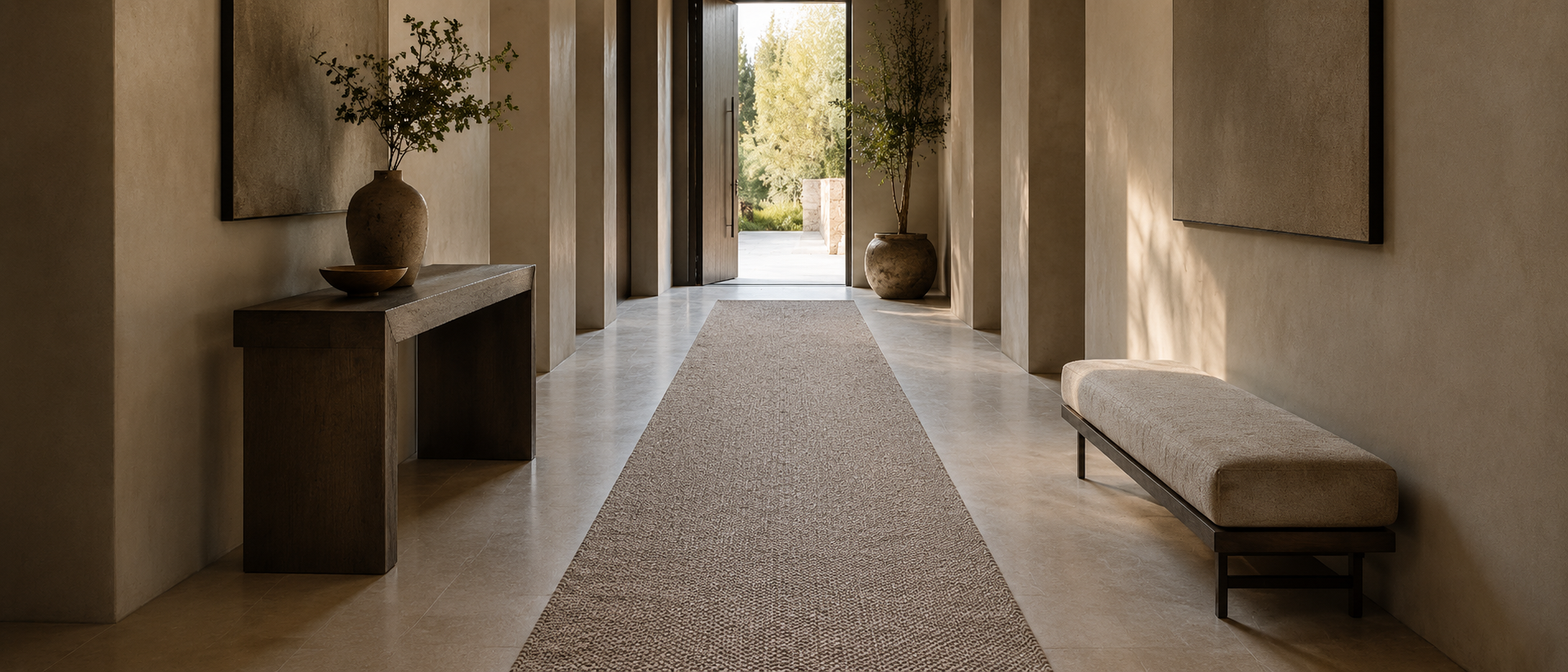
A hallway runner is the most elegant solution for an elongated entryway. It accompanies the path through the hallway, protects the floor along the entire walking line and brings visual harmony to the corridor. Typical dimensions are 70 × 250 cm or 80 × 300 cm. About 10 to 20 cm of floor should remain visible on the left and right so that the runner appears deliberately placed and the room does not feel cramped.
Washable rug for families and pets
With children, pets and wet weather, a washable rug is the most practical choice. It can go in the washing machine when needed, keeping it hygienic and fresh in the long term. Important: follow the manufacturer's care instructions and pay attention to the maximum washing temperature.
Outdoor rug for heavily used zones
Outdoor rugs are originally designed for the terrace and balcony, but they also work excellently in the entryway. They are flat-woven, moisture-resistant, dirt-repellent and easy to clean. For entrances with direct contact with the street or a wet house entrance, they are a robust alternative.
Designer rug for the representative entrance
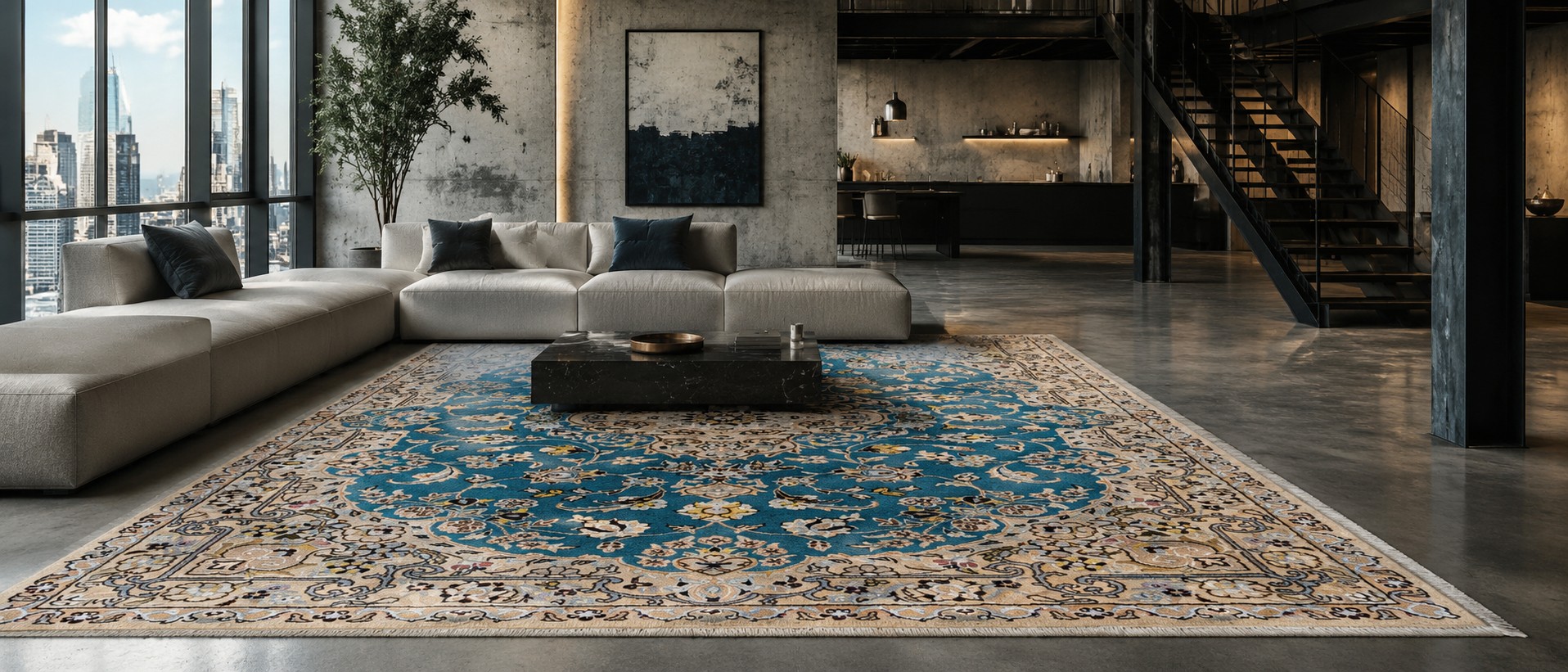
Anyone with a dry, generous entryway who wants to make it feel homely can also opt for a high-quality designer rug. A classic short pile or a patterned runner gives the entrée the same character as a rug in the living room.
The right material: from synthetic fibre to wool
The choice of material is a decisive factor in how easy to care for and how durable a rug in the entryway will be.
Synthetic fibre: robust and moisture-insensitive
Polypropylene is one of the most popular synthetic fibres for the entryway. The material absorbs very little moisture, is dirt-resistant and easy to clean. Polyamide (also known as nylon) is similarly robust, yet somewhat softer and particularly abrasion-resistant. Both materials are suitable for areas with heavy use.
Polyester is somewhat softer and easy to care for. Depending on the construction, it is well suited for mats and runners that are not confronted with large amounts of dirt on a daily basis.
Wool: high quality and homely
A wool rug brings warmth, character and longevity to the entryway. For dry, representative entrances, wool is an excellent choice. Directly in wet areas or at the front door leading outside, greater care is required during maintenance, as wool absorbs moisture and dries more slowly.
Natural fibres: jute, viscose, Tencel
Natural fibre rugs made from jute, viscose or Tencel look beautiful and suit many interior styles visually. For wet entrances they are only conditionally suitable, as these materials react more sensitively to moisture. In a dry, well-ventilated entryway, however, they can fully play to their strengths.
Choosing the right size
One of the most common uncertainties when buying is the question of the right size. A few simple rules help:
- The rug must not obstruct the door when opening and closing. Measure the door clearance before purchasing.
- In the hallway, a runner looks better than a large-area rug. It follows the natural direction of travel.
- Floor should remain visible on the left and right of the runner; 10 to 20 cm is ideal.
- Do not lay the rug right up to the walls. This makes the room feel narrower.
- Tip: Mark the desired dimensions on the floor with masking tape before you order.
Safety in the entryway
In the entryway, people often wear wet shoes or walk around in socks. Non-slip safety is therefore not an optional extra but an important basic requirement. Particularly on smooth floors such as parquet, porcelain stoneware or laminate, a non-slip backing or a separate rug underlay is essential. Flat-woven models are more practical in this regard, as they have no raised edges that one could trip over. This is especially relevant for children, older people and pets.
Care and everyday use: keeping the rug fresh
The entryway is the most heavily used zone in the home. With the right routine, the rug stays clean and well-maintained in the long term:
- Vacuum regularly, at least twice a week with heavy use.
- Allow moisture to dry promptly so that no mould forms.
- Place a doormat directly at the door and lay a beautiful rug behind it. The mat catches the coarsest dirt.
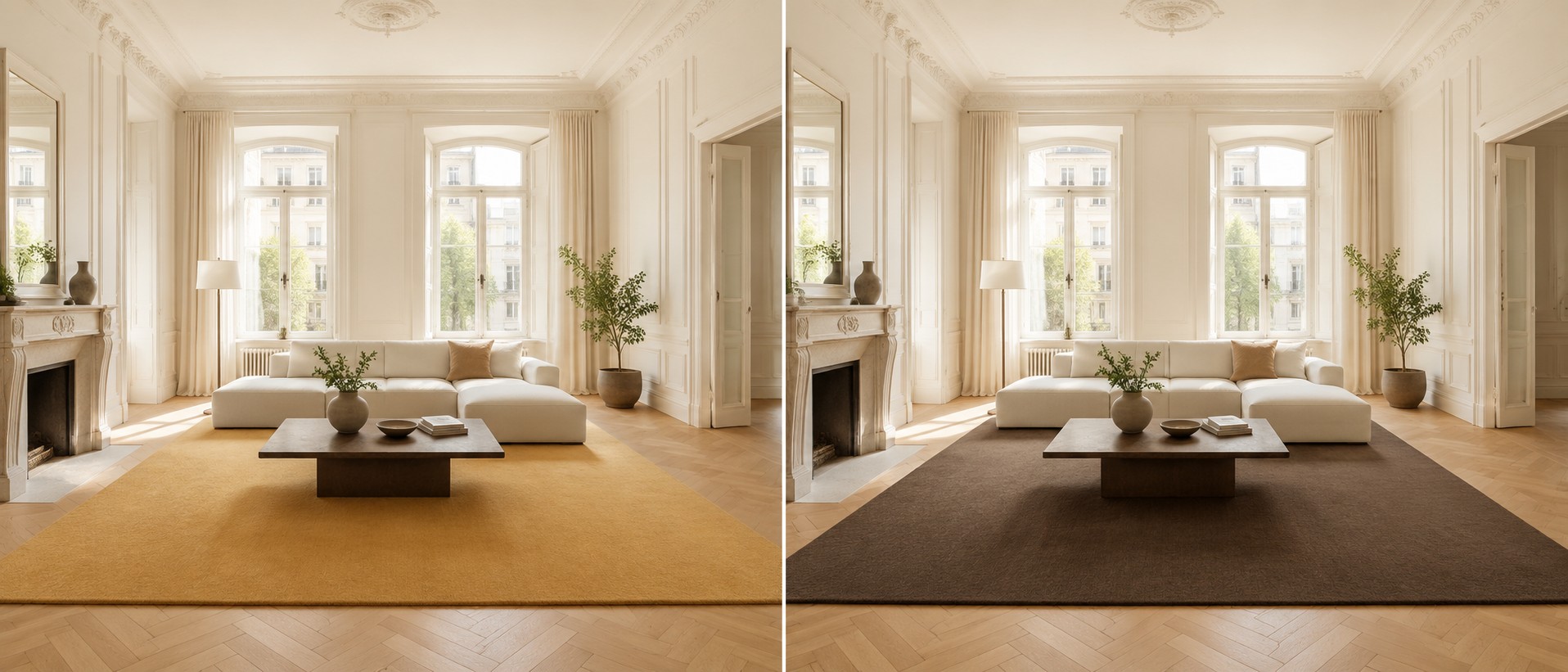
- Mottled colours and patterned rugs conceal everyday marks significantly better than plain light surfaces.
- For heavily soiled models: check washable variants or plan for professional cleaning.
Style advice: which rug suits which entrance?
The rug in the entryway is not an isolated object. It connects the architecture of the building with the interior style of the home. A few points of orientation:
- Small entryway: Light, calm colours make the room appear larger. Little pattern, low pile height.
- Narrow hallway: Longitudinal stripes or patterns visually elongate the room into the depth.
- Dark floors: A rug with contrast or in warm natural tones sets a beautiful accent.
- Light floors: Mottled or patterned rugs are more practical to care for than plain light variants.
- Representative entrance: High-quality patterns, calm colours and a short pile height look elegant and timeless.
Selection guide: which entrance, which solution?
Depending on the situation, different rug types are recommended:
- A lot of dirt and moisture: Synthetic fibre (polypropylene, polyamide) or outdoor rug; prefer washable options.
- Representative house entrance: High-quality short pile or classic runner, wool also possible.
- Narrow corridor: Runner in a suitable length, leave floor visible on the left and right.
- Family with children and pets: Washable, non-slip, flat-woven and easy-care synthetic fibre.
FAQ
Which rug is suitable for the entryway?
A flat, robust rug with easy-care material is the best choice for the entryway. With a lot of dirt and moisture, synthetic fibre models made from polypropylene or polyamide as well as outdoor rugs are recommended, as they are moisture-resistant and easy to clean. For a dry, representative entrance, high-quality short pile rugs or a classic runner are also suitable, possibly with a wool content. A non-slip backing or a separate rug underlay is advisable in every case.
What size should a rug in the entryway be?
The door must be able to open and close without obstruction. Measure the door clearance beforehand. In the hallway or corridor, choose a runner rather than a large-area rug. Leave about 10 to 20 cm of floor visible on the left and right of the rug. Do not lay the rug right up to the walls, as this makes the room feel narrower. Tip: Mark the desired dimensions on the floor with masking tape before you order the rug.
Which material is best for the hallway?
For heavily used hallways, polypropylene, polyamide and nylon are the most robust materials. They are moisture-insensitive, dirt-resistant and long-lasting. Polyester is well suited for easy-care mats with moderate use. A wool rug is a high-quality choice for dry, representative entrances. Materials such as jute, viscose or Tencel look attractive but react more sensitively to moisture and should therefore be used with care in wet entrance zones.
How does a rug in the entryway stay clean?
Vacuum regularly, at least twice a week with heavy use. Allow moisture to dry promptly to prevent mould from forming. Place a doormat directly at the door to catch the coarsest dirt. Check washable rug models, especially with children and pets. Choose mottled or patterned colours: they conceal everyday marks significantly better than plain light surfaces.
How do I prevent the rug from slipping?
The safest solution is a rug with a non-slip backing or a separate rug underlay placed between the rug and the floor. A non-slip grip is indispensable, particularly on smooth floors such as parquet, laminate or porcelain stoneware. Flat-woven models without raised edges are additionally safer, as no trip hazards arise. This is especially important for children, older people and pets.