
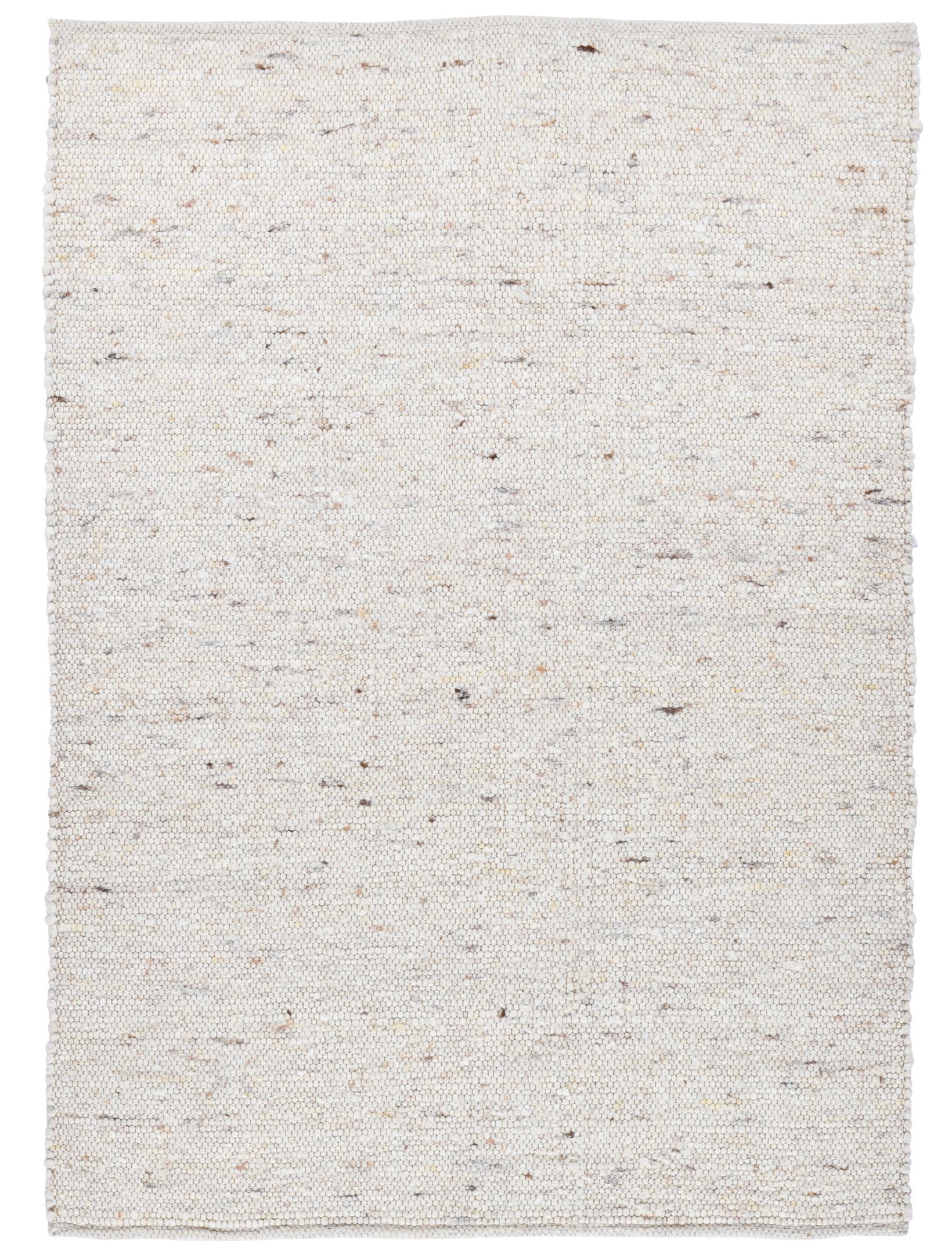
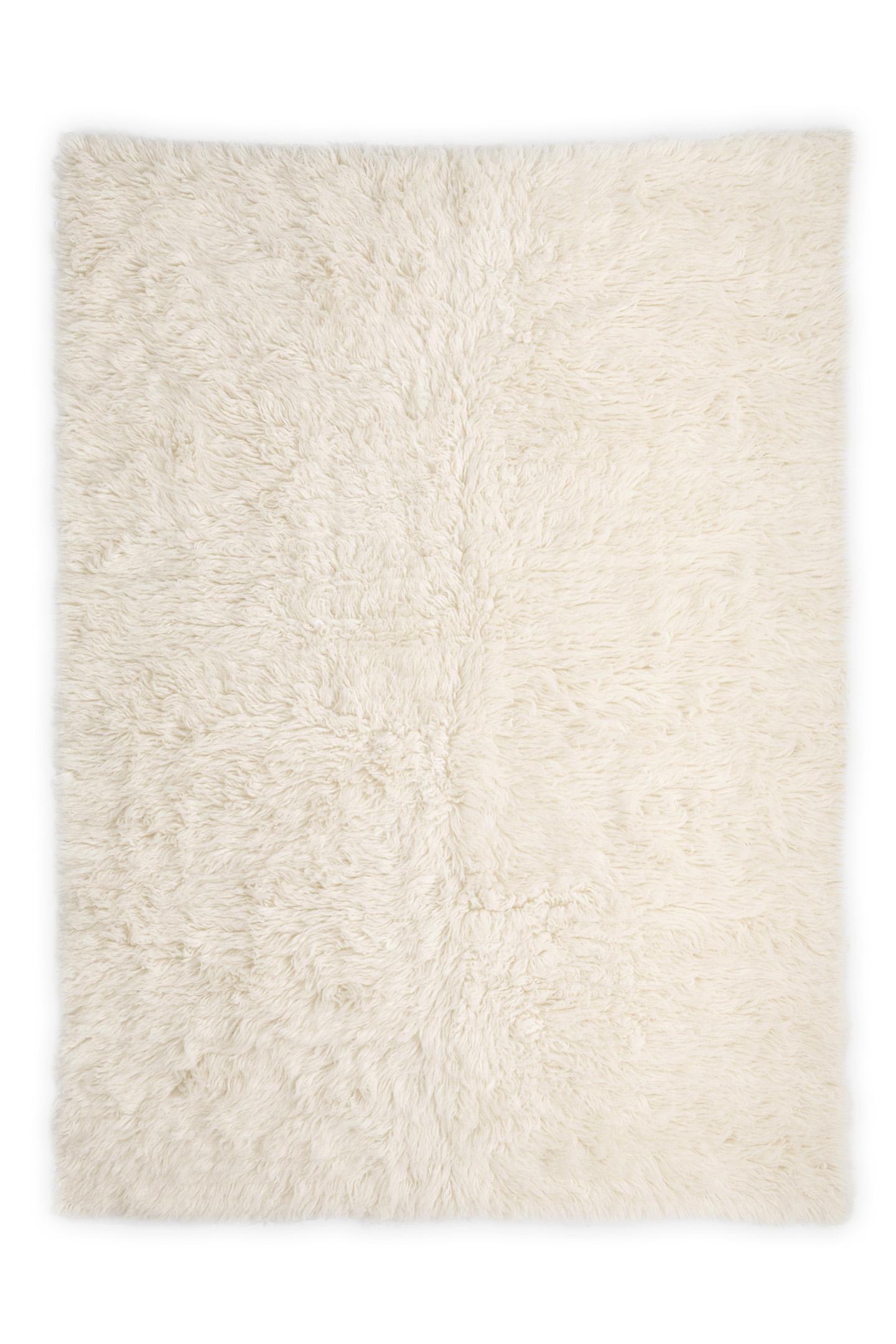


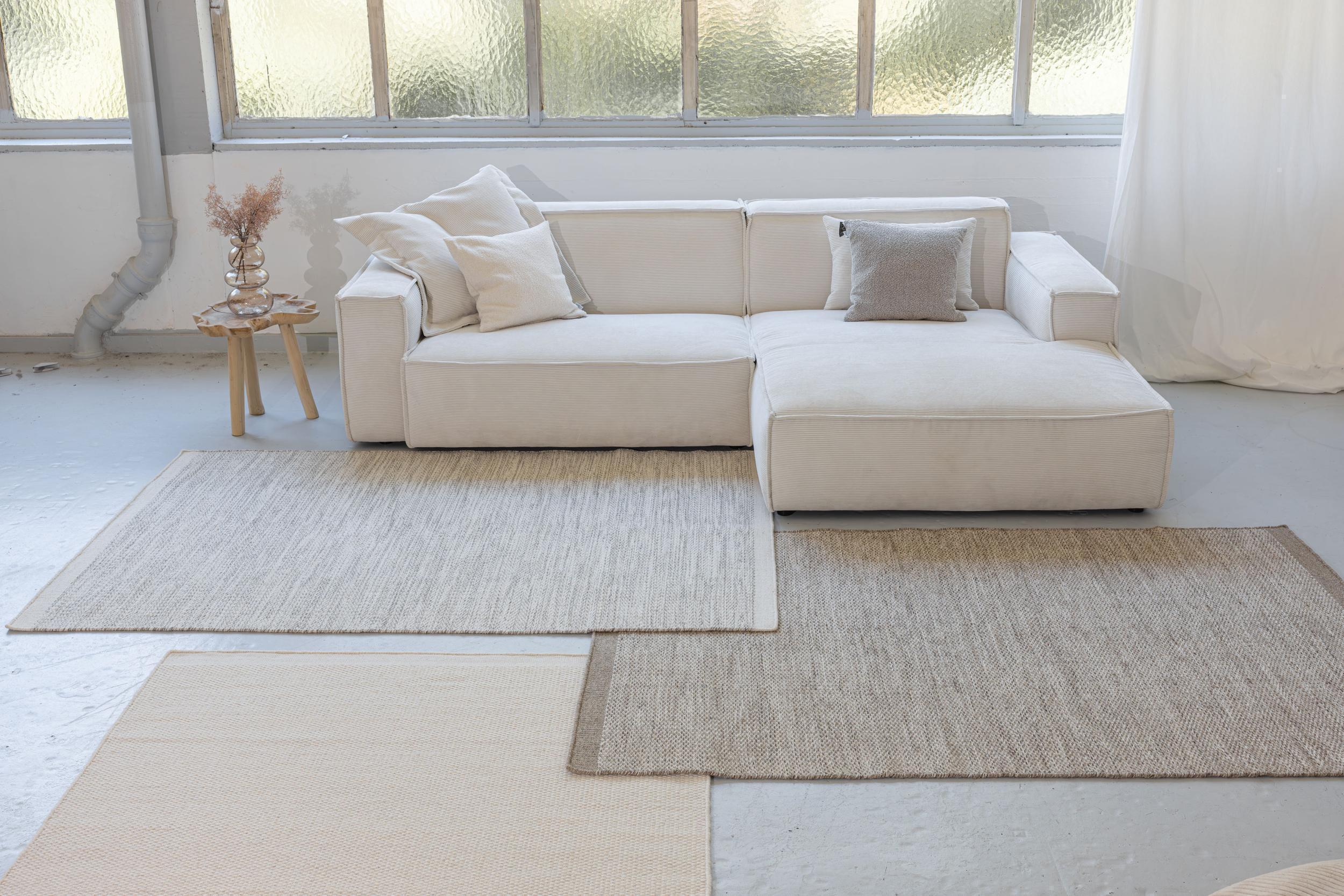


Wool rug: what the material truly delivers in everyday life
The most common question before buying is: is a wool rug easy enough to care for in everyday life, or does it become delicate quickly? The short answer: wool is more robust than most people expect. The reason is lanolin, the natural wool fat. It makes the fibers dirt- and water-repellent, so liquids stay on the surface at first instead of soaking in immediately. That gives you time when something gets spilled.
A wool rug brings noticeable substance to a room. It keeps things pleasantly warm in winter and has a temperature-balancing effect in summer. The dense, voluminous fiber structure absorbs sound, which makes a perceptible difference especially on hard floors such as parquet or tiles. In addition, wool regulates the room climate: it absorbs up to one third of its own weight in moisture without feeling wet, and releases it again when the air is dry. The room instantly feels warmer and calmer.
One more practical point: wool is antistatic and therefore attracts less dust than synthetic fibers. And the high elasticity means that pressure marks from furniture spring back out. If you want to buy a rug that lasts for years and looks natural doing it, wool is one of the most solid choices.
Is a wool rug easy to care for? Vacuuming, stains, cleaning
The most important care measure is simple: vacuum once a week. Under normal circumstances, that is all it takes to keep a wool rug looking good for a long time. The lanolin effect keeps the worst dirt on the surface anyway.
With stains, speed is what counts. An example: the glass of red wine tips over on the living room rug. Because lanolin repels the liquid at first, you have a moment. Blot immediately with an absorbent cloth, pressing lightly, but do not rub. Rubbing roughens the fibers and works the stain in deeper. For cleaning, use mild, pH-neutral products specifically formulated for wool. Bleach and aggressive chemicals damage the fibers and have no place on a wool rug.
A wool rug should neither be soaked nor wrung out. After damp cleaning, lay it flat to dry away from any heat source, no hairdryer and no direct sunlight, otherwise the wool can shrink or discolor. For a thorough refresh, a professional deep clean once or twice a year is recommended, depending on how heavily the rug is used.
Why a new wool rug sheds and when it stops
A new wool rug sheds in the first few weeks, and that is completely normal. During spinning, short fibers remain that are not yet firmly anchored in the yarn. These loose fibers come away at first, until the pile has settled. With genuine wool rugs, this shedding is even considered a quality characteristic, it is a good sign, not a defect.
Here is how it plays out in practice: a new wool rug loses fibers during the first four to six weeks. Simply vacuum briefly and regularly during this period, and you will get through the worst of it quickly. With some rugs, light shedding can continue occasionally for up to a year, but it decreases noticeably. If individual threads stand out prominently, trim them with small scissors. Do not pull them out, as that would damage the pile.
Wool rug for allergy sufferers and families with pets
Wool contains lanolin, which makes it difficult for house dust mites to thrive. Unlike in synthetic fibers, mites find it hard to multiply in wool. There is also an often underestimated effect: a wool rug binds dust from the air, which you then remove with the vacuum cleaner. This can noticeably improve indoor air quality.
For allergy sufferers, pile height is decisive. Low-pile variants are recommended because they can be vacuumed thoroughly with ease. High-pile, shaggy, and tufted wool rugs are less suitable here. An everyday example: a family with a dog in a terraced house does well with a low-pile wool rug. It binds dust, is antistatic, and can be kept clean quickly, while a high-pile rug demands considerably more effort. Wool is also naturally flame-resistant, a safety advantage in the home.
Wool rug on underfloor heating: what to look out for
A wool rug works well with underfloor heating. It has a comparatively low thermal resistance, so the warmth does reach the room. Hand-knotted wool rugs also have no glued backing, so you can place them over a heated floor without concern.
Pile height matters here. An example: in an older building with underfloor heating, choose a low to medium pile height and avoid too dense a knotting, so that the warmth can circulate. Too thick and too dense will reduce the heating performance. One further point to note: for permanently damp rooms such as the bathroom, a wool rug is not suitable, because the material gradually deteriorates with constant moisture.
Hand-knotted, hand-tufted, or machine-made: what this means for durability
The method of production has a strong influence on how long your rug will last, and also explains the differences in price.
- Hand-knotted: Thousands of individual knots, no glued backing, the pattern appears mirrored on the reverse side, and the fringes are part of the warp threads. These rugs last 60 to 100 years under normal residential use, and exceptional pieces even considerably longer.
- Hand-tufted: The backing is glued with canvas and latex, which conceals the knot structure. Such rugs typically last 5 to 15 years, after which the latex layer ages.
- Machine-made: Less expensive to purchase, fringes are usually only sewn on and decorative. The lifespan is generally 8 to 20 years before the pile wears down.
If you think long-term and want to buy a rug that accompanies you over decades, a hand-knotted wool rug is the most sustainable choice. Those who prefer to stay more flexible will find a suitable starting point in hand-tufted and machine-made options. Wool remains more robust than many natural fibers, a pure sisal rug or a jute runner tends to feel rustic and scratchy, while wool feels soft underfoot.
The right size for the living room, dining room, and bedroom
Size ultimately makes more of a difference than the pattern. A rug chosen too small makes the room look lost and visually separates the furniture from one another. These rules of thumb will help you:
Living room
In front of the sofa, the rug should extend approximately 20 to 30 cm beyond the sofa width on each side. Very common standard sizes are 170x240 cm and 200x300 cm. Ideally, leave 20 to 40 cm between the edge of the rug and the wall, this makes the rug look deliberately placed.
Dining room
Under the dining table, the rug must be large enough so that the chairs still stand on it even when pushed back. In practice, this means at least 60 to 75 cm longer and wider than the table. For a round dining table with a diameter of 100 cm, a round rug with a diameter of 200 cm is a good fit.
Bedroom
Here the rug should extend approximately 50 to 70 cm beyond the bed on each side, so that you step onto something soft in the morning rather than onto a cold floor.
Buying a wool rug: a brief decision guide
A quick summary to help you decide with confidence: a wool rug is warm, sound-absorbing, antistatic, and dirt-repellent thanks to lanolin. Care is limited to weekly vacuuming and quick blotting when stains occur. For everyday life with family and pets, choose low pile; for underfloor heating, choose a low to medium pile height. Pay attention to the method of production if maximum durability matters to you, and measure your room before buying. You will then get a wool rug that lasts for years and makes the room calmer and more comfortable.
