


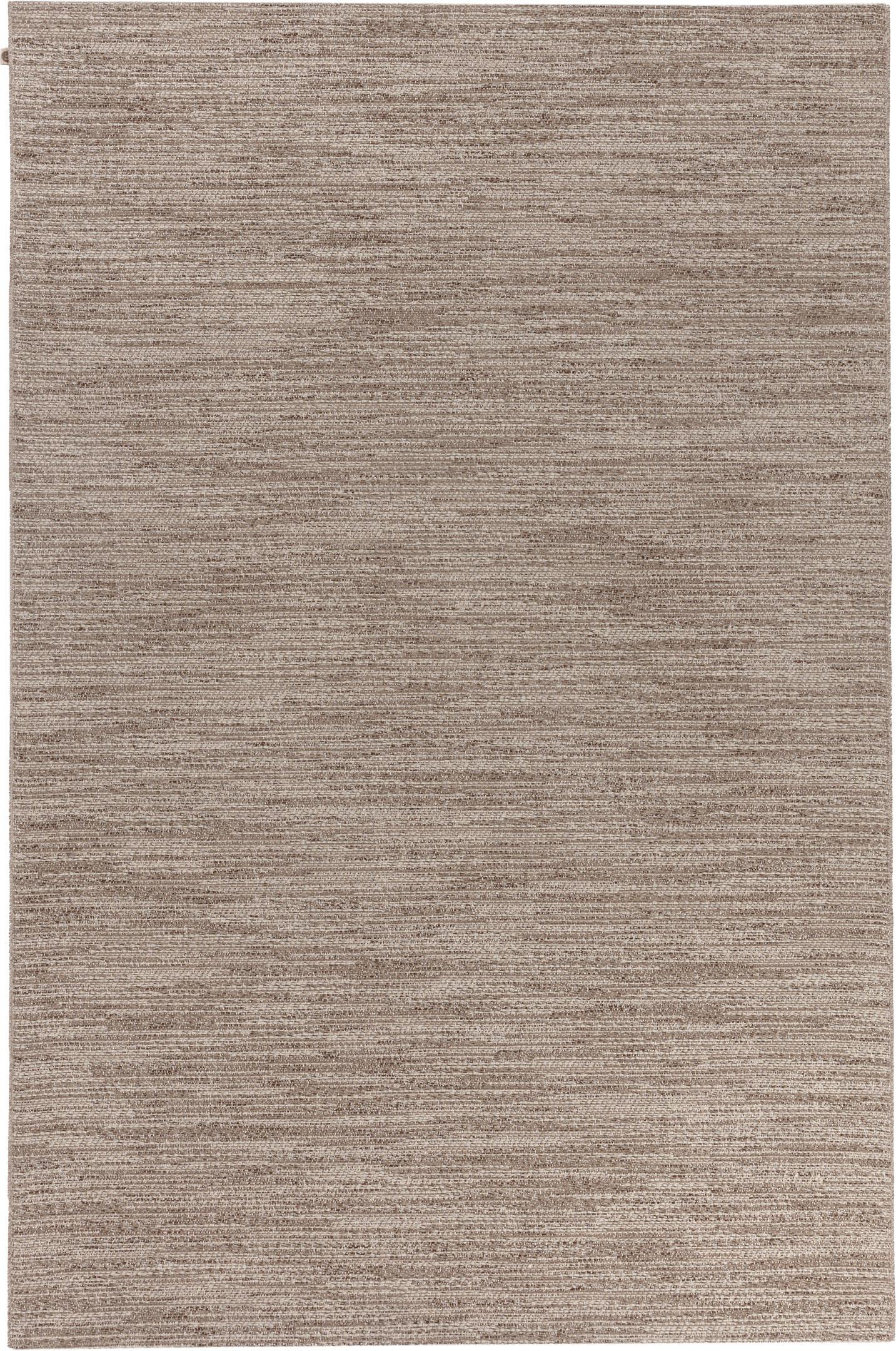


Low-maintenance rugs: beautiful living without constant effort
You want a rug that keeps up with everyday life and still looks good after a few months. That is exactly what low-maintenance rugs are made for. They are dirt-resistant, robust and quick to clean again. Not a daily source of worry, but a rug you lay out and simply use. Children, dogs, crumbs at the dining table: a low-maintenance rug handles all of this when the material and pile are right.
The difference between a hard-wearing rug and a delicate one almost always lies in the material and the pile height. Knowing this before buying saves you trouble and cleaning stress later on.
Which material really makes a rug low-maintenance
The fiber determines how easily dirt can be removed. Three materials perform strongly in everyday use:
- Polypropylene: absorbs almost no moisture. Cleaning liquid works on the surface instead of deep in the fiber, so you can wipe stains off practically from the top. Thanks to the dense fiber structure, dirt does not penetrate deeply and can be removed from the surface. It is also water-repellent and UV-resistant, which makes it popular as an outdoor rug.
- Polyamide: even more hard-wearing than polypropylene and therefore often used for heavily trafficked areas. It is also soft, lint-free and low-maintenance.
- Polyester: resistant to light and shape, and lint-free. A good choice if you want color-fastness and low effort.
Natural fibers also have their place: sisal is considered extremely hard-wearing and is popular with cat owners because the material is even used for scratching posts. Quality remains important: cheap synthetic-fiber variants are poorly suited to intensive use. With high, dense fiber quality, on the other hand, the rug still looks well-kept even after months of use, because the fibers withstand the strain.
Low pile, flatweave or high pile: which is easier to clean
The pile height determines the maintenance effort:
- Flatweave (approx. 0.5 cm): almost no pile height, easy to vacuum and to place under furniture. Leaves no pressure marks, ideal wherever chairs are moved often.
- Low pile (approx. 1 to 15 mm): easy to maintain, less prone to tangling, knotting and pilling. Pet hair gets caught less.
- High pile (16 to 40 mm): fluffy and soft, but more demanding to maintain, because hair and crumbs get caught deeper.
Loop pile has a closed surface, so dirt stays on top and is easy to vacuum. A patterned or mottled rug also visually conceals small stains. In households with pets, the rule is: avoid models with fringes, since these come loose quickly during scratching and play.
Low-maintenance rug by room: the right piece in the right place
Living room
Here the rug faces a lot of foot traffic and a lot of strain. Low pile made of polypropylene or polyamide is robust and quick to vacuum. For sizing, the rule is: the rug should extend about 20 to 30 cm beyond each side of the sofa, or be roughly 40 to 60 cm longer than the sofa itself. Common standard sizes are 160 x 230 cm, 200 x 290 cm and 240 x 340 cm.
Dining room
A dining rug must withstand crumbs, spilled drinks and chairs being pushed back. Flatweave or low pile is practical because chairs glide more easily and crumbs are simple to remove. Rule of thumb for size: the rug should be at least 60 to 75 cm larger all around than the table, so that even chairs pushed back still stand completely on it. For a table with 6 chairs, about 200 x 290 cm works well, for 8 chairs 240 x 340 cm. In open living-dining areas, a round rug softens strict lines.
Bedroom
Here it can be softer. If the bed stands entirely on the rug, it should, depending on the model, extend 40 to 90 cm beyond the edge of the bed, so your feet land softly when you get up.
Hallway and outdoor
The hallway rug catches street dirt and wet shoes. This is where insensitive, easy-to-clean material belongs, in muted or mottled colors rather than light tones. An outdoor rug made of polypropylene is weatherproof, UV-resistant and moisture-resistant: simply sweep it off or hose it down with the garden hose, and it dries quickly.
Low-maintenance rugs for families and pets
This is the most common concern, and it is quickly resolved. For children and pets, low pile is the better choice, because hair gets caught in the fibers noticeably faster with high pile. Synthetic rugs made of polypropylene or polyester are robust and easy to clean, even after a pet accident. Flatwoven synthetic-fiber rugs are especially resistant to scratching and wear.
In case of a urine accident: blot as quickly as possible with paper towel or a white cloth. If an odor remains, enzymatic cleaners or professional cleaning can help. This way, your rug stays practical for everyday life, even with a crawling child and a dog.
How to care for your rug properly
The effort involved is manageable:
- Vacuuming: at least once a week thoroughly, regardless of pile length. With children, pets or heavy use, daily vacuuming can make sense. A vacuum cleaner with a HEPA filter helps reduce allergens.
- Stains: blot immediately, never rub, or the stain will spread and be pushed deeper into the fiber.
- Home remedies: sprinkle baking soda evenly over the stain, dampen with water, let it sit and vacuum once dry. This also helps against odors.
- Test spot: test any cleaning product first on an inconspicuous area, so the colors do not suffer.
- Deep cleaning: clean more thoroughly every 12 to 24 months. For private households, a professional cleaning once a year is usually enough, more often for allergy sufferers or pet owners.
Buy low-maintenance rugs online at Homerugs
You choose material, pile height and size to fit your room and simply lay the rug out. No tradesperson, no renovation. A low-maintenance rug does not have to be uncozy: with the right low pile, you get warmth underfoot and still a dirt-resistant rug that easily keeps up with everyday life.
