
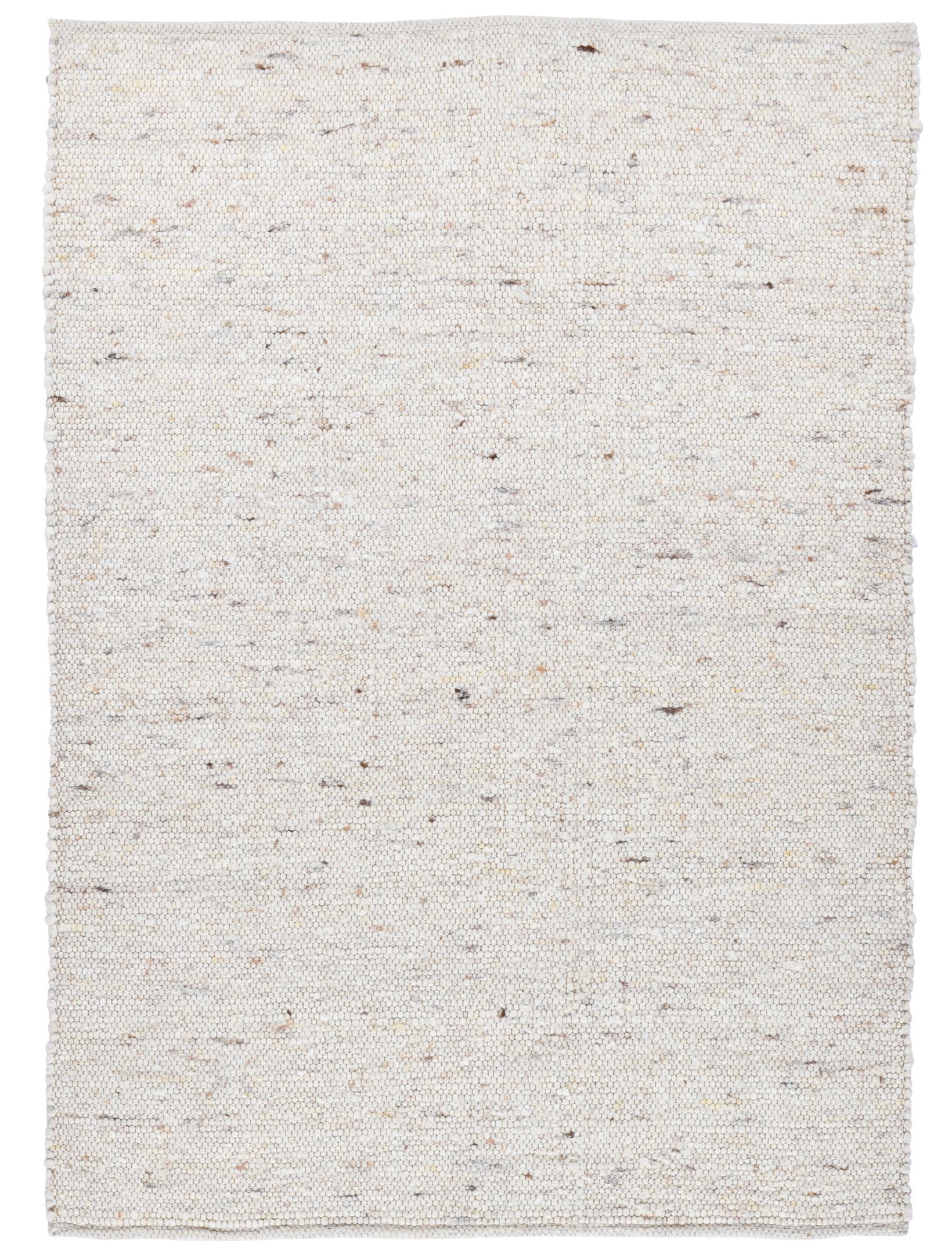
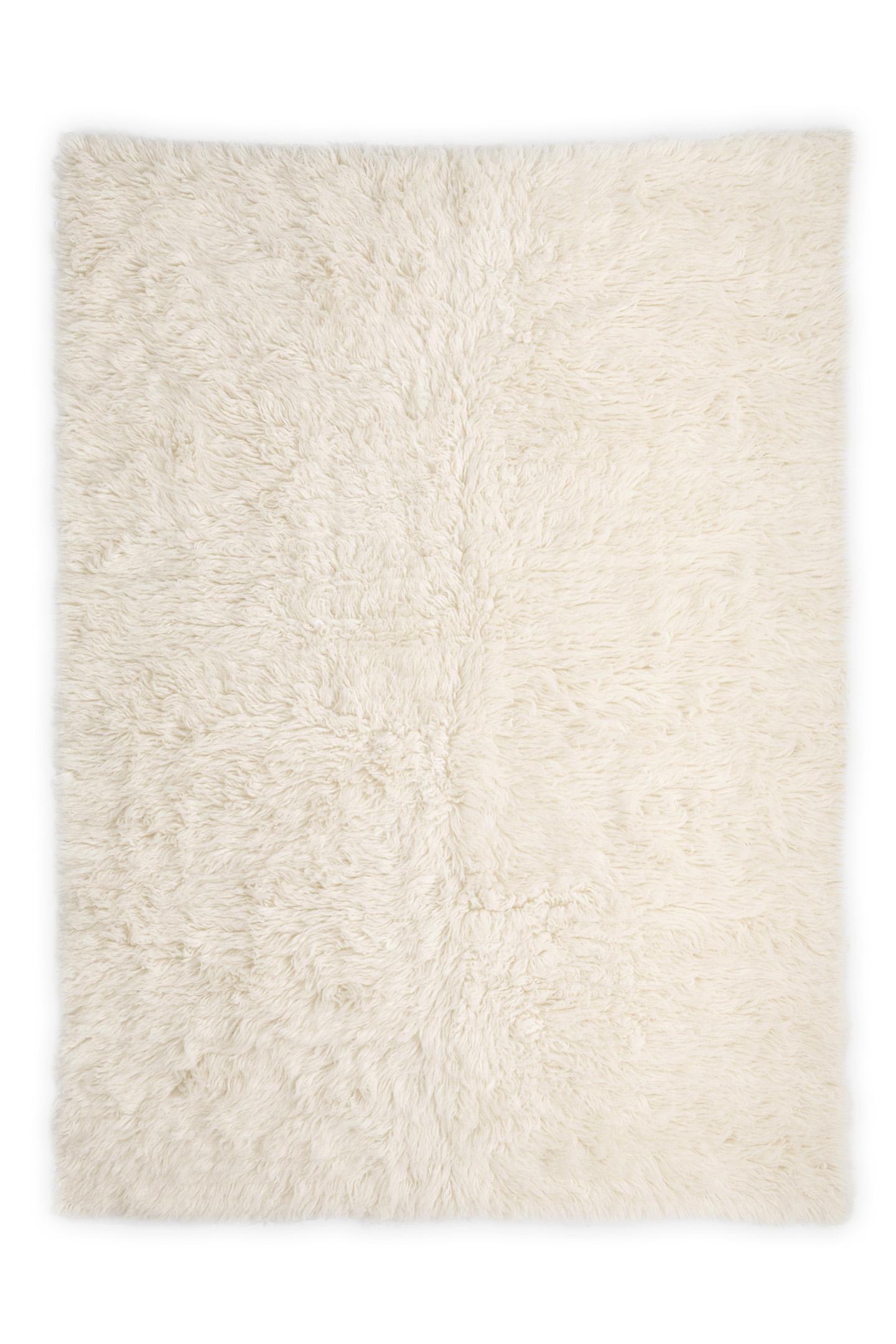


Virgin wool rug: why the higher price pays off over the years
A virgin wool rug costs more to buy than a model made from synthetic fiber. That is the point where many hesitate. But calculate the price over the period of use, and the picture changes. Virgin wool is shorn from the living sheep, which preserves all the valuable fiber properties: elasticity, dimensional stability, and a natural dirt resistance. A synthetic fiber rug looks tired after just a few years and ends up in the trash. A good wool rug retains its structure and color for many years.
The fibers recover after being compressed, barely absorb dirt, and barely build up static charge. That is exactly what makes virgin wool less expensive over time than the first glance at the price tag might suggest. You buy once and buy right, rather than three or four times at a mediocre level.
Hand-knotted or machine-made: how long your wool rug really lasts
The lifespan depends heavily on the manufacturing process, so there is no single figure here. A machine-made wool rug lasts around 8 to 25 years depending on use and care. A hand-knotted rug made from virgin wool can reach 50 to over 100 years with good care.
Compare that with the replacement cycle of a synthetic fiber rug, which is often worn out after a few years. Hand-woven wool rugs become heirlooms in many households, passed down from generation to generation. With proper care, a virgin wool rug is more durable than any synthetic rug, because the fibers are naturally elastic, dirt-resistant, and dimensionally stable.
Lanolin and self-cleaning: why the rug stays clean for years
Virgin wool contains lanolin, the natural wool fat. It makes the fiber dirt-resistant and gives it self-cleaning properties. A high-quality wool rug can therefore often go years without major cleaning, because the lanolin protects the fibers from soiling.
In addition: wool neutralizes odors and ensures a pleasant indoor climate. It absorbs moisture and releases it again when needed, warms in winter, and has a balancing effect in summer. Wool consists of up to 85 percent air and therefore stores heat very well. And the antistatic property prevents dust from being stirred up.
Caring for a virgin wool rug: the simple rules for everyday life
Care is simpler than the price might suggest. Vacuum once or twice a week, preferably with a flat nozzle, so that dust and sand are removed early. For spilled liquids: first absorb with absorbent kitchen paper, then gently dab residue with a damp cloth. Avoid rubbing or pressing.
Keep away from harsh products. Bleach and vinegar are out of the question, and chemical cleaners damage the delicate wool fibers. For deep cleaning, a specialist once or twice a year is worthwhile. You should avoid direct sunlight, as it can bleach the fabric. A new wool rug shedding a little at first is normal and rather a sign of quality. This settles over time.
Virgin wool rug for families, pets, and allergy-sensitive households
Especially in everyday life with children, the virgin wool rug shows its strengths. An example: a family with two young children, the apple juice tips over. Place kitchen paper on it, dab, done. The lanolin helps prevent the liquid from soaking in immediately, giving you time to act.
For allergy-sensitive households, the antistatic property is interesting because less dust is stirred up. This is considered a general tendency in the industry, but is not a medical guarantee. Check individual compatibility yourself if in doubt. In the bathroom you are better off choosing other materials, as a wool rug does not cope well with too much moisture. For living room rugs, bedrooms, and dining rooms, however, virgin wool is a robust choice; even in heavily used rooms, good qualities preserve structure and color.
Laying a virgin wool rug correctly under the sofa, dining table, and bed
The right size determines the effect. Common formats are, for example, 120 x 180 cm, 160 x 230 cm, and 200 x 290 cm. Per room, it becomes more specific:
Living room
The rug should be wider than the sofa. As a minimum, the front legs of the sofa and armchairs stand on the rug. If it is to reach fully under the sofa, choose it around 40 to 60 cm longer than the sofa itself.
Dining room
The rule here is: rug length = table length + chair depth + 25 cm clearance for sitting down. This way the chairs still stand on the rug even when pulled back. For a round table for 4 with a diameter of 100 cm, a round rug with a diameter of 200 cm fits well.
Bedroom
Around 45 to 60 cm of overhang on each side of the bed is a good guideline, so you step onto something warm in the morning.
Regarding underfloor heating: many virgin wool rugs are suitable depending on the model. As this depends on the construction and backing, check the manufacturer's information for the individual rug.
Sustainable rugs made from natural fiber: the balance adds up
Virgin wool is a renewable raw material, biodegradable, and requires no petroleum-based source materials. Those looking for sustainable rugs will find in the natural fiber wool a solution that combines durability, elasticity, and natural beauty. Wool is also naturally flame-resistant, with a significantly higher temperature threshold than most other household fibers.
Add to that the impact sound insulation: textile floor coverings noticeably improve the acoustics in a room, with impact sound improvements of at least 20 dB. The room immediately feels warmer and quieter. A virgin wool rug therefore brings living quality and lasts a long time, which makes the calculation work out over the years.
