


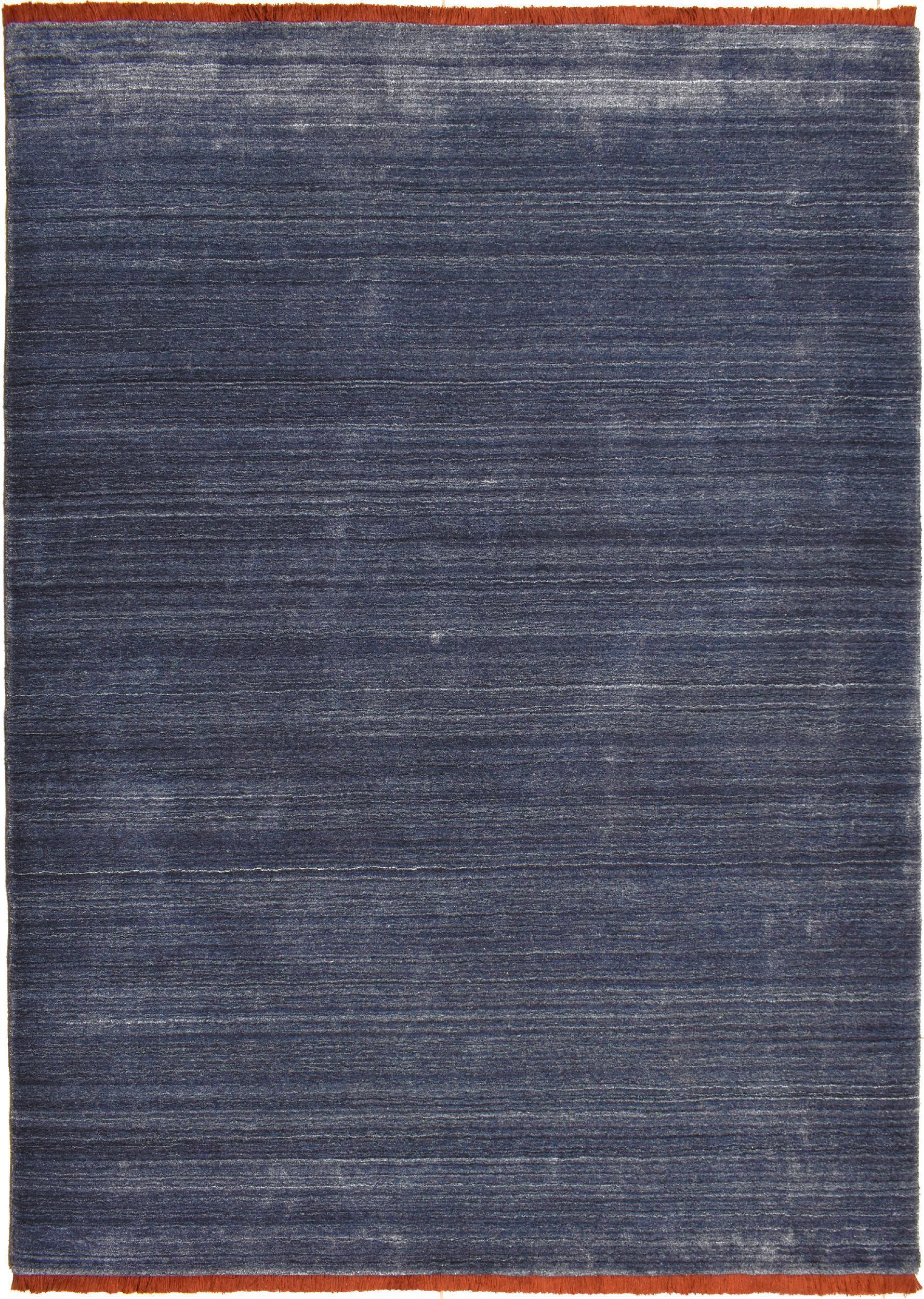


Blue Rug: Too Cool, Too Dark or Too Dominant? How to Resolve the Question
The three concerns that most often slow down a purchase are always the same: Does a blue rug feel too cool, does it make the room too dark, does the color push too strongly to the foreground? The good news is that each of these questions is resolved through the shade of blue, before you even think about size or material.
Too cool? Choose a tone with a green tint like teal, which radiates warmth. Too dark? A light blue actually brightens a room and makes it appear optically larger. Too dominant? As a surface beneath a sofa or bed, blue settles in calmly and gives the room depth rather than noise. Blue demonstrably lowers pulse rate and blood pressure and tends to be associated with positive feelings rather than melancholy. That is exactly why a blue rug works so well in living and rest zones.
Light Blue, Dark Blue or Teal: Which Shade Suits Your Room
Three shades, three effects. Once you know them, you can make your choice in a minute.
Light Blue: Airy and Brightening
Light blue rugs create a light atmosphere and make the room appear larger through optical width. In darker corners of the living room they visibly brighten things up. Ideal for small rooms and anything that should feel fresh and open.
Dark Blue: Elegant and Deep
A dark blue rug conveys a luxurious feel and becomes a calm focal point in larger rooms. Under light furniture it appears particularly striking, but also elegantly balances out darker pieces. In short: the refined color statement that grounds the room.
Teal: Between Blue and Green
A teal rug sits between blue and green and often carries a gray undertone. Depending on the light, the effect shifts toward blue or green. Teal brings warmth through its color saturation and is therefore the most versatile choice for those who waver between cool and warm.
Choosing a Blue Rug by Light Direction: North- and South-Facing Rooms
The light in a room plays a key role in whether your blue rug feels warm or cool. Two simple rules are enough.
North-facing rooms receive cool, subdued light. Here you counterbalance with warmer shades of blue: teal, teal-green or indigo with a green or violet tint. Example: a north-facing bedroom with teal and a green tint radiates warmth despite the cold light.
South-facing rooms with plenty of warm light handle the cooler tones better. In front of a large south-facing window with lots of sunlight, you are better off reaching for navy blue rather than teal, because the cooler blue balances out the warm light. Blue can also lower the subjectively perceived temperature, which is noticeably pleasant in front of sunny facades.
Combining a Blue Rug: Sofa and Wall Colors That Work
Blue is an accommodating partner. With neutral tones such as beige, white and gray, a balanced, calm picture emerges. If you want more tension, you set warm accents like coral or mustard yellow against it.
- Gray sofa: a dark blue rug plus a brass side table. The gray stays calm, blue brings depth, and the brass sets the warm highlight.
- Light furniture in sand or white: a dark blue rug appears striking here and gives the light zone a clear anchor.
- Dark furniture: a lighter shade of blue softens the visual heaviness and opens up the room.
This is how a blue rug works both in classic and modern interiors. Those who prefer something more individual will find expressive patterns in blue and teal among our designer rugs.
Blue Rug for the Living Room and Bedroom: The Right Size
The most common mistake when buying a rug is choosing one that is too small. A few rules of thumb will prevent that.
Living Room
The rug should be 40 to 60 cm longer than the sofa, otherwise the seating area feels cramped. Common living room sizes are 160x230 cm, 200x290 cm or 240x340 cm, with open-plan layouts tending toward the larger formats.
Bedroom
If you want the entire bed to stand on the rug, plan for 40 to 50 cm of overhang on each side. For a queen-size bed, 200x290 cm fits with around 40 cm of overhang on each side; for king-size, 240x340 cm is more appropriate. As an alternative, you can place narrow runners of about 60 cm width on both sides.
Dining Room
The rule here is: rug length = table length plus chair depth plus 25 cm clearance. The rug should extend at least 75 cm beyond the table edge, so that the chairs remain fully on the rug even when pushed back.
Material for Everyday Use: Wool, Cotton, Viscose, Synthetics
The material determines how robust and easy to care for your blue rug is in daily life. You will find more details on the relevant material pages.
- Wool: absorbs moisture, neutralizes odors and is resistant to stains thanks to its natural oils. Wool is antistatic, picks up less dust and dampens footstep noise. A high-quality wool rug lasts for decades with proper care.
- Cotton: absorbs moisture similarly to wool, has a thermoregulating effect and is somewhat lighter. Smaller cotton rugs can often be washed in the machine without any problems.
- Viscose: finely spun, soft and with a silky sheen, but less elastic. Suitable for low-traffic rooms such as the bedroom, but not for entryways or damp rooms, as viscose retains moisture for a long time.
- Synthetics (polypropylene, polyester): durable, long-lasting and easy to care for. Ideal for heavily used areas; polypropylene is often even weatherproof.
Caring for Blue Rugs: Stains and Cleaning by Material
A dark or blue rug often shows crumbs and fluff less clearly than a light one. When it comes to stains, the most important thing is to act in a way that suits the material.
- General: vacuum thoroughly at least once a week, more often in heavily used rooms. Dab liquids from the outside inward so the stain does not spread.
- Wool: never treat with soap or dish soap, as this permanently damages the fiber. Dab a red wine stain on a wool rug cold from the outside inward, without warm water and without soap. New wool rugs shed at first; remove this fluff by hand.
- Viscose: vacuum only with a soft attachment; stiff brushes damage the pile.
- Synthetics: resistant to water and stains; mild rug shampoos and household remedies such as vinegar or shaving foam work well.
For high-quality rugs, a professional cleaning every two to three years is recommended. This keeps the blue tone rich and clear for years to come.
