


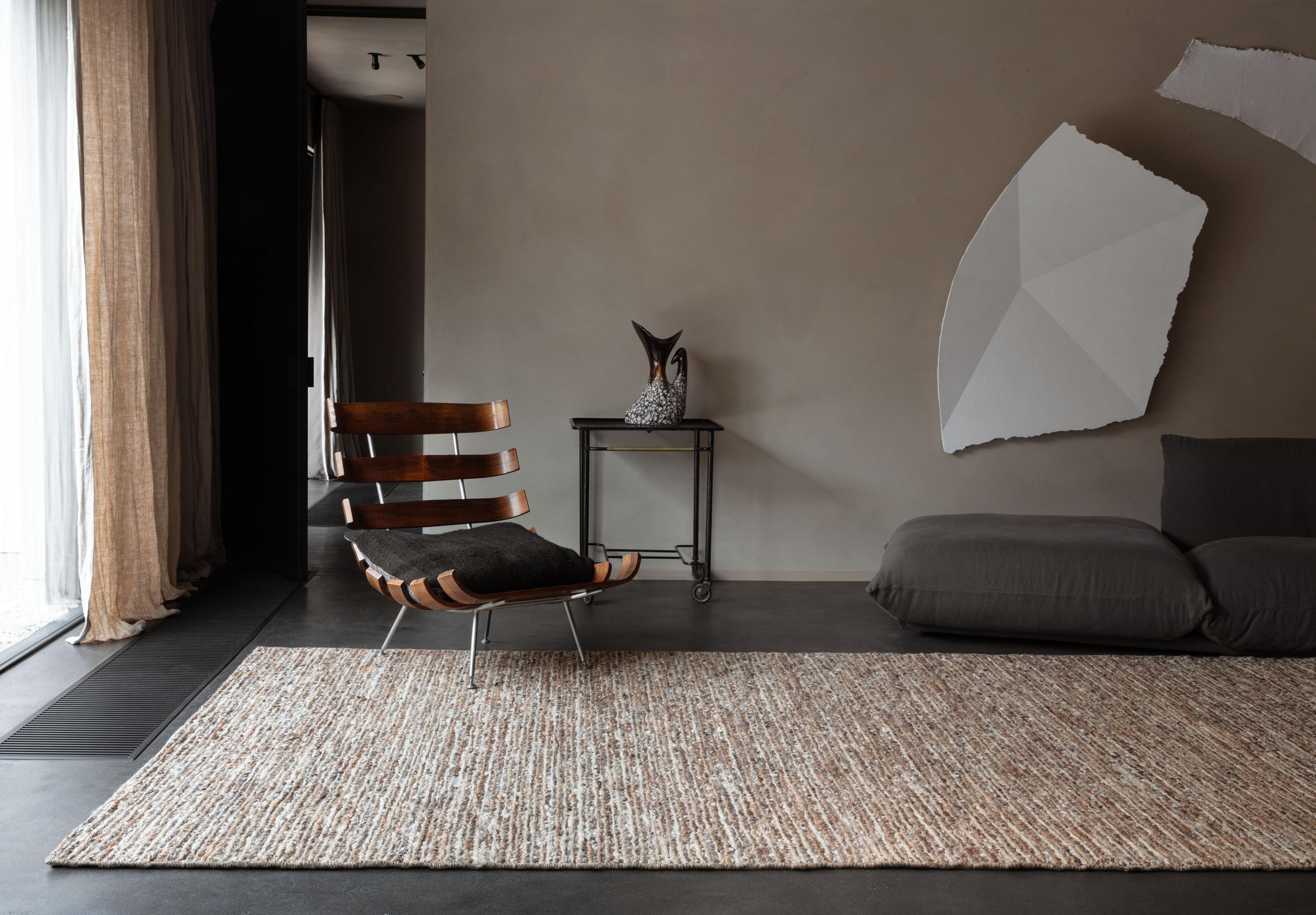


Jute rug: warm natural fiber for calm, stylish rooms
A jute rug instantly brings a natural, warm base tone into the room. The fiber shows tones from light beige to golden brown, and because jute is a natural product, no two rugs are exactly alike. That is precisely what defines the look: authentic, calm, understated.
If you like a Scandinavian, natural, or boho style, a rug made from jute is the foundation that holds everything together. It pairs with wood, with plants, with light-colored walls. And it does what a good rug should do: it dampens sound, defines a zone, and makes the room feel warmer and more inviting. No renovation, no tradesperson. Lay it down, put the furniture on top, done.
In this overview you will learn how jute feels, where it lies safely, how to care for it, and which size suits your setup. That way you make a purchasing decision that works in everyday life.
What jute is and how a jute rug feels
Jute is a bast fiber from the bark and stems of the jute plant, grown mainly in India and Bangladesh. The fibers consist primarily of cellulose and lignin and sit in the middle, woody section of the stems. A distinction is made between brown jute, with more robust, softly silky fibers, and white jute, which is somewhat less resilient.
In terms of feel: jute is a strong, durable material and therefore rarely fluffy-soft. The surface feels natural and slightly textured, noticeably more pleasant than a scratchy mat. Those who prefer something softer underfoot can place a cotton underlay beneath it, which noticeably increases comfort.
The fiber acts as a sound and thermal insulator and regulates the indoor climate in winter as well as summer. Jute is also antistatic, meaning it does not build up static electricity, and is considered hypoallergenic, which makes it interesting for allergy sufferers. The natural structure is breathable and contributes to a pleasant room atmosphere.
Jute rug or sisal rug: the feel comparison for barefoot rooms
Both are natural fiber rugs, but they differ considerably in feel. A sisal rug has a firm, coarse structure and is very robust. Jute is softer, finer, and smoother, though somewhat less resilient.
For barefoot rooms, this is decisive. If you want to step comfortably onto the rug in the morning, jute is the better choice, because the smoother fiber is friendlier underfoot. Sisal excels where there is a lot of traffic and the rug needs to withstand more.
Short rule: Jute for calm, barefoot-friendly areas such as bedrooms and cozy living rooms. Sisal for higher-traffic surfaces. One example: a flatwoven jute rug beside the bed in a Scandinavian bedroom is pleasant to step onto in the morning and brings calm to the room.
Moisture clearly explained: where your jute rug lies safely
Here is the most important information before buying, stated directly: jute is sensitive to moisture. Wet jute can warp, become heavy, and lose firmness, and with prolonged moisture and poor ventilation it tends to mold. A jute rug is therefore made for dry living areas, not for damp rooms.
Well suited:
- Living room, as a base under the seating group or as a living room rug under the coffee table
- Bedroom, barefoot-friendly beside or under the bed
- Dining room under the table, in normally frequented households
- Quiet areas such as a reading nook
Better to avoid:
- Bathroom and kitchen due to moisture and splashes
- Outdoor and balcony in wet weather (only fine on dry days)
- Heavily trafficked hallways and entryways with moisture and dirt
Jute is best placed in shaded, dry, well-ventilated rooms. Direct, prolonged sunlight can cause the color to fade, so it is better not to place the rug in full sun in front of a window. A golden-brown jute base tone in a boho living room with urban jungle plants looks best in a bright but shaded spot.
Regarding slip resistance: on smooth floors, jute does not stay in place on its own. A separate anti-slip underlay is a sensible accessory; it provides grip and also protects the underside of the fibers.
Caring for a jute rug: vacuuming, blotting, keeping it dry
Care is straightforward, as long as you follow one rule: keep it dry. Real jute is not washable and does not belong in the washing machine, because too much water and mechanical stress damage the fibers and can ruin the rug.
For everyday care, this is sufficient:
- Vacuum regularly, ideally weekly and with a soft brush attachment, on both sides if possible.
- Simply beat out or vacuum up dry dirt.
- Treat odors with baking soda applied dry: sprinkle on, leave to work, vacuum off, with no additional moisture.
- Rotate the rug from time to time so that it wears evenly.
For stains, the rule is: blot rather than rub. If a glass of water tips over by the sofa, blot up the liquid immediately with a dry cloth and let the spot dry thoroughly. A small amount of spilled water is unproblematic as long as you absorb it quickly. For more severe soiling, test a mild cleaning solution on an inconspicuous area first and work with as little water as possible. Aggressive chemicals, heavy scrubbing, and pressure washers damage the fiber and should be avoided. If a stain is deeply set, professional cleaning is the gentler alternative to wet cleaning at home.
Round and rectangular shapes: which suits your room
The shape plays a role in how calm a room feels. A rectangular jute rug creates clear structure, but requires the right size and placement, otherwise the room can feel unbalanced. Round rugs are more forgiving: they give straight-lined furniture a softer feel and do not need to be positioned perfectly. A round jute rug with a 160 cm diameter under a straight-lined armchair turns a corner into an inviting reading nook.
A few practical guidelines for size:
- Common standard sizes for the living room are 140x200 cm or 160x230 cm.
- The rug should be at least as wide as the sofa, ideally around 20 cm wider. As a guideline, it may extend 20 to 30 cm beyond the sofa on each side.
- For a 2-seater sofa between 180 and 200 cm wide, at least 160x230 cm is a good fit.
- In large rooms, 200x290 cm brings the entire seating group onto the rug and creates a cozy island.
- Under the dining table, the rug should be at least 60 cm longer than the table on each side, so that the chairs remain on it when pulled back.
- Round jute rugs are usually available in diameters of approximately 80 to 200 cm.
A tip for character: layering. Lay down a large jute base of, for example, 240x340 cm and place a smaller patterned rug (around 160x230 cm) on top. This way you combine the calm natural fiber with a colorful or patterned designer rug as a focal point.
Sustainable rugs made from jute: the golden fiber at a glance
Jute is considered one of the most important natural fibers in the world alongside cotton and is popularly called the golden fiber. It ranks among the strongest and most durable natural fibers and is a renewable raw material, which is why jute is a popular starting point for sustainable rugs.
How long a jute rug lasts depends on use and craftsmanship. Handwoven models in quiet rooms last considerably longer than heavily used pieces. One thing is clear: choosing a dry location, vacuuming regularly, and blotting stains immediately noticeably extends the lifespan.
All in all, a jute rug is the right choice if you want a genuine natural look that brings warmth and calm to the room, placed where it stays dry. Then you get a rug with character that works well in everyday life.
