


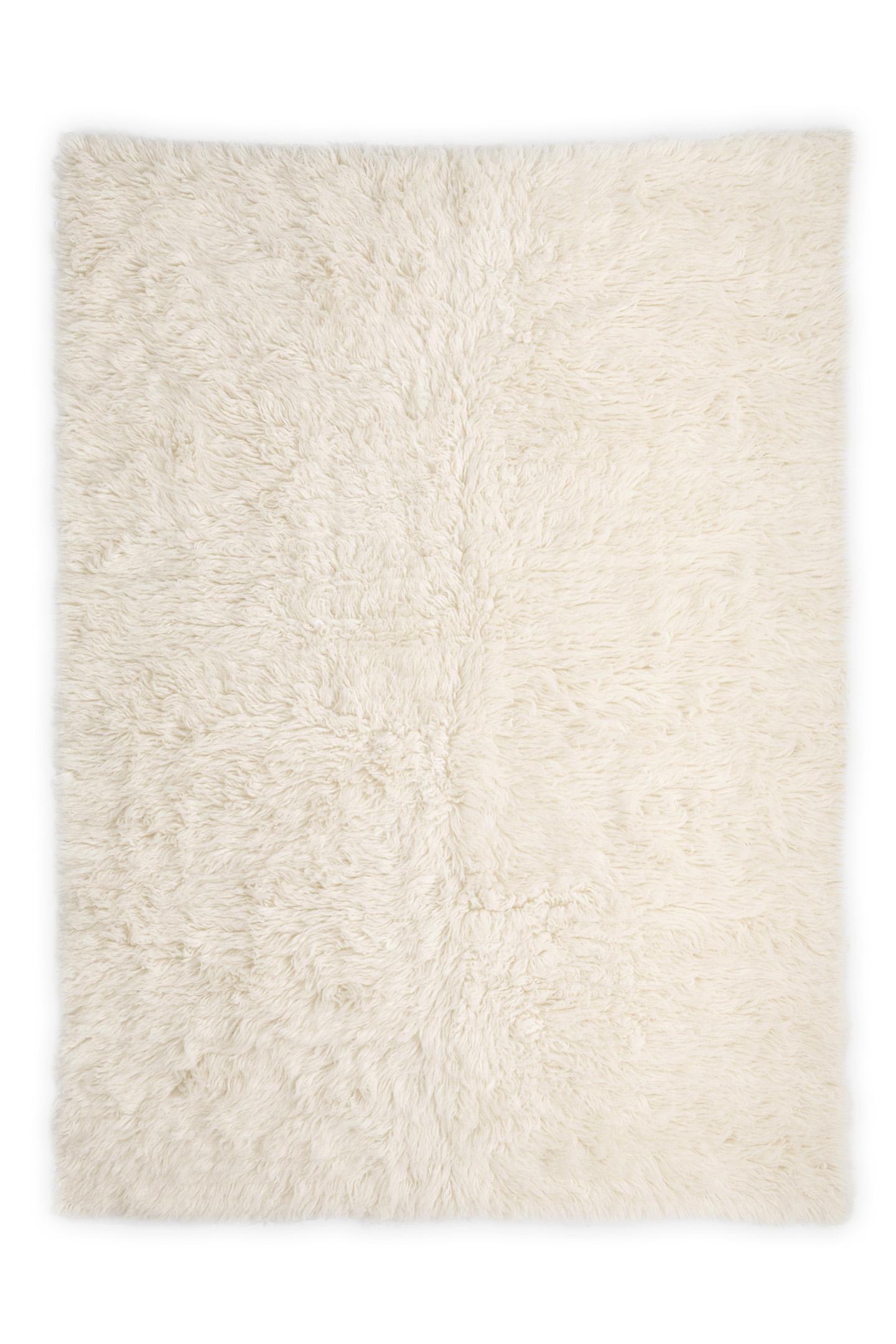


Berber Rug: what you buy and why it feels authentic
A Berber rug brings genuine craft culture into the room. It is thick, warm underfoot and noticeably dampens sound. The room immediately feels warmer and calmer. That is exactly what drives the purchase: you want a characterful piece with history that elevates the room, and a distinctive aesthetic to match.
The key question before buying is: is the piece truly authentic and hand-knotted, or a machine-made copy in the Berber style? The authentic Berber comes from Morocco, Algeria or Tunisia and is made from thick wool. The style copy looks similar in the product photo, but is often made from synthetics such as nylon or olefin and is machine-produced. When you know what to look for, you make the right choice before spending your money.
Authentic or Lookalike: the 5 characteristics of a hand-knotted Berber rug
These five points separate the original from the machine-made product:
- Material: A high-quality Berber rug uses a cotton warp and a pile layer of virgin wool. If nylon or olefin appears in the description, you are looking at a style copy.
- Origin: An authentic Berber comes from Morocco, Algeria or Tunisia. Production in Turkey, India or Pakistan is possible, but alone says nothing about genuine handwork.
- Knotting rather than weaving: Hand-knotted means that every knot is tied individually. On authentic pieces, the back shows the pattern in mirror image and slight irregularities.
- Unique character: Small variations in pattern, color and edge are part of it. Perfect symmetry and flawless machine edges point to industrial production.
- Wool quality: Genuine Atlas virgin wool feels springy underfoot and slightly greasy, because it contains lanolin. Synthetics feel smoother and cooler.
A typical real-life example: you compare two online listings. One is a 15/15 knotting from Morocco, the other is nylon goods from Turkey at half the price. The price difference is explained by material and handwork. With the nylon you buy the look; with the Moroccan piece you buy the substance that lasts two decades.
Material and Wool: why Atlas virgin wool with lanolin makes the difference
Traditional wool for Berber rugs comes from sheep in the highlands of the Moroccan Atlas Mountains. This wool contains a high proportion of lanolin, the natural wool fat. This makes the rug springy underfoot, durable, dirt-repellent and sound-absorbing. Wool with a high fat content is considered especially long-lasting and can be thoroughly cleaned.
The wool brings even more: it absorbs moisture and releases it again, which has a positive effect on the indoor climate. The wool fibers have a scaly surface with small hollow spaces, which binds dust rather than distributing it in the air. An authentic Moroccan rug is therefore more robust and more livable than any synthetic copy. Compared to classic rugs such as a finely knotted Persian rug, the Berber lives from its thick, coarse wool and its deliberately simple patterns.
Beni Ourain Rug: the natural-white original with diamond pattern
The Beni Ourain rug is the best-known form of the Berber. It is named after the Berber tribe of the same name in the Middle to High Atlas of Morocco. Typical features are the natural-white ground, the high pile and dark diamond patterns. High-quality examples develop an increasingly soft, silky surface over time. This is a sign of aging and craftsmanship, not wear.
As a bedroom rug, the Beni Ourain comes into its own particularly well: natural-white against dark wooden furniture, it creates a calm, bright contrast that you stand on barefoot in the morning. This combination explains why the Beni Ourain is also so popular in modern Scandi rug concepts. Light wood, clean lines and a warm wool rug go together.
Buying a Berber Rug Online: reading knotting, weight and origin correctly
When buying online, you decide based on the product specifications. Knotting density is calculated from the number of knots per 10 cm in the warp and weft directions and extrapolated per square meter. The 15/15 knotting is the most common density; a 25/25 knotting as the finest variant is rare on the market. In addition, the terms simple, double or triple describe whether the knotting thread is laid once or multiple times.
Important: knotting density and weight alone say little about value or price. Look at material (virgin wool rather than synthetics), origin and knotting type together. This is how you read a listing correctly and recognize whether the price matches the substance.
For size: as a living room rug, the Berber should be large enough for at least the front legs of the sofa and armchairs to rest on it. This way the rug connects the furniture into a seating group. In the bedroom, lay it crosswise under the bed so that you step onto wool when you get up. In the hallway, a narrower format works well as a runner.
Caring for a Berber Rug: the first 6 to 8 weeks and beyond
A new Berber rug sheds at the beginning, and that is completely normal. The surface of authentic Berber rugs is shorn a second time, and the loose fibers come away during the first few weeks. This is a sign of authenticity, not a defect.
During the first 6 to 8 weeks, gentle sweeping or light vacuuming is sufficient. You should avoid using a beater vacuum, as it damages the pile and the fabric. After that, the rug is easy to care for: regular vacuuming is enough. Note that light wool fibers are susceptible to stains from colored liquids such as coffee or red wine. Blot spills quickly with a clean cloth. A well-maintained Berber rug lasts 20 years or longer, sometimes several decades.
Who benefits from a Berber Rug: families, allergy sufferers, rental apartments
For families, the Berber is robust and sound-absorbing, which is a real advantage in busy rooms. The durable wool handles everyday life with ease.
For allergy sufferers, the lanolin is a point in its favor: it repels house dust mites and makes it harder for them to multiply. Pay attention to the pile here, however. A high, plush pile gives dust more of a foothold and makes cleaning more difficult. A short, dense pile is the better choice for allergy sufferers. An allergy-sensitive household therefore opts for the short-pile, dense variant rather than the high-pile plush.
For rental apartments, the rug is ready to use immediately. Simply lay it out and enjoy it, no renovation, no tradespeople needed. When you move out, you roll it up and take it with you.
