

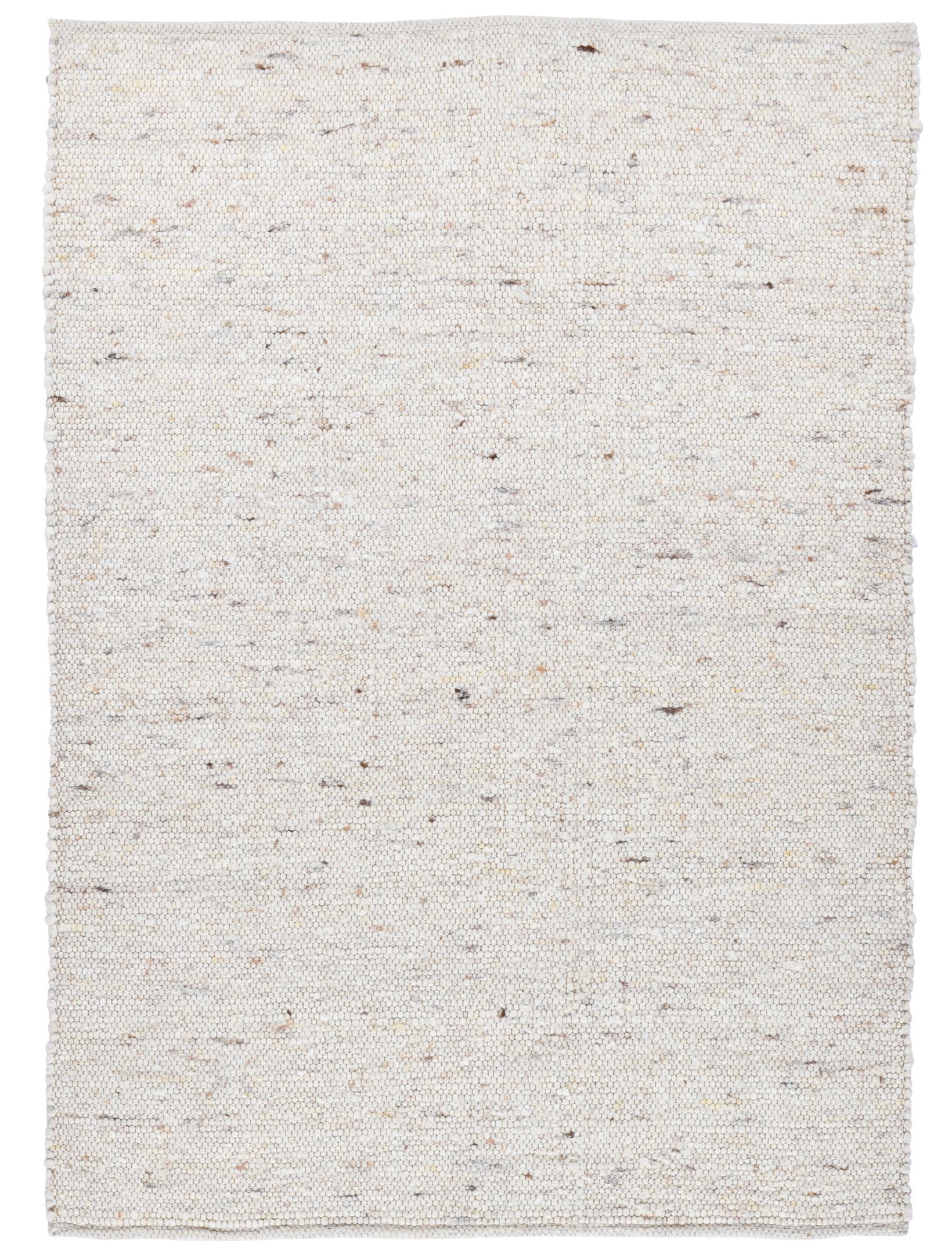
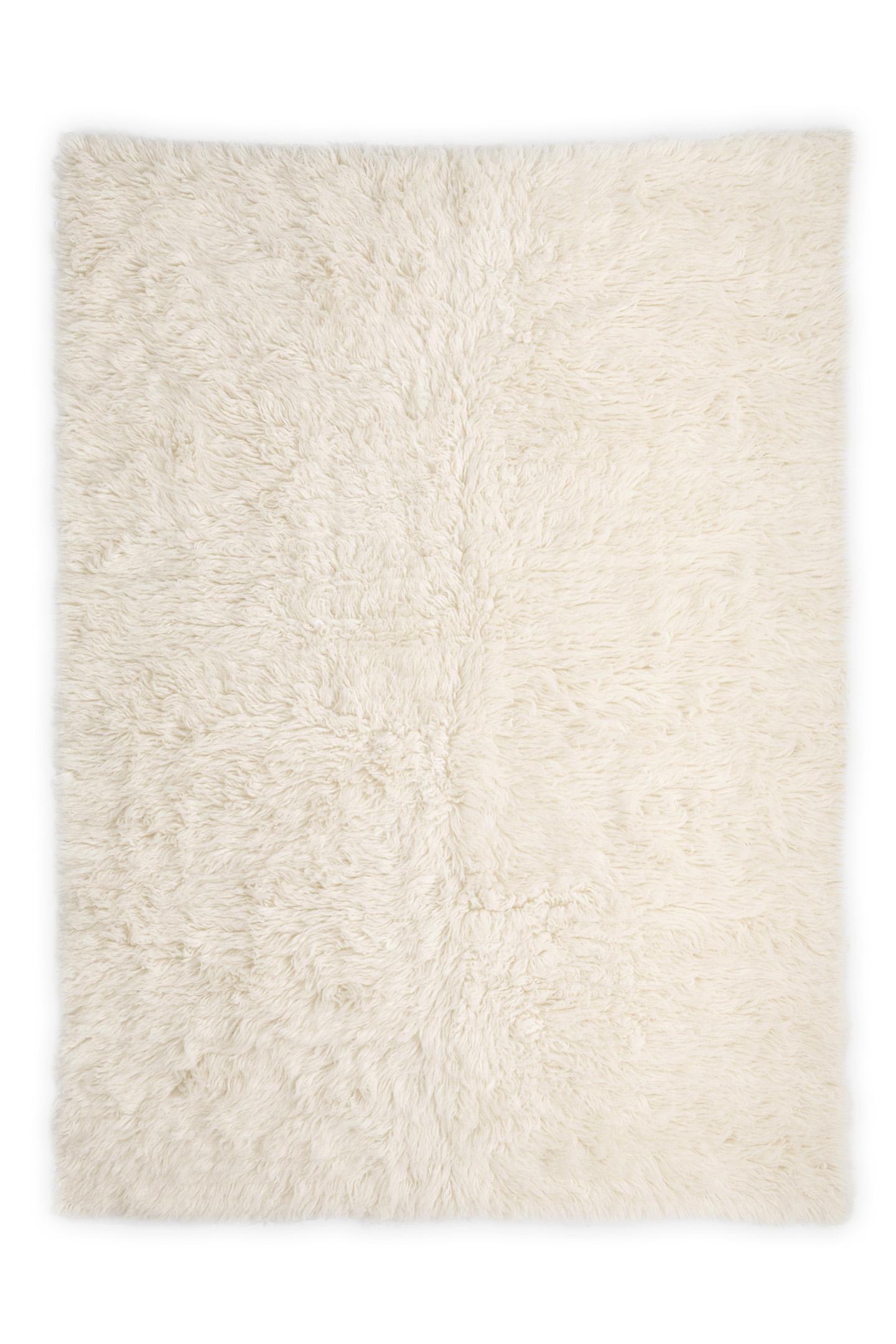

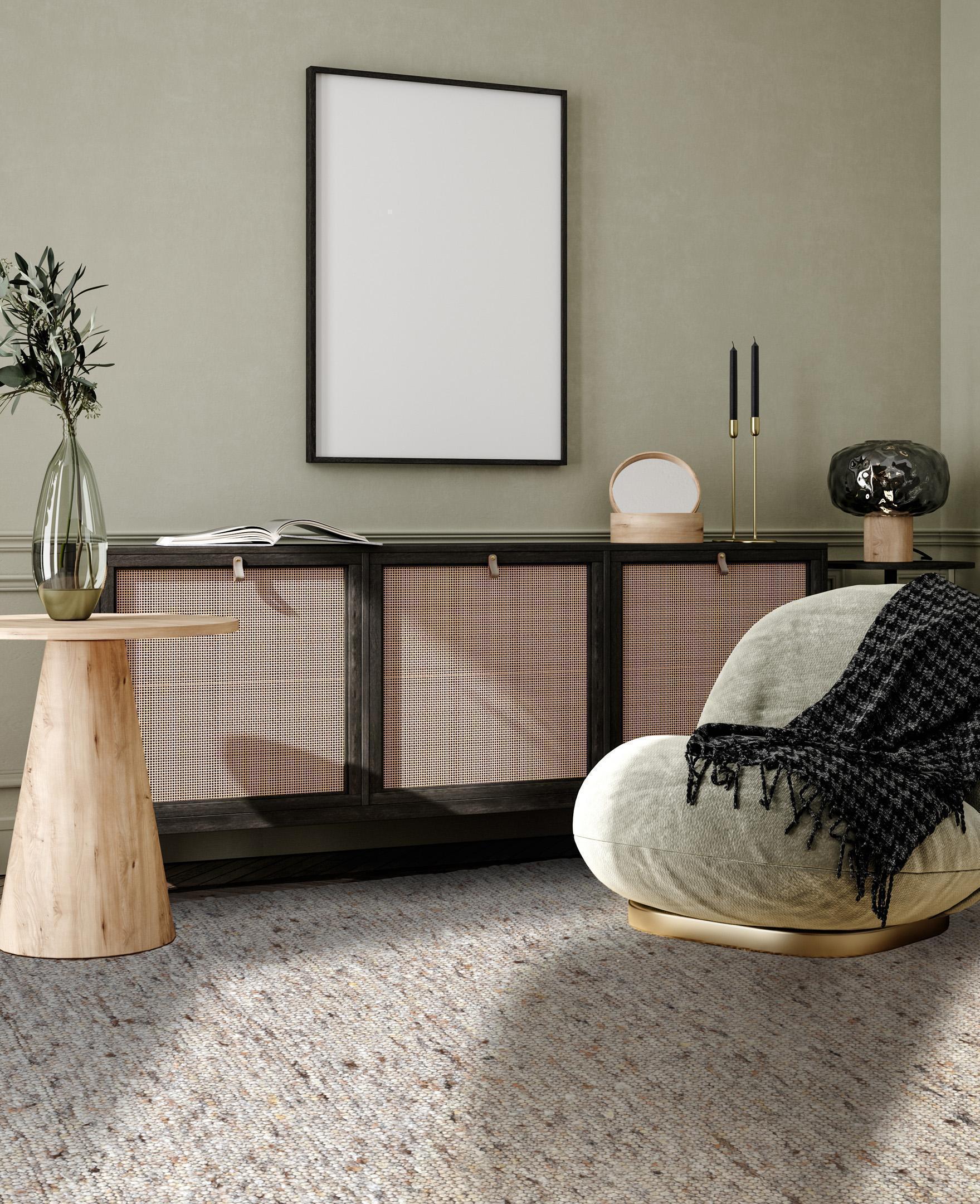


Greige rug: warm gray tone that adapts to the light
The big question before buying is usually: will the rug turn out too gray-cool or too beige-generic? A greige rug takes exactly that uncertainty away. Greige is a mixed color of gray and beige, with no fixed reference tone. It balances between warm and neutral and therefore stays versatile. The room immediately feels calmer, more refined, and allows for more flexible furnishing.
A beige gray rug gives you a stable base that adapts to your furniture, your light, and your style while remaining quietly in the background. That is precisely why this warm gray tone works as a base color for almost any interior style, especially the Scandinavian and Nordic look. A light base color also makes the room appear larger and more open.
How light changes the color: cooler by day, warmer in the evening
Greige shows a different face depending on the light. Under bright, cool light, the gray component comes to the fore. Under warmer, indirect light, the beige component predominates. The same rug therefore feels cooler in the morning and warmer in the evening.
An example: in a north-facing apartment with cool daylight, a greige rug with more gray in the morning looks modern and crisp. When you switch on a warm, indirect lamp in the evening, the beige component comes forward and the room immediately feels cozier. It is precisely this shift that makes greige so practical: you get two moods from one rug.
Choosing the undertone: sandy-warm or taupe-cool
Within the greige spectrum there are variants with a sandy or taupe undertone. The rule of thumb is simple:
- More beige, sandy undertone: warmer and cozier. Good for cool north-facing rooms that need some warmth, or for rooms where you often sit in the evening.
- More gray, taupe-cool undertone: more modern and crisp. Good for bright, sunny rooms where a more beige variant can quickly look washed out.
In bright rooms, greige rugs with a stronger gray component look more modern; in darker rooms, more beige variants brighten the space. When buying, think first about your room's light, then about the undertone.
Greige, beige, and taupe: the difference explained briefly
The three tones are often confused. Here is how to tell them apart:
- Beige: a pure warm tone with no gray component, looks light and soft.
- Greige: a mixture of gray and beige. Higher beige content than taupe, making it warmer than other gray mixed tones. A rug greige is the bridge between cool crispness and warm coziness.
- Taupe: has a brown component and therefore looks cooler, darker, and more earthy than greige.
Important: greige is a color family, not a single standard tone. The exact shade depends on the mixing ratio and the light. Do not be unsettled by slightly differing names between models.
Material by room: wool rugs, viscose, and synthetic fiber compared
The color determines the effect; the material determines everyday life. An overview:
Wool: the robust natural material
Wool stores warmth and is therefore particularly suitable as insulation in winter. It absorbs moisture and neutralizes odors in the room. Natural oils make wool rugs more resistant to stains; they are also antistatic and attract less dust. A strong candidate for the living room rug and the bedroom rug. Only with prolonged moisture is wool problematic: it does not belong in the bathroom.
Viscose: silky sheen
Viscose has a silk-like sheen and a soft, scratch-free feel. It wears more quickly than wool and is more susceptible to stains. It also reacts sensitively to moisture. Use viscose where it can show off its sheen but is subjected to less stress, such as in the bedroom.
Synthetic fiber: easy to care for and hard-wearing
Polypropylene and polyester are hard-wearing and retain their shape and color even with intensive use. Polyacrylic is soft, colorfast, dimensionally stable, and resistant to mold and mites. Synthetic fiber rugs are often considered hypoallergenic and harbor less dust and mites than natural fiber. The right choice for heavily used areas. Modern rugs made from polypropylene are virtually indestructible in full construction.
With designer rugs: a warm gray tone softens contrasts between materials such as light wood, black metal, and light fabrics. In a Japandi living room with light oak and a black metal shelf, greige absorbs the hard contrast between the materials and makes the interior feel calmer.
Measuring a greige rug to your sofa: the +20 to 30 cm rule
The most common cause of a wrong purchase is the size. As a rule of thumb, the rug should be 20 to 30 cm wider all around than the sofa, so that it visually frames the seating area. A rug that is too small, placed only under the coffee table, creates a postage-stamp effect and looks unsettled in small rooms.
Example calculation: for a corner sofa 260 cm wide, a format of 200 x 290 cm works so that the complete sofa stands on the rug with extra room. Common standard sizes for the living room are 120 x 180 cm, 160 x 230 cm, and 200 x 290 to 300 cm.
Further guidelines:
- Sofa against the wall: it is sufficient for the front legs to stand on the rug. This is the most common solution.
- Freestanding seating group: all furniture completely on the rug looks generous and is suitable for open-plan rooms.
- To the wall: leave 20 to 40 cm of space, so the rug looks deliberately placed.
- Dining room: approximately 60 cm larger all around than the table, so that chairs pulled back still stand on the rug.
Greige in everyday life: families, pets, and care
Light rugs show stains more visibly because dark soiling stands out more strongly on light tones. How easy a rug is to clean depends more on the material, weave technique, and pile height than on the color itself. A smaller light-colored format is also easier to care for in everyday life than a large-scale version.
For a family with a young child, a smaller format in polypropylene for the heavily used play area is therefore the practical choice: hard-wearing, colorfast, and quick to vacuum. For living rooms and bedrooms, where things are calmer, wool or finer materials come into their own.
Care is straightforward if you keep two things in mind:
- Vacuum regularly: at least once a week, more often in heavily used areas. Avoid rotating brush attachments, as they can damage delicate fibers.
- Treat stains immediately: around 90 percent of all stains are water-soluble and can be removed with clear, warm water. Always blot rather than rub. After wet cleaning, do not walk on the rug for at least 24 hours and ventilate the room well.
A thorough deep clean is recommended approximately every three to five years, depending on use.
In brief: which rooms suit greige
A greige rug fits anywhere you want the room to feel warm, crisp, and timeless. Larger surfaces create visual calm and make furniture groups feel cohesive; smaller formats set deliberate accents. The neutral color supports light woods such as birch and oak as well as darker species such as walnut in the same room. You choose the undertone according to your light, the material according to your room, and the size according to your sofa. That gives you a base that remains harmonious even after a change of furniture or decor.
