Rug Under the Dining Table: How to Calculate the Right Size
Chair movement decides the rug size
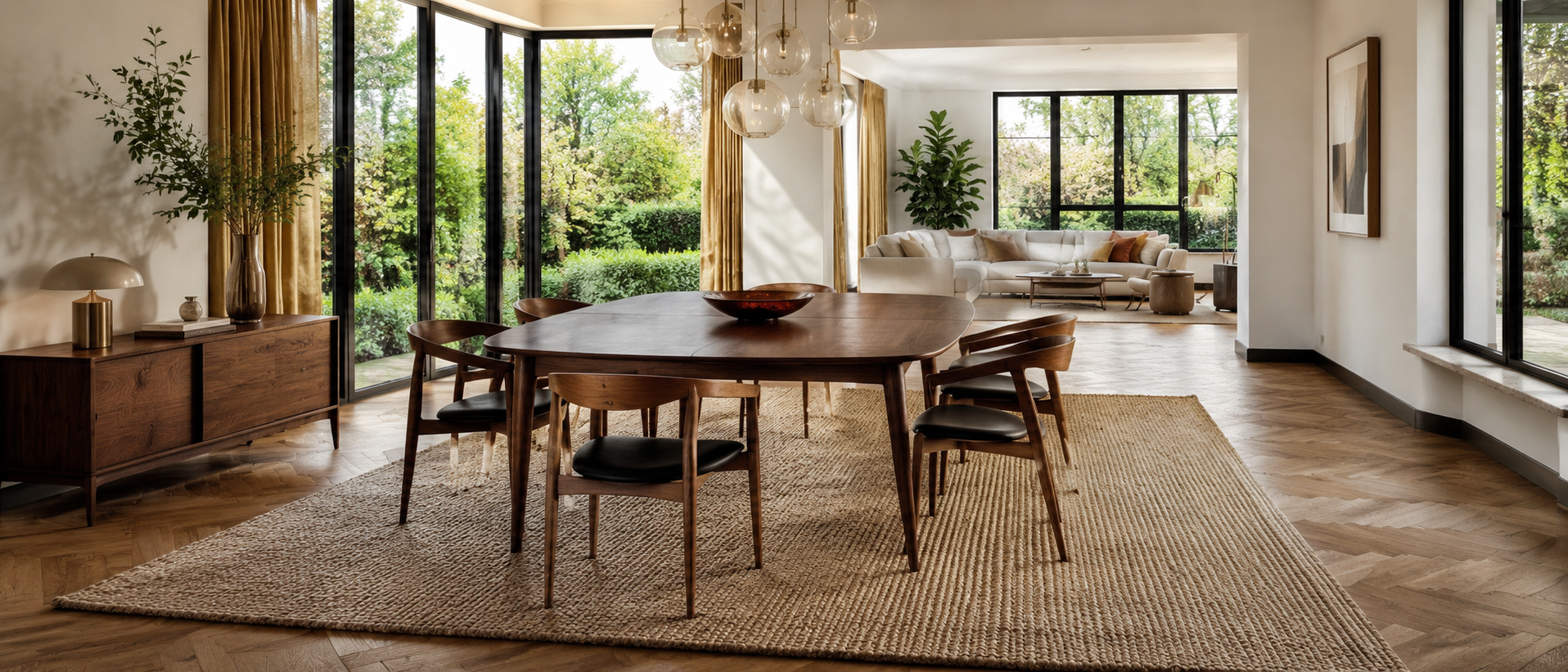
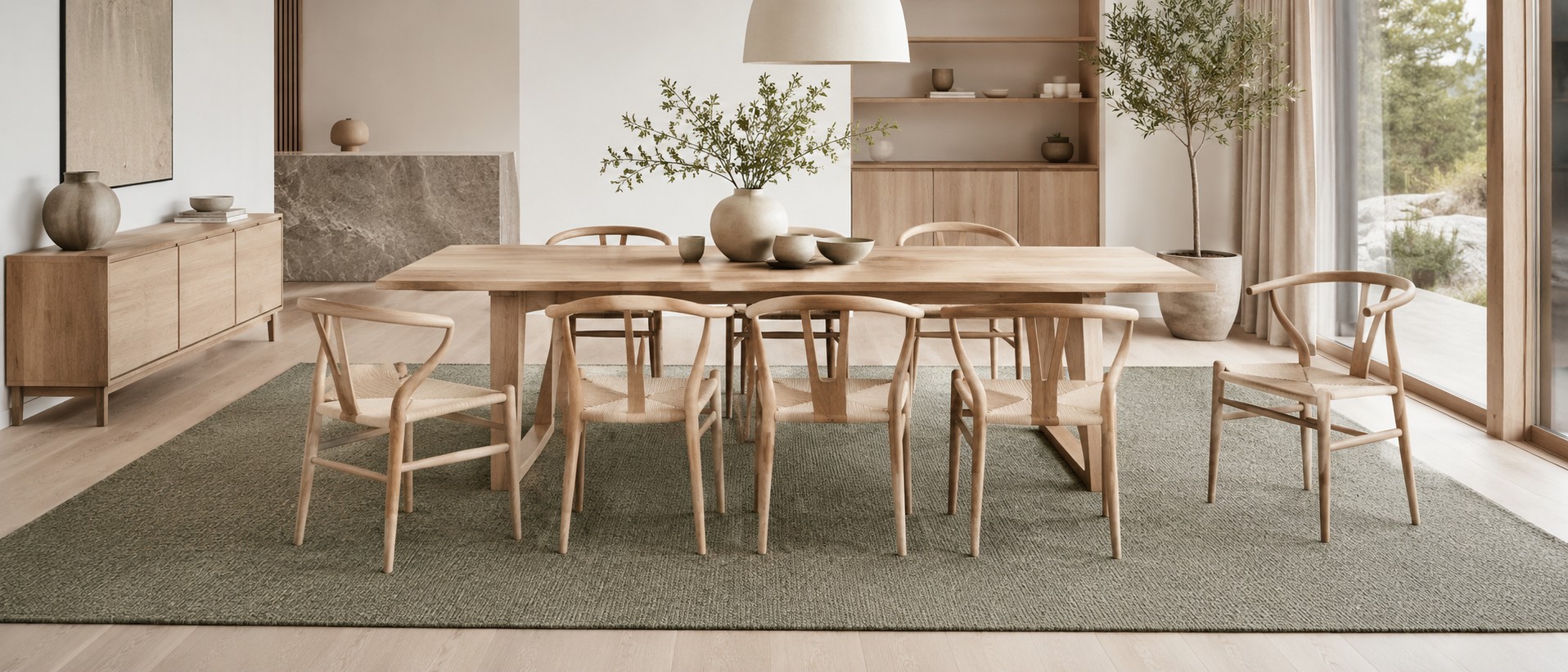
When someone gets up from the table, the chair travels backward. That distance, typically 50 to 60 cm, is exactly what drives the most important sizing rule in dining room rugs: the rug must extend at least 60 cm beyond the table edge on all four sides. With that clearance, every chair leg stays on the rug even mid-slide, so there is no ridge to catch on and no edge curling up over time.
Sixty centimeters is the floor, not the target. For standard dining chairs it holds up well. If your seats are deep armchairs or have wide armrests, bump the overhang up to 75 to 80 cm per side. The relevant measurement is chair depth: the deeper the seat, the more rug you need behind it.
The tempting middle ground, front legs on the rug and rear legs on the floor, causes real problems. Uneven leg heights make the chair rock, and the rug edge folds upward into a trip hazard with regular use.
The formula: add 120 cm to each table dimension
The math stays simple. Take your table measurement and add the overhang twice, once for each side:
- Rug length = table length + 2 × 60 cm
- Rug width = table width + 2 × 60 cm
A table measuring 160 × 90 cm works out to: (160 + 120) × (90 + 120) = 280 × 210 cm. That is your minimum starting point.
For a round table, take the diameter and add 120 cm to get the minimum rug diameter. A round table at Ø 120 cm needs a rug of at least Ø 240 cm.
With an extendable table, always calculate based on the fully extended length. A rug sized for the compact position will leave the extra chairs stranded off the edge whenever you open the table up, and the repeated scraping back and forth over the rug border damages it over time.
Size table: common table sizes and the rugs that fit them
The figures below reflect the 60 cm minimum overhang on every side. Armchairs or extra breathing room? Step up to the next standard size.
| Table size | Seats | Minimum rug (60 cm overhang) |
|---|---|---|
| 120 × 80 cm | 4 | 240 × 200 cm |
| 140 × 90 cm | 4 to 6 | 260 × 210 cm |
| 160 × 90 cm | 6 | 280 × 210 cm |
| 180 × 90 cm | 6 | 300 × 210 cm |
| 180 × 100 cm | 6 to 8 | 300 × 220 cm |
| 200 × 100 cm | 8 | 320 × 220 cm |
| Ø 120 cm (round) | 4 | Ø 240 cm |
One more spatial check: leave 20 to 30 cm between the rug edge and the nearest wall or piece of furniture. That gap keeps the room from feeling cramped and lets doors swing freely.
Round or rectangular: let the table shape lead
The straightforward answer is that rug shape should follow table shape. A rectangular rug under a rectangular table distributes the overhang evenly, with no corners reaching further into the room than necessary.
A round rug under a round table is a natural match, and the same overhang rule applies. A round rug under a rectangular table is workable, though the diameter has to span the full table length with 60 cm to spare on each end. In most rooms, that results in a very large circle pressing into surrounding furniture.
In open-plan living and dining spaces, a round rug can do useful work by softening the boundary between zones. It reads as a deliberate design choice rather than a sizing workaround, as long as the rug is genuinely big enough.
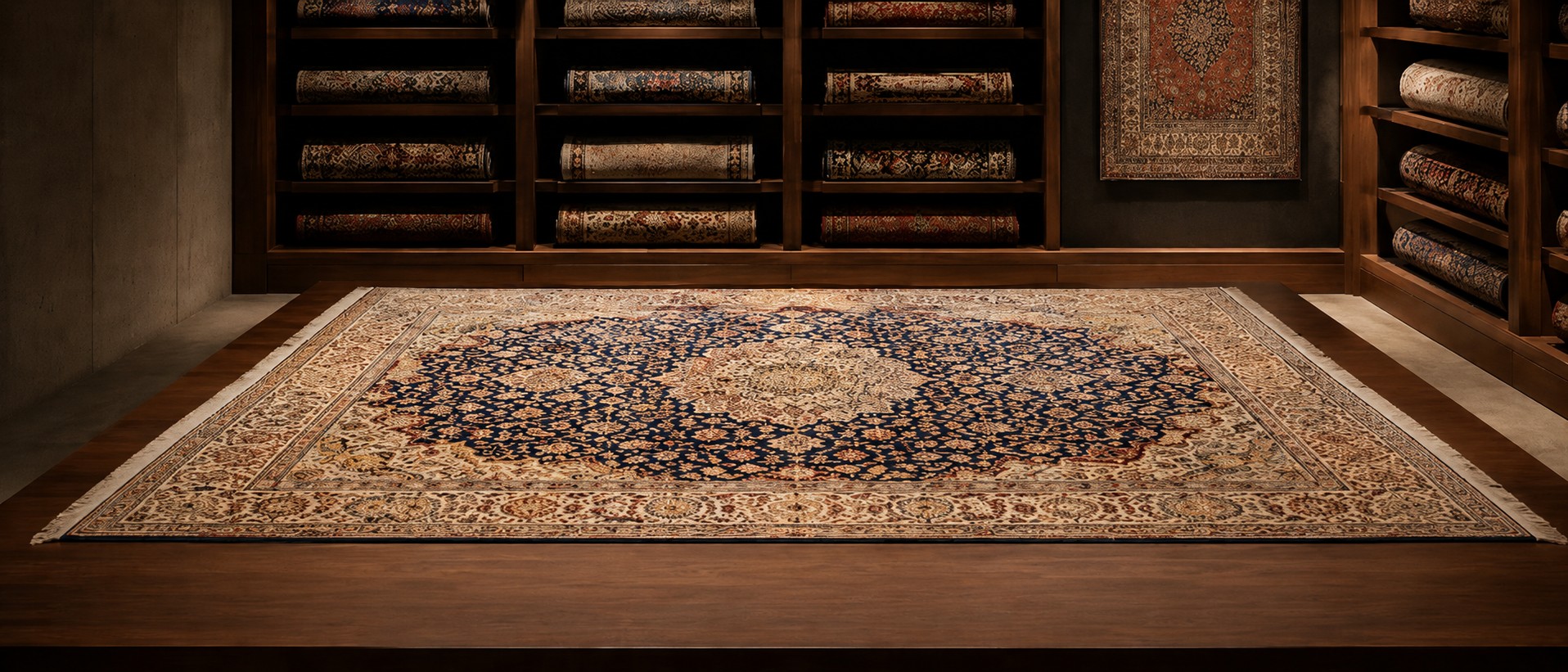
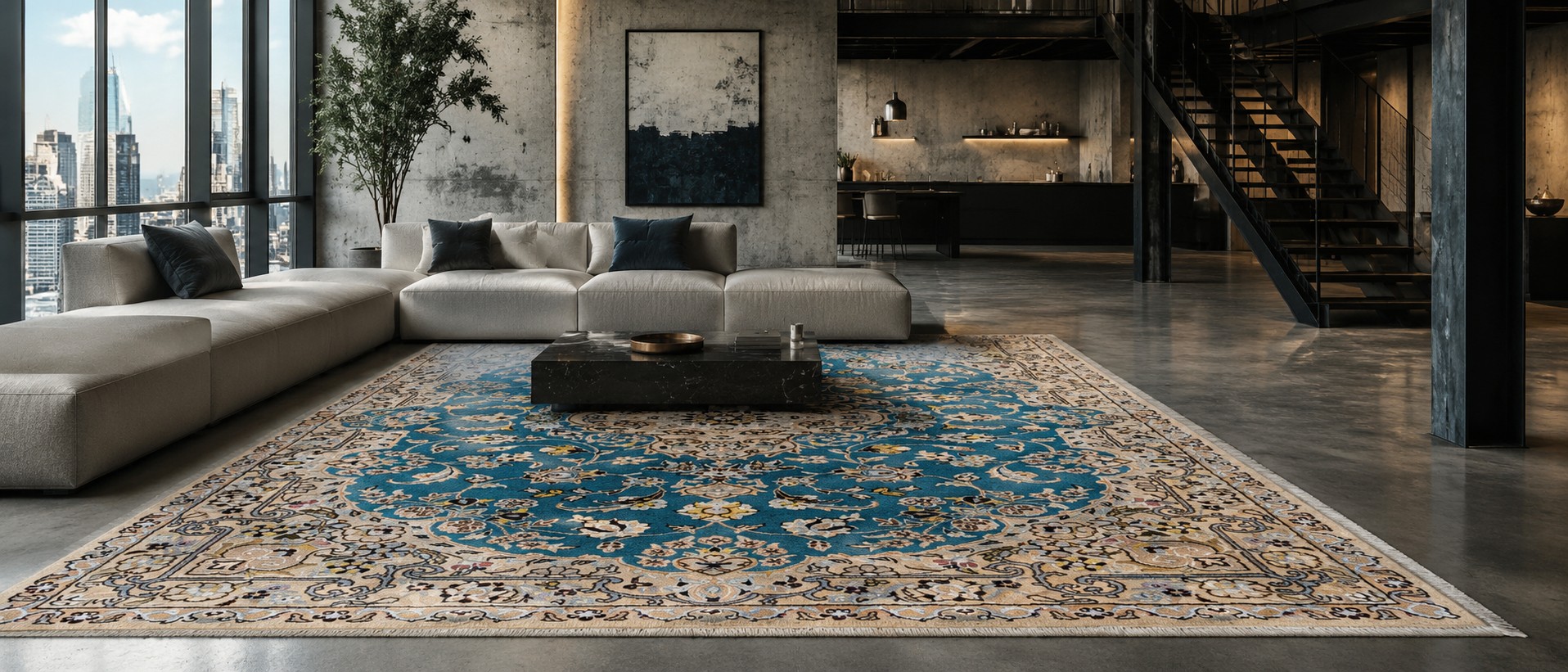
One detail worth keeping in mind: the center of the rug stays hidden under the table nearly all the time. The border is what people actually see. A strong edge pattern or a contrasting frame becomes the real visual element in a dining room rug.
Materials that hold up under the dining table
Few spots in a home are harder on a rug than the area under a dining table. Crumbs, spills, and chair legs grinding back and forth every single day. The material has to be dense enough to resist wear and easy enough to clean that a spilled glass of wine does not become a permanent feature.
Good choices:
- Flatweave: No pile to trap crumbs, wipes down easily, and chairs slide across it without resistance. The most practical option for daily use.
- Short-pile up to 10 mm: Still comfortable underfoot, still manageable to clean. K-Tipp, the Swiss consumer magazine, puts the recommended maximum at 5 mm for dining areas; pile heights up to 10 mm are manageable in everyday use as well.
- Polypropylene (PP): Moisture-resistant, tough enough for outdoor use, and easy to wipe clean. One of the most durable fiber options available.
- Wool (short pile, tightly woven): Viable with regular vacuuming and fast action on spills. High-pile wool belongs elsewhere.
- Outdoor PP rugs: Waterproof and simple to hose down, a solid pick for households with young children or frequent guests.
Materials to avoid:
- High pile: Crumbs disappear into it, chair legs leave lasting dents, and cleaning is a project rather than a quick wipe.
- Viscose: Absorbs moisture, distorts when wet, and loses its sheen quickly under heavy use.
- Fringed edges: Fringe gets caught under chair legs repeatedly and turns into a trip hazard at the table edge.
Non-slip pads and chair gliders: the finishing details
A non-slip pad under a dining table rug is worth treating as standard, not optional. It stops the rug from bunching up when chairs are pushed back, protects the floor underneath, and extends the rug's lifespan. On smooth hardwood or laminate the difference is immediate.
If you have a vinyl floor, use a plasticizer-free pad. Standard pads can react with vinyl surfaces and leave discoloration on the floor beneath.
For chair gliders, plastic, Teflon, or stainless steel all work well on rugs. They move smoothly across the pile without snagging or leaving pressure marks. Felt gliders are a worse fit for rugs because they grip the fibers and make the chair harder to slide.
FAQ
How big does a rug under a dining table need to be?
Add 60 cm to each side of your table measurement. The formula is: table length + 120 cm = rug length, table width + 120 cm = rug width. A 180 × 90 cm table needs a rug of at least 300 × 210 cm. That clearance keeps every chair leg on the rug when someone pushes back to stand up.
What is the 60 cm rule for dining table rugs?
The 60 cm rule means the rug extends at least 60 cm beyond the table edge on all four sides. When a person stands up, the chair travels roughly 50 to 60 cm backward. A smaller overhang lets the rear chair legs roll off the rug edge, which causes the rug to curl up and creates an uneven surface. For deep armchairs or wide seats, 75 to 80 cm overhang per side is the better figure.
What size rug do I need for a 160 × 90 cm table?
A minimum of 280 × 210 cm. The calculation: 160 + 120 = 280 cm in length, 90 + 120 = 210 cm in width. For armchairs or more room to move, step up to the next standard size, for example 300 × 240 cm.
Can I put a round rug under a rectangular dining table?
Yes, but the diameter has to span the full table length plus 60 cm on each end. In most cases that means a very large circle extending well into the surrounding space. As a general principle, rug shape follows table shape: a rectangular rug under a rectangular table gives an even overhang on all sides. A round rug works best in open-plan spaces where it deliberately marks off the dining zone.
Which material works best under a dining table?
Flatweave: No pile to trap debris, easy to wipe, chairs glide smoothly. Short pile up to 10 mm: Comfortable underfoot and still easy to maintain. Polypropylene (PP): Tough, moisture-resistant, simple to clean. Avoid: High pile (traps crumbs, shows chair dents), viscose (damaged by moisture), and fringed edges (become a trip hazard under chairs).