Rug Material Sisal: What It Is, Where It Comes From and Why It Is Suitable for Rugs
Sisal at a Glance: a Natural Fibre with Character
Sisal is a plant-based natural fibre obtained from the leaves of the agave sisalana. The long, sword-shaped leaves of this agave contain firm fibre bundles that are extracted by beating, scraping and drying, then spun into yarns. The result is a dry, grippy and textured fibre from which particularly durable rugs can be made.
Anyone who picks up a sisal rug for the first time will notice immediately: this is no deep pile. Sisal feels firm and slightly rough, not fluffy. Precisely this quality makes it a material with a clearly defined character, one that suits certain rooms and interior styles very well and others less so.
Where Does Sisal Come From? Origin and Cultivation
Botanically, sisal is closely linked to Mexico. The agave sisalana originates from the south-eastern part of Mexico, more precisely from the Yucatán region. The fibre was once exported to the world via the port of Sisal on Yucatán, which gave the material its name.
Today sisal is cultivated in numerous tropical and subtropical regions, well beyond Mexico. Important growing areas are located in East Africa (primarily Tanzania and Kenya), in Brazil, on Madagascar and in parts of Asia. The agave thrives on dry, nutrient-poor soils and manages with little water, making its cultivation comparatively resource-efficient, although the complete ecological footprint of a rug depends on further factors such as processing, dyeing, backing material and transport.
How Does an Agave Become a Rug?
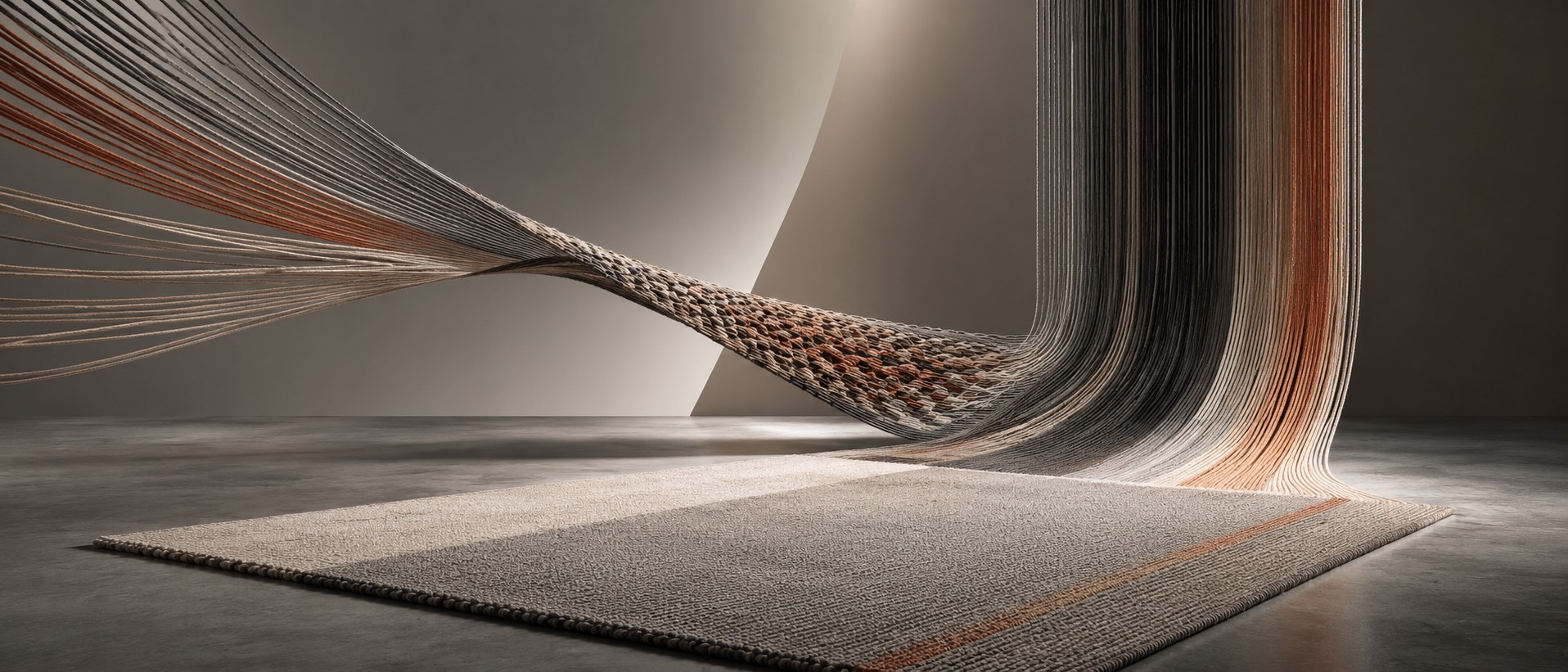
Harvesting sisal is done by hand. The mature leaves are cut, the fibres mechanically extracted, washed, dried and brushed. The dried fibres are made into yarns that are woven, braided or knotted. Sisal rugs are most often flat-woven or produced in a coarse, natural weave, which gives them their characteristic, textured appearance.
The fibre itself is naturally held in creamy beige and sand tones. Dyed sisal rugs are possible, yet many designers and interior architects particularly appreciate the untreated, earthy natural tone as a design element.
Why Sisal for Rugs? The Key Properties
Robustness and Abrasion Resistance
Sisal has been used for centuries for ropes, cordage and matting because the fibre is exceptionally tensile and abrasion-resistant. These properties transfer directly to the rug: a sisal rug copes well with heavily used areas and barely loses its character even after years of daily use.
Dimensional Stability and Structure
Sisal lies flat and dimensionally stable. There is no curling, no matting, no fluffing. As a hallway rug or in an entrance area, sisal therefore proves particularly reliable: the surface remains neat and defined even with frequent foot traffic.
Natural Look as a Design Element
In the field of interior design, sisal is regarded as a classic of nature-oriented interiors. Whether in a pared-back living room, a home office or at the dining area: a living room rug made of sisal brings texture and warmth to the space without visually dominating it. The woven structure looks calm, high-quality and architectural, combining well with wood, linen, concrete and natural materials.
Sustainability with a Realistic View
Sisal is a plant-based, renewable fibre and is biodegradable. These are genuine advantages over synthetic rug materials. Anyone who wishes to assess the environmental impact of a rug holistically should also include backing material, adhesives, dyes and transport route in their consideration.
Where Does Sisal Fit? Areas of Use at a Glance
Sisal rugs unfold their character in rooms that are dry and aimed at a clear, calm design:
- Hallway and corridor: Ideal for high-traffic areas, as the fibre is robust and abrasion-resistant.
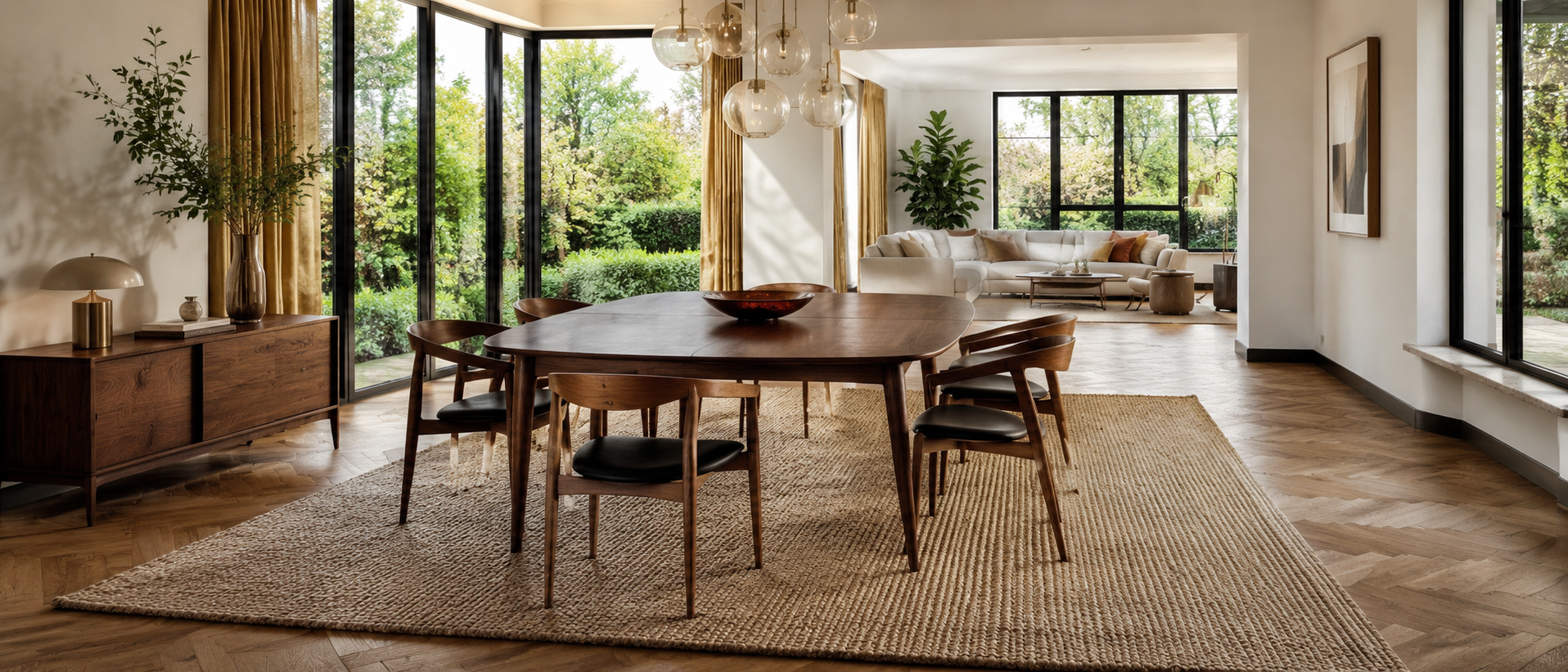
- Dining room: The textured surface handles chair movement well and looks elegant beneath a dining table.
- Study and home office: The clear, calm look supports focused work.
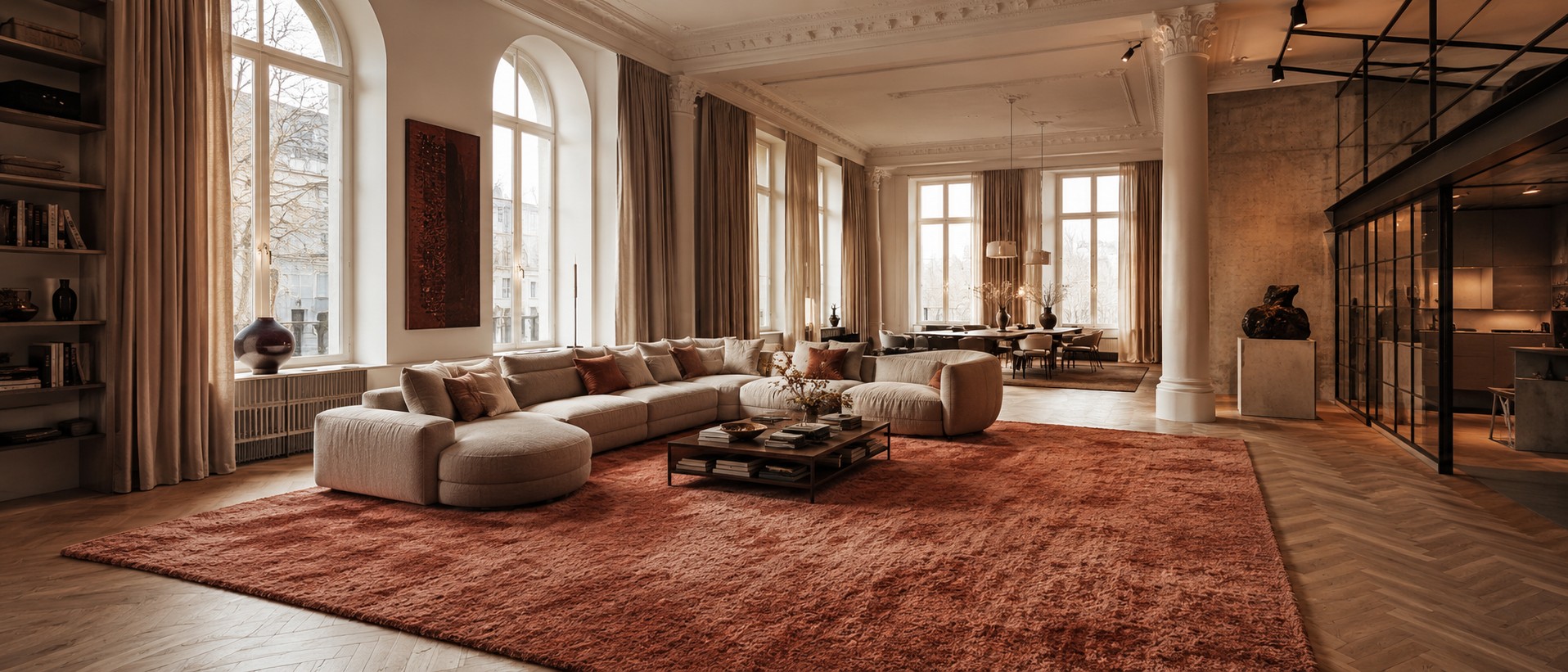
- Living room with minimalist furnishings: Sisal sets a natural accent without overwhelming the room.
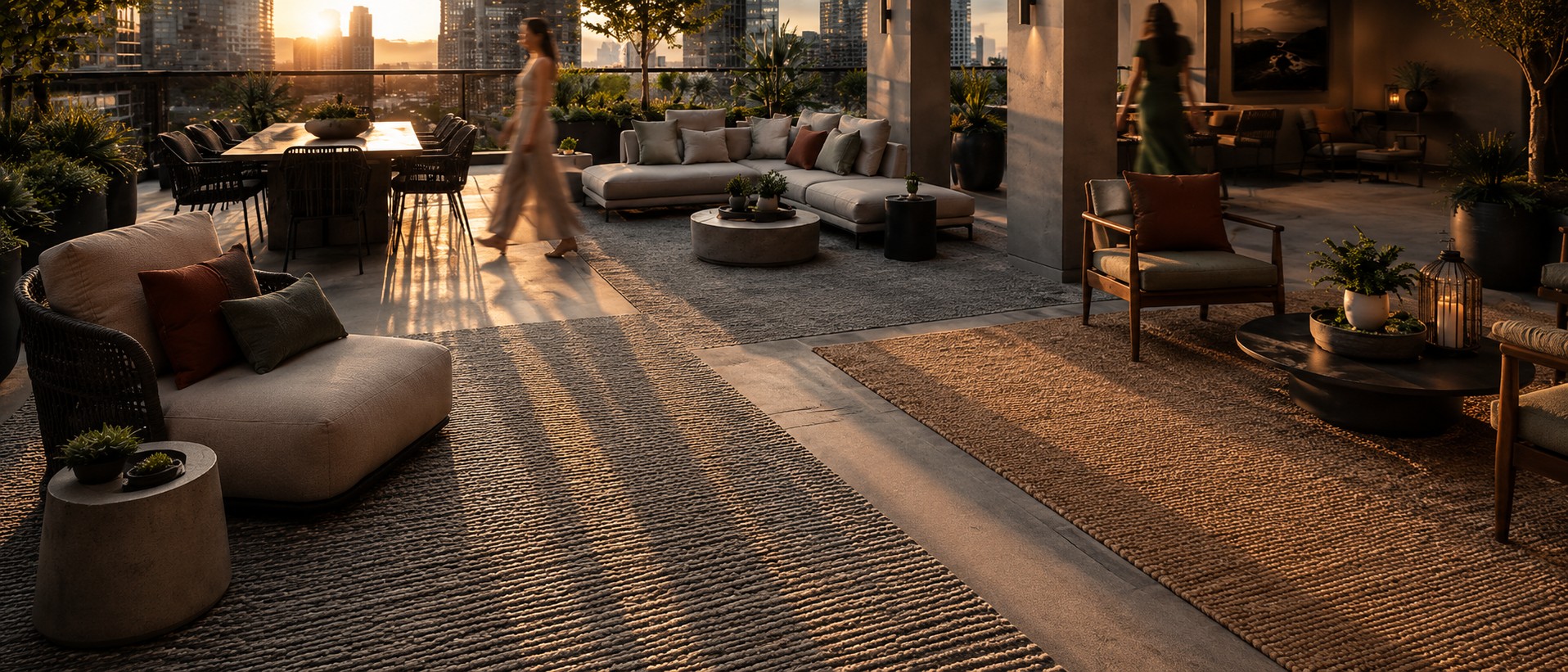
For the bathroom, kitchen, balcony or as an outdoor rug, sisal is less suitable. The fibre reacts sensitively to moisture: it swells, deforms and is prone to stains and discolouration if it becomes permanently wet. Synthetic outdoor fibres are considerably better suited for damp exterior areas.
As a barefoot rug in the bedroom or children's room, sisal should also be chosen with care. Those seeking soft comfort underfoot will lean towards wool or another deep-pile material. Those who deliberately use the natural structure as a style statement and can forgo excessive softness will be satisfied with sisal in the long term.
Sisal or Jute? A Brief Comparison
Sisal and jute are often mentioned in the same breath, but they are different materials. A jute rug is generally softer and lighter than sisal, but has lower abrasion resistance. Jute is suited to less intensively used rooms and is less durable as a floor covering in heavily trafficked areas. Sisal is the harder, more robust choice; jute is the somewhat gentler one. Both are natural fibres with a similar look but a different character underfoot.
Care: What Sisal Needs and What Harms It
Dry dirt and dust can simply be vacuumed up. This is the greatest care advantage of sisal: everyday maintenance is straightforward. Liquids, however, must be treated immediately. Blot rather than rub, work from the outside inwards, and do not drag a wet cloth across the surface.
Many care sources recommend dry or minimally damp cleaning methods for natural fibre rugs. Too much water, steam cleaners or wet shampoos can cause waves, stains and discolouration that are difficult to reverse. To put it precisely: sisal is easy to care for when dry, but more demanding with liquids than many retailers suggest.
FAQ
What is sisal in rugs?
Sisal is a natural fibre obtained from the leaves of the agave sisalana. The fibres are firm, dry and textured. For rugs, they are processed into robust yarns and woven or braided. The result is a floor covering with a clear texture, natural look and high durability.
Where does sisal come from?
Botanically, the agave sisalana originates from south-eastern Mexico. The name sisal goes back to a port on the Yucatán peninsula, through which the fibre was once shipped. Today sisal is cultivated worldwide in warm regions. Important areas of origin are in East Africa (Tanzania, Kenya), Brazil and Madagascar.
Why is sisal suitable for rugs?
The fibre is naturally robust, abrasion-resistant and dimensionally stable. This makes sisal rugs particularly well suited to high-traffic areas such as hallways, dining rooms and studies. The natural, woven structure looks calm and high-quality and integrates well into pared-back, nature-inspired interior styles.
Is a sisal rug easy to care for?
Dry dirt can be vacuumed without difficulty, making everyday maintenance straightforward. Liquids must be blotted immediately without rubbing. Too much water, steam cleaners or wet cleaning agents can cause stains, waves or discolouration. Dry cleaning methods are clearly the better choice for sisal.
What are the disadvantages of sisal?
Sisal is textured and grippy; for barefoot areas such as bedrooms or children's rooms, soft deep-pile material is more comfortable. The fibre reacts sensitively to moisture: stains and deformation caused by wetness are difficult to remedy. For bathrooms, kitchens, balconies and outdoor areas, sisal is not suitable. In permanently damp environments, the fibre quickly loses its quality.