Silk Rug: What the Material Really Offers and Who It's Worth It For
Silk: Lustre, Fineness and Quiet Opulence
No other rug material creates as much impact over such a small surface area as silk. The pile shimmers, appearing lighter or deeper depending on the viewing angle, and even the finest ornaments stand out with razor-sharp clarity. Anyone who touches a real silk rug for the first time immediately understands why this material has been regarded as a sign of artisanal mastery for centuries. And anyone who wants to buy a silk rug should equally understand which rooms and which lifestyles it is truly suited to.
Where Does Silk Come From and What Makes It So Special?
Silk is a natural animal fibre. It is obtained primarily from the cocoons of the mulberry silkworm Bombyx mori. Each caterpillar spins a single, uninterrupted thread several hundred metres long. This thread consists at its core of fibroin, a mechanically resilient protein, and is encased in sericin, an adhesive substance that holds the cocoon structure together. For rug production, sericin is largely removed, which fully reveals the characteristic smoothness and lustre of the finished fibre.
The fibre is extraordinarily fine. This fineness is the key: the thinner the material, the more knots can be tied within a given area. And more knots mean sharper contours, more precise ornaments and pictorial motifs that cannot be achieved at this quality with any other fibre.
How Silk Is Used in Rugs
Silk as a rug material appears in three different forms:
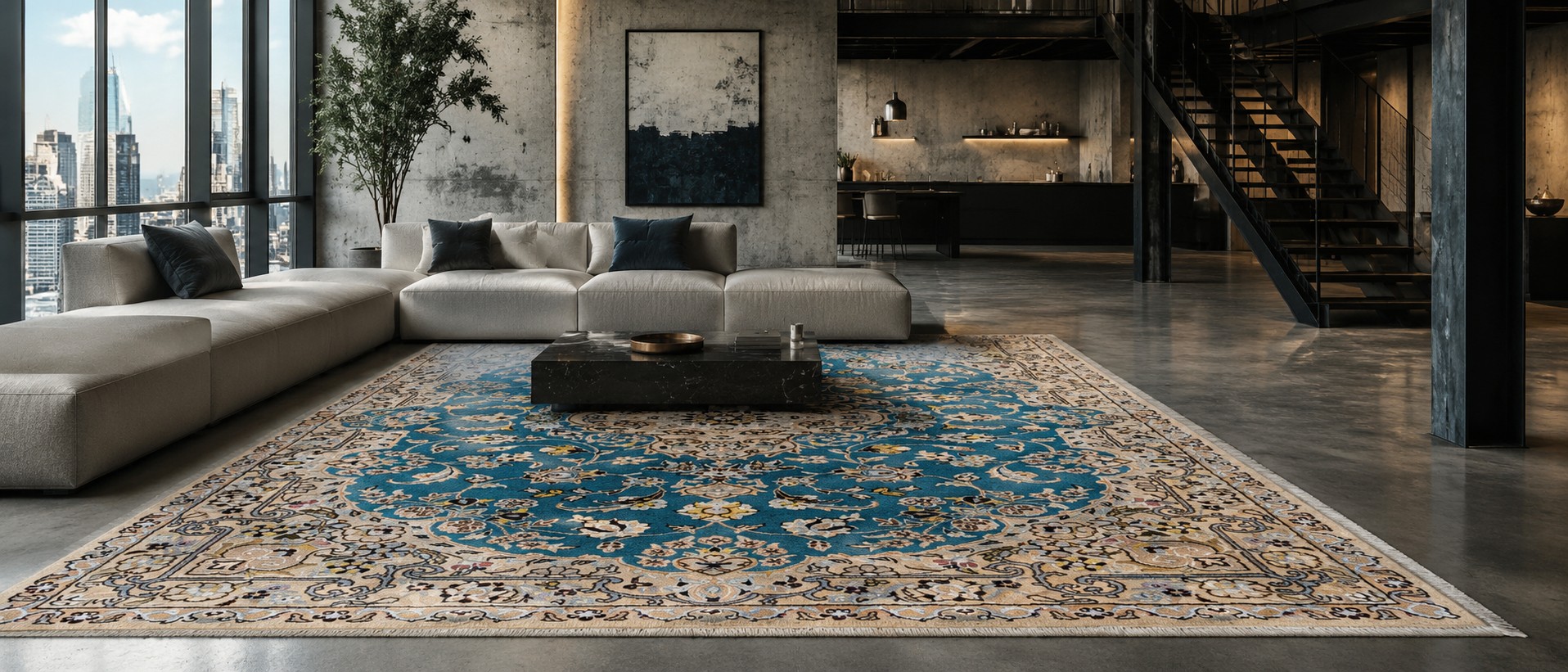
- Pure silk rug: The pile, warp and sometimes also the weft consist entirely of silk. These rugs are genuine craft objects with the highest knot density. Classic rugs from Qum or Kashmir are among the best-known examples of this category.
- Silk accents in a wool rug: Silk is used selectively for contours, pattern areas or highlights of light, while the base surface consists of wool. The result combines the lustre of silk with the durability of the wool fibre.
- Silk in warp and weft: Here, silk forms the load-bearing foundation of the rug. This allows for particularly thin, supple rugs with high flexibility.
For most living spaces, silk accents in a wool rug are the pragmatically smartest solution: the sheen effect is tangible, the care requirements remain manageable, and the price is in a considerably more accessible range than for pure silk rugs.
The Strengths of a Silk Rug
Silk offers a combination of properties in a rug that no other material unites in this form:
- Light effect and lustre: The smooth fibre surface reflects light at an angle that shifts depending on the viewer's perspective. A silk rug appears lively, never flat.
- Pattern precision: The high knot density allows floral patterns, fine medallions and curved ornaments to be knotted with a sharpness that is not possible with coarser fibres.
- Tactile quality: The surface feels smooth, cool and pleasant. For a rug that is also intended to be experienced as a tactile design object, this is a decisive factor.
- Representational character: Classic rugs made of pure silk are often displayed as wall hangings or in rooms with low foot traffic. Their presence is that of a collector's piece.
Where Silk Shines and Where It Reaches Its Limits
A silk rug is not an all-rounder. This is part of its character. Knowing the strengths leads to a better purchasing decision.
Well suited for:
- Bedrooms and quiet living areas with low usage intensity
- Formal rooms, salons or reception areas
- Wall hangings and collector's pieces
- Lightly trafficked zones where the eye perceives the rug more than the foot
Less suited for:
- Hallways, dining areas and kitchens with heavy wear
- Children's rooms and households with pets
- Areas where moisture occurs regularly
- Rooms with intense, direct sunlight (UV fading possible)
Silk has high tensile strength as a fibre, but as a rug pile it is sensitive to heavy abrasion and moisture. The smooth fibre surface also conceals dirt less readily than the textured surface of wool. Stains are therefore more quickly visible.
Silk, Wool or Viscose: What Is the Difference?
This question comes up regularly when buying a silk rug, and it is a legitimate one. The term "silk rug" covers different materials in the market.
Real natural silk comes from the silkworm and is an animal protein fibre. It is the most expensive and most delicate of the three materials, but also offers the most intense, natural lustre and the highest pattern precision.
Viscose and art silk are plant-based regenerated fibres (usually derived from cellulose) and optically imitate the lustre of silk. They are considerably less expensive, but even more sensitive to moisture than real silk. When wet, they quickly become soft and lose their structure. A viscose or bamboo silk rug is not a silk rug in the true sense.
Tencel (Lyocell) is likewise a cellulose fibre, but is produced using a more environmentally friendly process. Tencel also conveys a certain shimmer effect, but differs clearly from real silk in terms of tactile quality and long-term behaviour.
A wool rug with silk accents is the most balanced choice for most living spaces: wool is more durable, easier to care for and more forgiving. The incorporated silk sections bring the desired lustre and visual depth without making the entire surface delicate.
Caring for a Silk Rug: What Really Matters
Caring for a silk rug follows a clear principle: as little intervention as necessary, as gently as possible.
- Regular vacuuming on a low setting, following the direction of the pile. Vigorous scrubbing or brushing damages the delicate fibre.
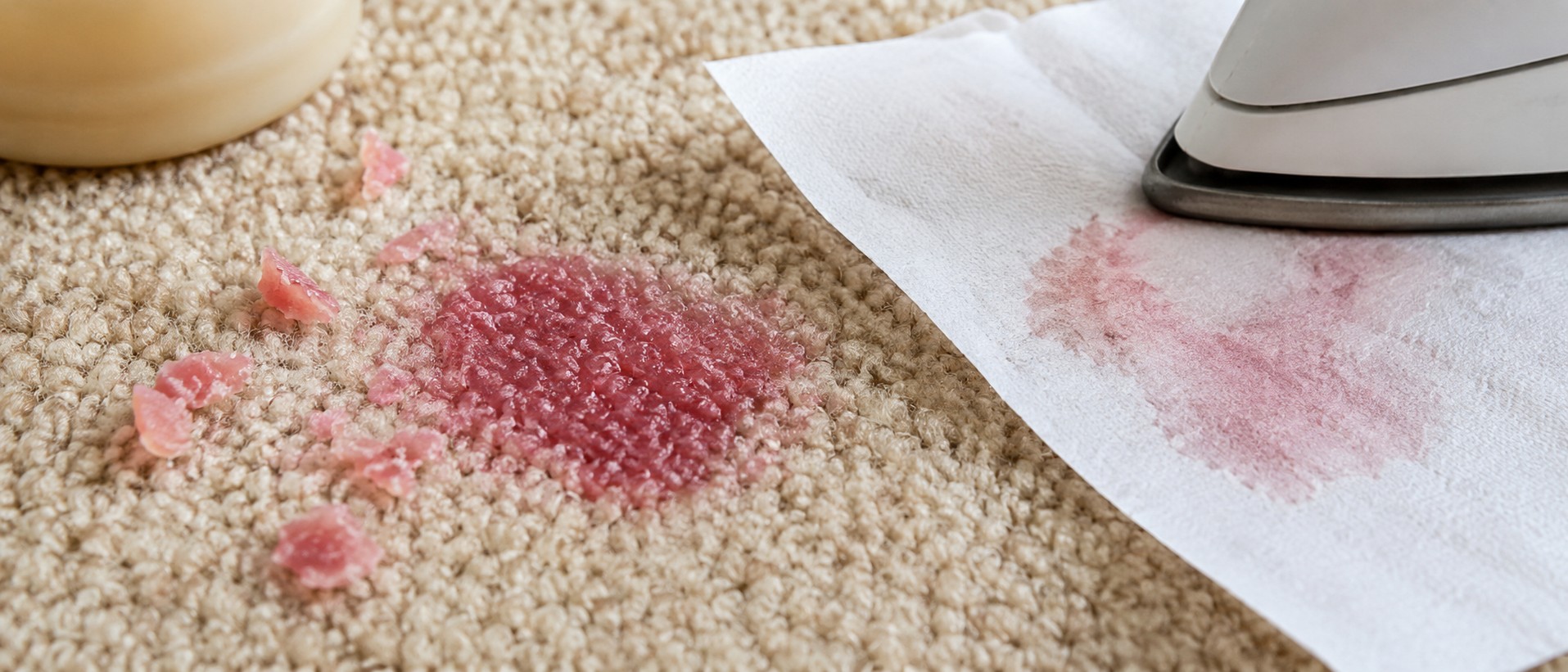
- Remove stains immediately: Carefully blot damp soiling, do not rub. Use water sparingly.
- No wet cleaning at home: Silk is sensitive to excessive water, heat and aggressive cleaning agents. Deep cleaning should be left to a specialist.
- UV protection: Intense, direct sunlight can fade the colours over time. A shaded or semi-shaded position preserves the vibrancy of the colours.
- Protect the underside: A suitable rug underlay prevents slipping and reduces abrasion on the back of the rug.
For high-quality, pure silk rugs: when in doubt, always entrust deep cleaning to a specialist rug cleaner. The effort is worthwhile, because improper cleaning can cause irreversible damage.
Why Silk Rugs Are So Expensive
The price of a real silk rug results from several factors combined. Silk itself is a labour-intensive material to produce: thousands of cocoons are required for one kilogram of raw silk. In addition, there is the knotting work itself: a medium-sized silk rug with high knot density can take years to produce. Every knot is tied by hand. The precision required to reproduce fine patterns without error demands years of experience. The end result is frequently a unique artisanal object. The price is therefore a direct reflection of material, craftsmanship and time.
Decision Guide: Which Rug Is Right for Me?
As a guide for purchasing:
- Pure silk rug: Ideal for quiet premium spaces, formal rooms or as a collector's piece. Requires consistent care and a location with low usage intensity.
- Wool rug with silk accents: The elegant everyday solution. Brings lustre and depth to the living space while remaining easier to care for and more hardwearing than a pure silk rug.
- Robust natural fibres or pure wool: Anyone looking to furnish a hallway, dining room or busy living room will be better served in the long run with a high-quality wool rug.
The most honest argument for buying a silk rug is precision, lustre and tactile quality in a place where these qualities truly come into their own.
FAQ
What is silk in rugs?
Silk is a natural animal fibre obtained from the cocoons of silkworms. Its core consists of fibroin, a resilient protein that gives the fibre its smoothness, lustre and fineness. In rugs, silk is used either as a pure pile, as an accent material in a wool rug, or in the foundation weave. The result is a rug with exceptional pattern precision and a natural, shifting shimmer that other materials lack.
Why are silk rugs so expensive?
The price arises from several factors at once: obtaining natural silk is labour-intensive, as thousands of cocoons are needed for one kilogram of raw silk. The knotting work itself is time-consuming. A high-quality silk rug with fine knot density can take years to produce, with every knot tied by hand. High-quality silk rugs are frequently unique artisanal objects. The price directly reflects the material, the handwork and the level of detail.
Is a silk rug durable enough for everyday use?
For quiet rooms with low usage intensity, yes. For hallways, dining areas, children's rooms or households with pets, a pure silk rug is less suitable. Silk has high tensile strength as a fibre, but is sensitive to abrasion and moisture. A wool rug with silk accents combines the best of both worlds: it brings the desired lustre while remaining considerably more practical for everyday use than a pure silk rug.
How do you care for a silk rug?
Vacuum regularly on a low suction setting, following the direction of the pile. Blot stains immediately and carefully, do not rub or scrub. Use moisture sparingly: silk is sensitive to excessive water. Do not use aggressive cleaning agents or heat. Entrust high-quality silk rugs to a specialist cleaning service for deep cleaning. Protect the rug from intense, direct sunlight to prevent fading.
What is better: silk, wool or viscose?
The answer depends on the room, intended use and budget. Real silk is refined, fine and lustrous, but requires careful maintenance and is costly. Wool is more durable, easier to care for and more forgiving in everyday life. Viscose or bamboo silk imitates the lustre of natural silk, but is not a real animal fibre and is even more sensitive to moisture. For elegant living spaces with normal use, a wool rug with silk accents is often the most balanced choice: visually refined and at the same time practical for everyday life.