How to care for your outdoor rug: Keep it clean, dry and long-lasting
Weather-resistant means low-maintenance, but not maintenance-free
A good outdoor rug withstands rain, sun and pollen far better than an indoor rug. Even so, it is worth giving it a little attention on a regular basis. The most common problems, mould, damp stains, odour or discoloured pile, rarely result from the weather alone. They arise from standing moisture, organic dirt and a lack of drying. Understanding this is the most important foundation for proper care.
The most important material properties at a glance
Not every outdoor rug reacts to moisture and dirt in the same way. The material determines how robust, how quickly drying and how easy to clean a rug really is.
- Polypropylene (PP): The most commonly used material for outdoor rugs. Water-repellent, UV-resistant, shape-stable and easy to rinse. Ideal for balcony, terrace and garden.
- Recycled synthetic fibres (e.g. PET): Also weather-resistant and easy to care for, but the manufacturer's care instructions should always be observed.
- Natural fibre look in synthetic fibre: Rugs that imitate jute or sisal but are made from synthetic fibre are often suitable for outdoor use. Genuine jute or genuine sisal, however, does not tolerate prolonged moisture well.
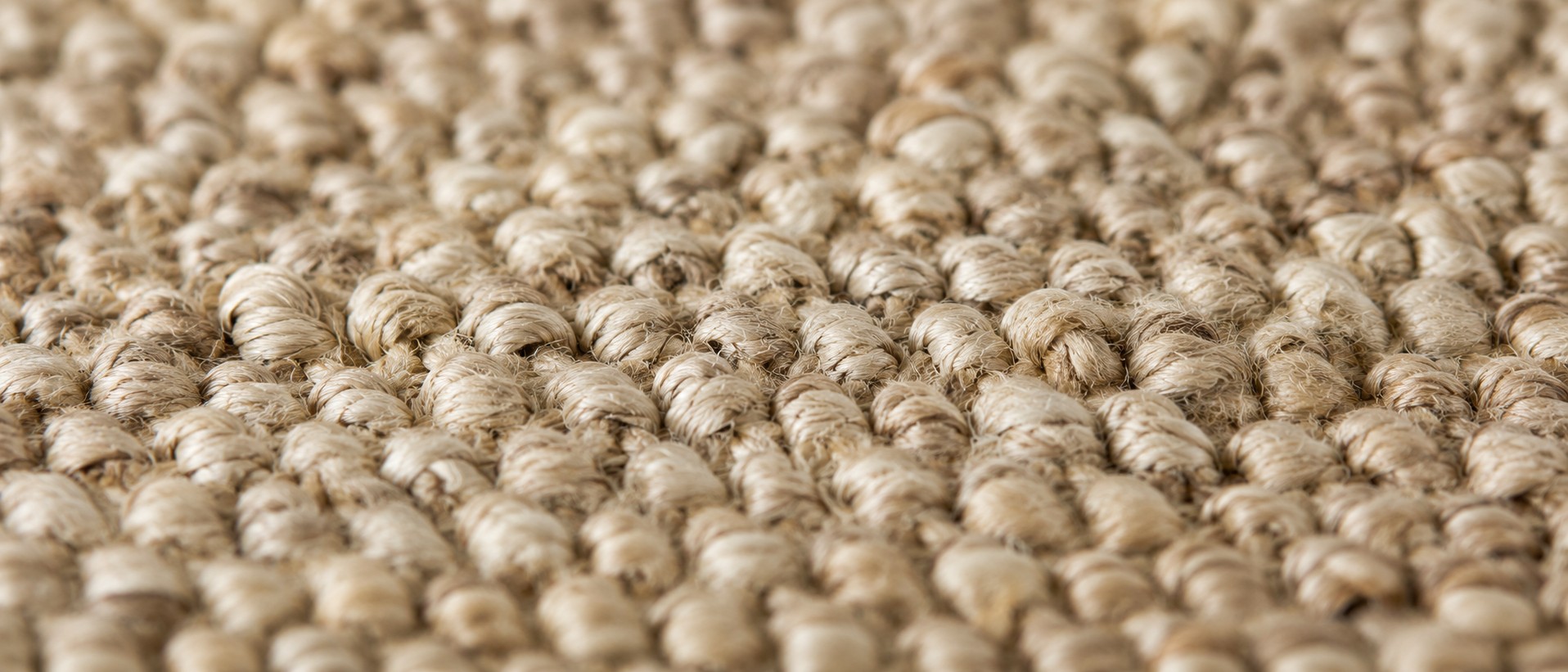
- Flat-woven qualities: Dry faster than high-pile variants and are generally easier to clean. Particularly recommended for locations with frequent rain.
Basic rule: Anyone who wants minimal effort should choose flat-woven synthetic fibre rugs in weather-resistant quality. They are more forgiving and dry reliably.
Everyday care: A simple routine for outdoors
The best care routine is one that fits effortlessly into daily life. Anyone who takes small steps regularly will prevent big problems.
Regular but straightforward
- Shake the rug out occasionally to remove loose sand, soil and pollen.
- Lift dust, pet hair and fine particles with a vacuum cleaner or a soft brush.
- After heavy rain, briefly lift the rug and allow the underside to air.
- Treat stains immediately, before they dry out or penetrate deep into the material.
More thorough cleaning when needed
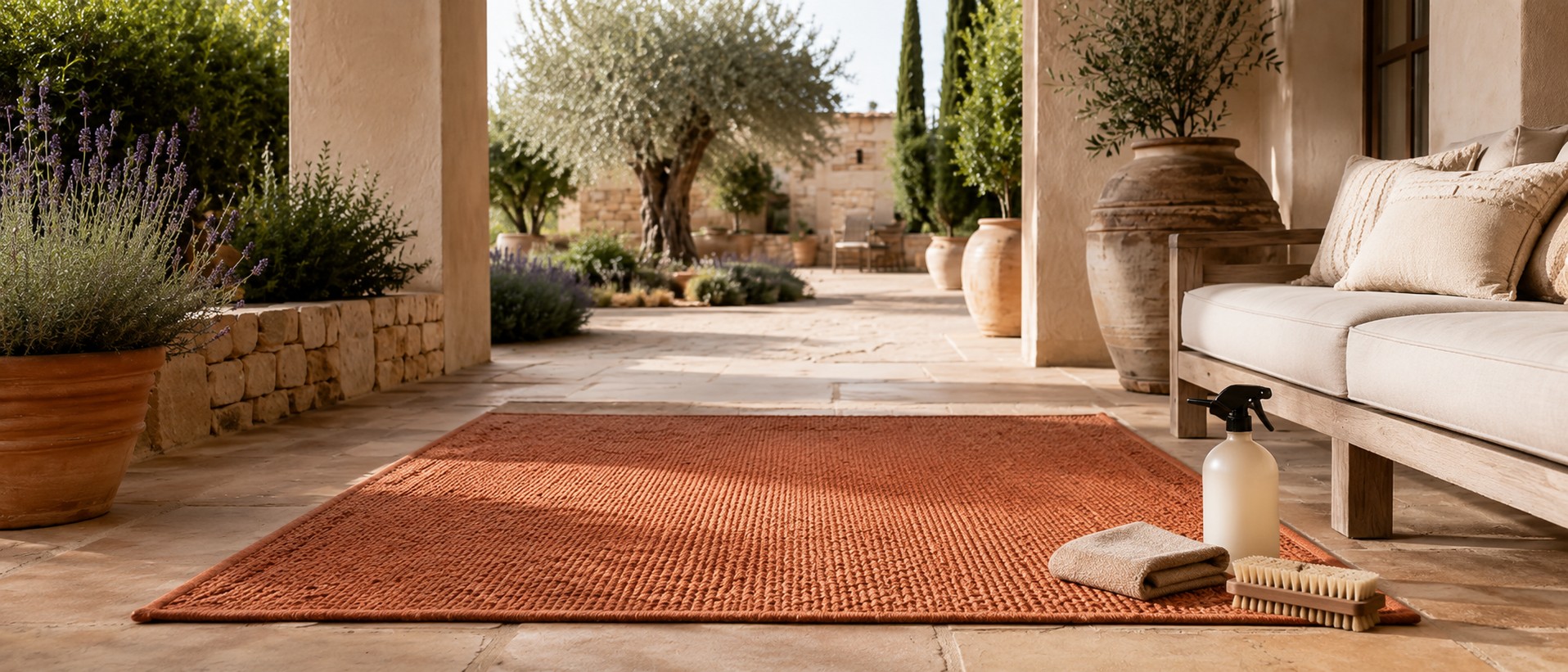
For a more thorough clean, clear water, a soft brush and a little mild soap are sufficient in most cases. Rinse the rug from both sides, gently brush it and then rinse it out completely. Important: Remove all soap residue completely, as it will otherwise attract new dirt. Afterwards, allow the rug to dry completely, hung up or in an airy spot, before laying it flat again.
Typical stains and how to deal with them
Every terrace and every balcony has its own everyday challenges. Here are the most common types of stains and the appropriate approach:
- Soil and mud: Allow to dry completely first, then brush off. Rinse with clear water afterwards.
- Blossom dust and pollen: Brush off dry or vacuum. Do not rub when wet, as this spreads the dust deeper into the material.
- Grease and barbecue stains: Loosen with a drop of mild washing-up liquid, work in gently and rinse thoroughly.
- Drinks: Absorb the liquid immediately, then rinse with clear water.
- Green algae growth: Brush off dry, then clean gently. Green algae growth often develops due to moisture and poor ventilation at the base.
As a general rule: treat stains gently, never rub aggressively. A small material test on an inconspicuous spot is always advisable before using new cleaning products.
Mould and damp stains: Understand the cause, solve the problem
Mould is not purely a material problem. It develops where moisture remains for a long time, organic dirt is present and air circulates poorly. Rugs that lie permanently on damp concrete, wooden decking or artificial grass are particularly at risk.
At the first signs of damp stains or mould: brush the rug dry, clean it gently and then allow it to dry completely. Then eliminate the cause: is the rug lying on a permanently damp surface? Is leaves or organic material collecting beneath it? Is air circulation lacking? Answering these questions will prevent recurrence more reliably than any cleaning product.
After rain: Handling drying correctly
Outdoor rugs made from synthetic fibre may get wet. What matters is that the water can drain away and the rug can dry out completely afterwards. On wood, concrete, tiles or artificial grass, moisture can build up under the rug, even when the surface already appears dry.
After prolonged rain, it is advisable to drape the rug over a railing or stand it up so that both the top and underside can air well. Even a few hours of air circulation make a big difference. Anyone who rolls up or leaves the rug while it is damp risks odour, damp stains and, over time, mould.
Pressure washers: When yes, when better not
The pressure washer is a frequently searched topic, but it is not a universal care tool. For robust synthetic fibre rugs it can be used, provided the pressure is set low and a sufficient distance is maintained. The manufacturer's care label should always be consulted beforehand.
For high-quality outdoor rugs, the gentler alternative is the better choice: a garden hose, soft brush and mild soap clean thoroughly without straining the material. Flat-woven rugs and finer structures are sensitive to excessive pressure.
Winter storage: The final step of a long season
The winter break is an important part of outdoor rug care. Stored correctly, the rug will emerge from storage in perfect condition in spring.
- Clean the rug thoroughly before storing it.
- Allow it to dry completely, with no remaining moisture.
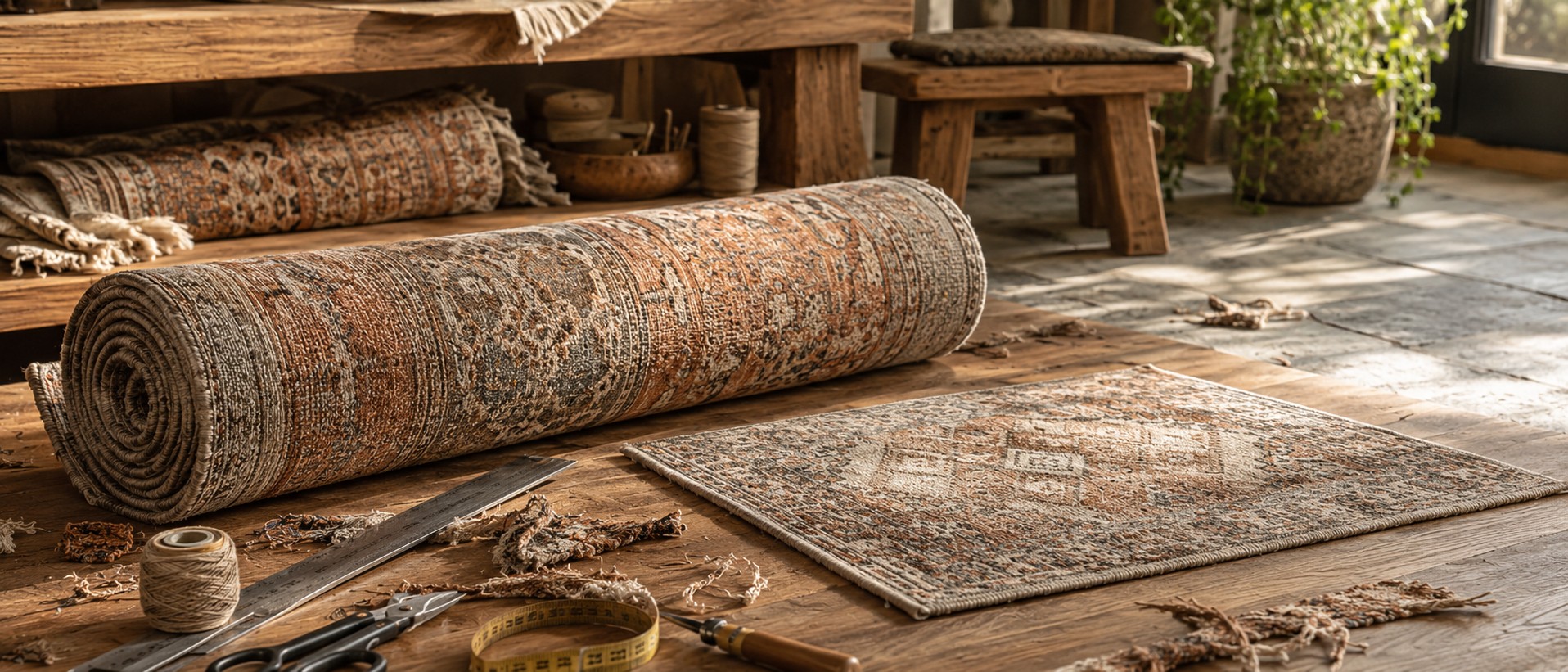
- Roll it up loosely, do not crease or store it folded.
- Store it in a dry, airy and sheltered location, for example in the cellar only if it is genuinely dry.
- Do not seal it away damp in plastic sheeting, a closed garden box or a poorly ventilated room.
Anyone who invests five minutes in cleaning and drying in autumn will have a fresh rug in spring that is ready for immediate use.
Common mistakes to avoid
Many care problems can be traced back to a few typical mistakes:
- Rolling up or folding the rug while it is damp.
- Never checking or airing the underside.
- Leaving soap residue in the material.
- Rubbing stains vigorously instead of dabbing gently.
- Using aggressive cleaning products or bleach.
- Ignoring the manufacturer's care instructions.
- Leaving the rug permanently on a damp or dirty surface.
The good news: anyone who keeps these points in mind will enjoy an outdoor rug for many seasons.
FAQ
Can an outdoor rug be left outside permanently?
With weather-resistant synthetic fibres such as polypropylene, this is generally possible. What matters is that no standing moisture collects under the rug. Depending on the surface, wooden decking, concrete or tiles, moisture builds up differently. After prolonged periods of rain it is worth lifting the rug and allowing the underside to dry. The manufacturer's care label also provides binding information on what the respective material can tolerate.
How do you clean an outdoor rug properly?
Shake out or brush off loose dirt. Rinse from both sides with the garden hose. For heavier soiling, use a little mild soap and a soft brush. Rinse out all cleaning product completely, as residue attracts new dirt. Allow the rug to dry completely, hung up or in an airy spot, before laying it flat again.
What should you do about mould or damp stains on an outdoor rug?
First brush the rug dry, then clean it with water and mild soap. Do not use aggressive chemicals. Afterwards, allow it to dry completely and thoroughly. It is equally important to eliminate the cause: persistent moisture, organic dirt such as leaves under the rug, or a lack of air circulation are the most common triggers. Improving these conditions will prevent recurrence more reliably than cleaning alone.
Is it permitted to clean an outdoor rug with a pressure washer?
For robust synthetic fibre rugs this is possible under certain conditions: low pressure, sufficient distance and a prior check of the manufacturer's care instructions. For high-quality or finely structured outdoor rugs, the garden hose combined with a soft brush is the gentler and safer method. The pressure washer should remain the exception, not the standard cleaning method.
How should an outdoor rug be stored correctly in winter?
Clean the rug thoroughly before storing it. Allow it to dry completely, including the underside. Roll it up loosely, do not crease or store it folded. Store it in a dry, airy location. Do not seal it away damp in plastic sheeting, a closed garden box or a damp cellar, as mould will otherwise develop.