Outdoor Rug Guide: Material, Size and Care for the Outdoors
The outdoor space as a second living room
As soon as it warms up, life moves outside. An outdoor rug gives a balcony, terrace and garden the same comfort as a room indoors. Before it delivers that effect and lasts for years, a few deliberate choices matter: the material, a realistic picture of weather resistance, the right format and a lean care routine. This guide gathers the topics and points to the matching category at each step.
Material first: what really lasts outside
Outdoors, the fiber decides everything else. Polypropylene absorbs almost no moisture, dries quickly and stays light-fast in many lines. Polyester and recycled PET offer much the same, often with a softer hand. Natural fibers like jute and sisal win on warm texture but tolerate lasting dampness poorly, so they stay a choice for covered spots. The suitable qualities are gathered in the synthetic-fiber rugs and the full range of outdoor rugs.
Format and shape: from round to large-scale
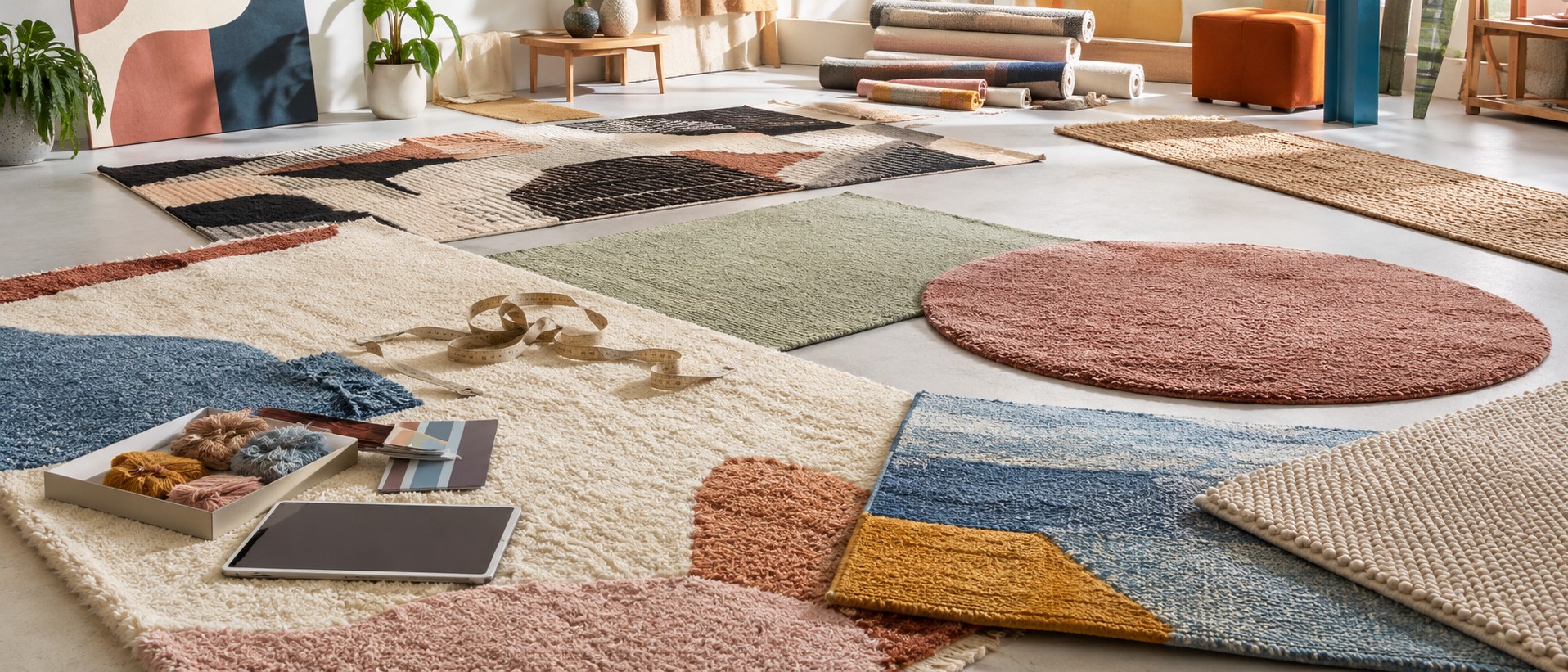
Size carries an outdoor area or lets it fall apart. For a terrace: the seating group stands with all its legs on the rug, or at least the front ones. Generous formats define a clear zone and give the space calm. Round rugs suit lounge corners and bistro sets, since they break the edges of rectangular layouts. The right cut is found, depending on the spot, in the balcony rugs, the terrace rugs and the garden rugs.
Reading weather resistance realistically
Weather-resistant does not mean every rug suits every spot. The interplay of fiber, flat weave and location decides. On a south-facing balcony the sun hits the rug for hours, and UV resistance becomes a requirement. Muted, heathered tones show slight changes less than bold solid colors. Built specifically for permanent outdoor use are the weather-resistant rugs.
Cleaning without effort
A synthetic rug stays fresh with a few moves:
- Shake out or brush off sand, pollen and leaves regularly.
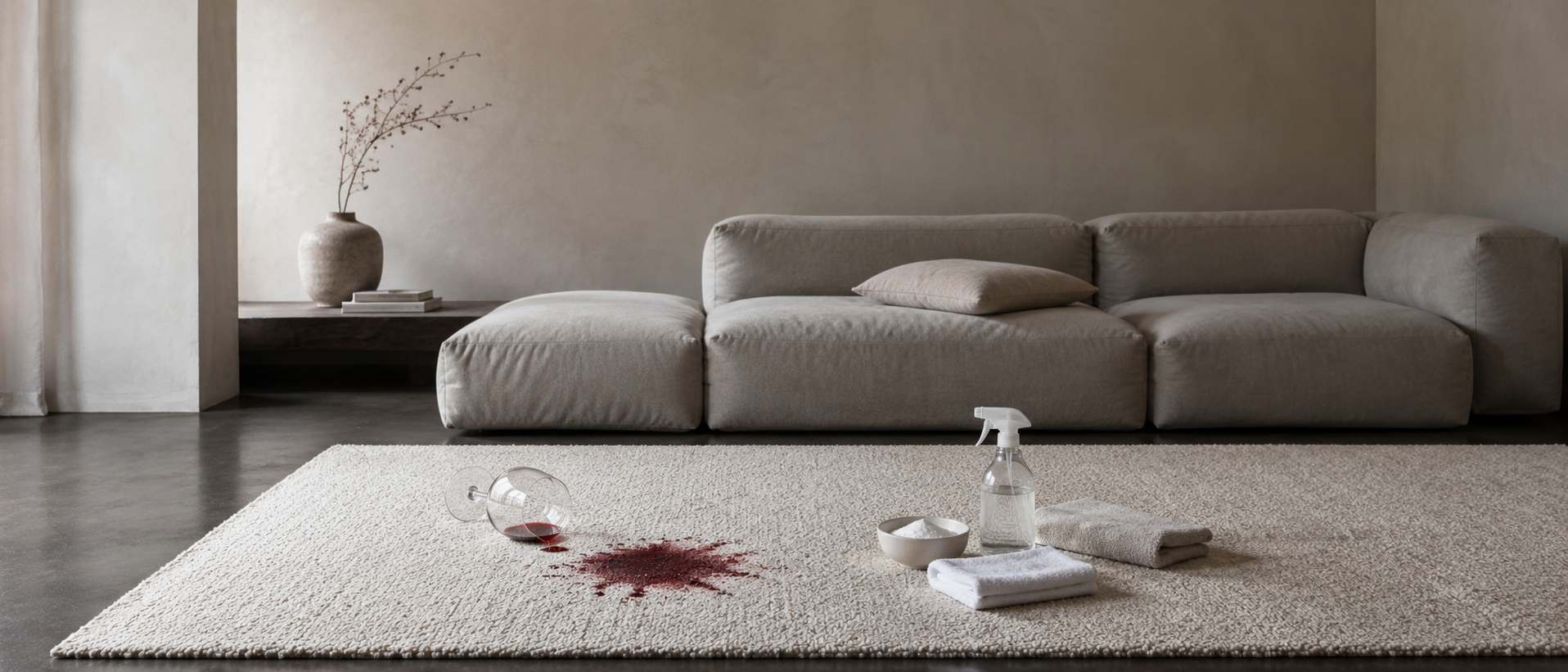
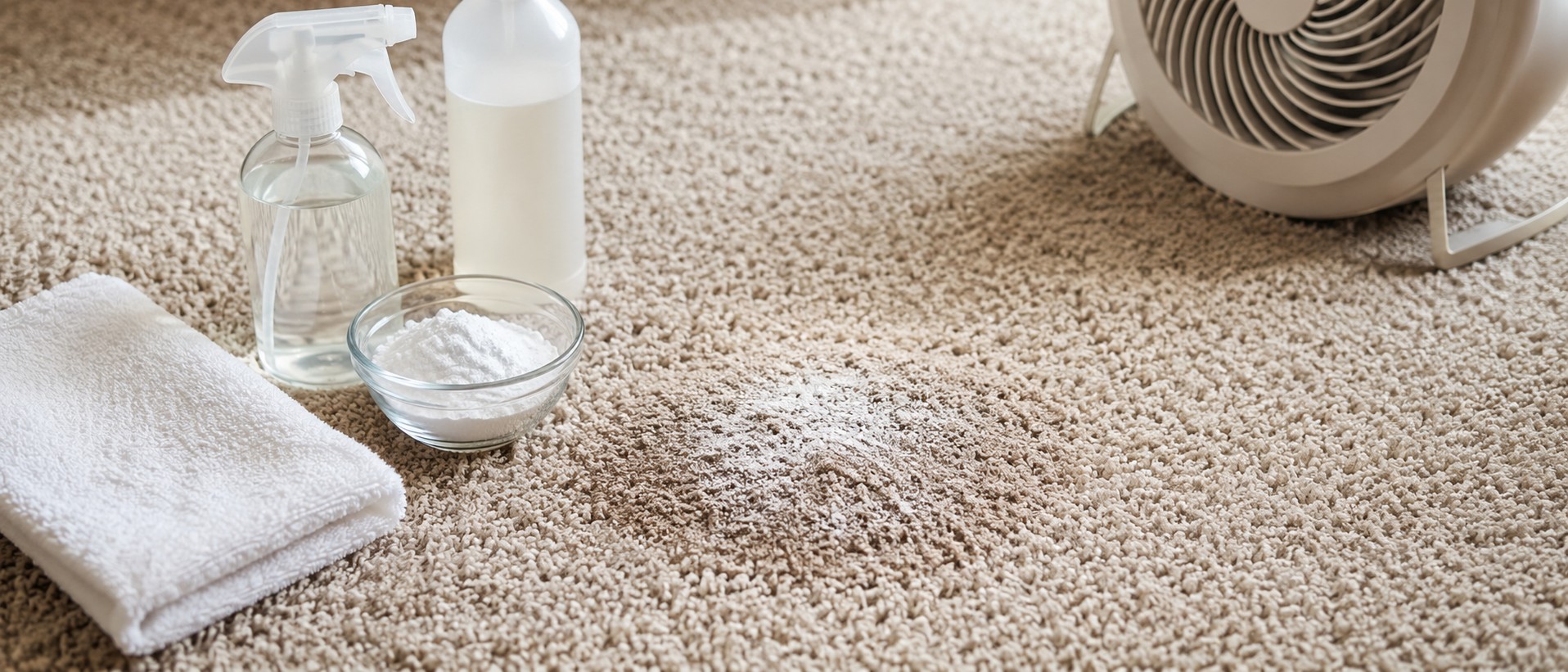
- For heavier soiling, rinse with a garden hose and mild soap, then rinse clear.
- Let it dry completely before the rug lies flat again.
A pressure washer is not an everyday tool: only robust polypropylene qualities tolerate it, and only at low pressure and distance. The gentle method stays water with a soft brush.
Dampness, mold and winter
Dampness itself is no problem; standing dampness is. If water stays trapped under the rug and air is missing, odor and mildew marks appear. So after long rainy spells, lift and air it. Before winter, the rug is cleaned, dried fully and stored rolled up loosely in a dry, airy place. Airtight film and damp cellar rooms are unsuitable for that.
Color and pattern for the outdoors
With the basics in place, styling follows. Earthy and sandy tones join effortlessly with wood decking, stone slabs and greenery and age quietly. Geometric patterns give the floor a statement of its own and work strongest in restrained corners. A warm tone like terracotta or muted green adds depth to the seating group. That way the rug moves from a practical covering to the element that holds the outdoor space together.
FAQ
Which material works for a balcony and terrace?
Open balconies and uncovered terraces are best served by synthetics like polypropylene, polyester or PET. They take on almost no moisture, dry fast and handle rain and temperature swings reliably. Natural fibers such as jute or sisal look inviting but belong under a roof, since they store dampness. Flat-woven models generally perform best outdoors.
Are outdoor rugs water-permeable?
Most synthetic outdoor rugs are water-permeable, or at least let water drain off quickly rather than pooling it. A flat weave and an open structure support this. The surface underneath stays decisive: if water can flow away and air circulates, the rug dries on its own after rain.
What size fits a lounge corner or a terrace of 3 by 4 meters?
For a lounge corner, a round format adds a soft accent and frames the seating. For a terrace around three by four meters, a format from 200 by 300 centimeters fits, so the table and chairs have room. Size only reveals itself in place: mark the area with tape first and the effect is clear before you order.
How do I prevent mold under the outdoor rug?
Mold needs standing dampness and missing airflow. The most effective step is under-ventilation: lift the rug after long rain, keep the surface free of leaves and allow air to circulate on smooth tiles. If odor appears, a mild soap solution followed by full drying, including the underside, resolves it.
Does the outdoor rug need to come inside for winter?
Weather-resistant synthetics can stay outside as long as drainage and airflow are in place. During hard frost, snow or long rainy spells, rolling the rug up, drying it fully and storing it dry is the better call. This one routine keeps colors and fibers intact across several seasons.