Red Wine on the Rug: What Matters Right Now
Act immediately before the stain sets
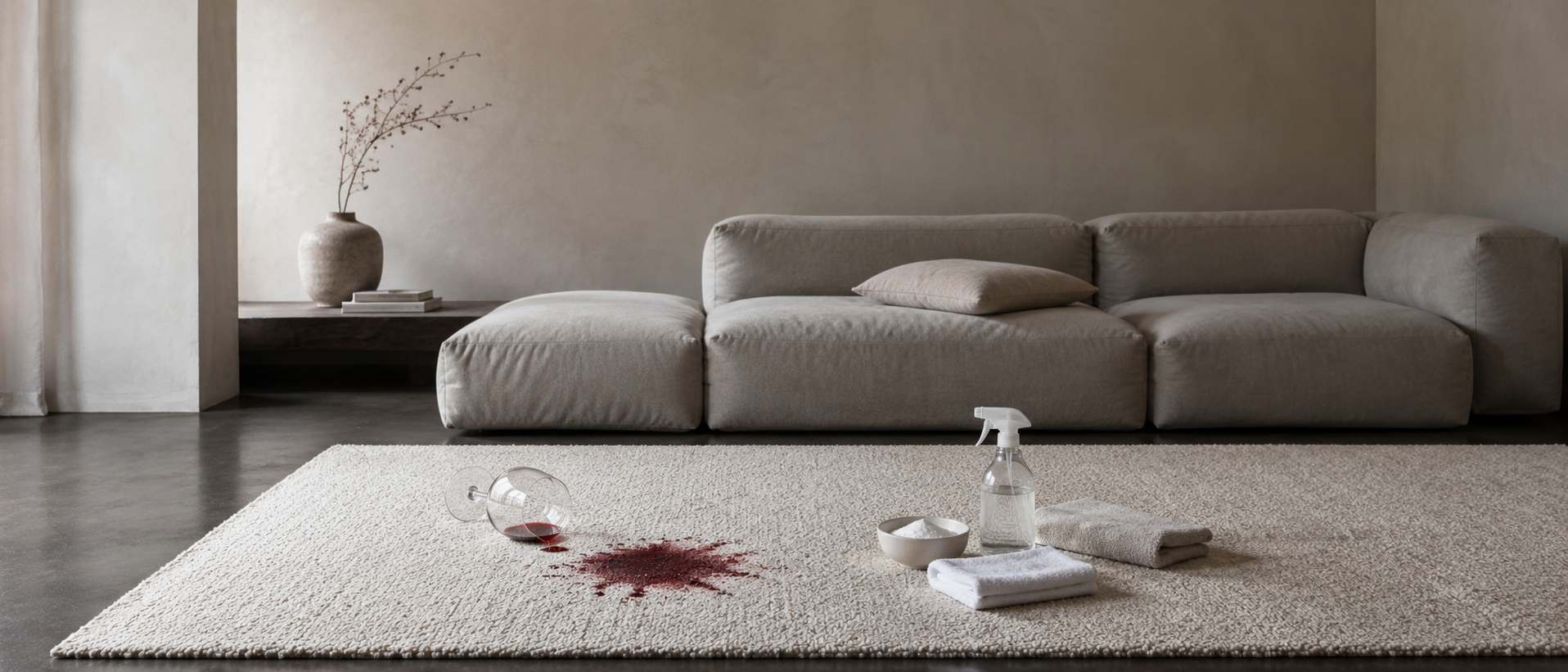
A tipped glass of red wine in the living room and your gaze goes straight to the rug. In that moment, the next minute determines how serious the damage will really be. Red wine contains intense dyes and tannins that work their way into the fibres quickly. The longer you wait, the more deeply they become anchored.
The most important rule first: Blot, never rub. Rubbing spreads the stain, pushes it deeper into the material and can damage fibres, especially in a high-pile rug or a soft wool rug.
The 5 steps for fresh red wine stains
- Step 1: Blot up excess liquid immediately. Take white kitchen paper or a clean, light-coloured cloth and carefully blot the red wine from the outside inwards. This prevents the stain from spreading.
- Step 2: Apply a little cold water. Add just a small dash of cold or still water (alternatively: sparkling water) directly onto the stain to dilute the concentration of the red wine.
- Step 3: Blot again from the outside inwards. Gently absorb the loosened red wine with a fresh cloth. Repeat this process two to three times.
- Step 4: Apply an absorbent agent (optional). Spread a thin layer of bicarbonate of soda or baking powder over the damp area and leave it to work for a few minutes. The agent absorbs residual moisture. Then vacuum thoroughly.
- Step 5: Allow the area to dry. Do not use a hairdryer and avoid applying heat. Leave the area to dry in the air or covered with a dry cloth. Afterwards, check the area again in daylight.
Fresh stain or dried? The difference matters
A fresh red wine stain can in many cases be significantly reduced or completely removed using the procedure described above. With a dried stain the situation is different: the dyes have already bonded with the fibres. This requires patience and an adjusted approach.
- First carefully rehydrate the old stain with a little cold water and leave it to work for a few minutes.
- Then gently blot without scrubbing.
- Test a suitable stain remover on a concealed area before applying it to the visible stain.
- For valuable, hand-knotted or delicate rugs: commission professional cleaning before further attempts make the damage worse.
Honestly: not every dried red wine stain can be completely removed. This is not solely a question of method, but of the material, the time elapsed and the depth of colour of the wine.
Home remedies compared: what really helps
Sparkling water
A tried-and-tested first-aid measure. The carbonation helps to loosen and dilute fresh stains. Sparkling water is suitable for most rug materials and is gentle enough for a short-pile rug in the dining room as well as a fluffier living room rug.
Salt
Salt absorbs liquid and can help with a very fresh stain by binding the red wine at the surface before it penetrates deeper. It does not remove the dyes completely, however. Important: never rub salt in; vacuum thoroughly after drying and remove any residue.
Bicarbonate of soda and baking powder
Both agents are fine, mildly alkaline and absorb moisture. They are suitable as a second step after blotting. Do not rub in aggressively; instead sprinkle loosely and leave to work.
Vinegar and lemon
These acids are routinely recommended in many guides. They can work on light, robust synthetic fibre rugs. With wool, silk, viscose or high-quality designer rugs, however, they carry risks: acids can attack fibres, alter colours and weaken the structure. When in doubt, leave them out or use only after a material test on a concealed area.
Specialist cleaners
Commercial stain removers formulated specifically for rugs deliver the most reliable results, provided they are used in a manner appropriate to the material. Always test on an inconspicuous area first.
Material guide: not every rug tolerates the same treatment
Synthetic fibre rugs (polypropylene, polyester)
These materials are the easiest to care for. They absorb moisture less quickly and respond well to the methods described. Outdoor rugs or flat-weave rugs in particular react robustly to cold water and blotting.
Wool rug
Wool is a natural fibre with a degree of natural dirt resistance, but it is sensitive to acids, hot water and heavy soaking. For a wool rug: use only cold water, a pH-neutral or wool-suitable cleaning agent, blot gently and do not scrub. For stubborn stains, consider professional rug cleaning at an early stage.
Silk and viscose
These materials are among the most delicate of all. Silk and viscose can develop watermarks when damp and change structurally. Professional cleaning is the safest choice here.
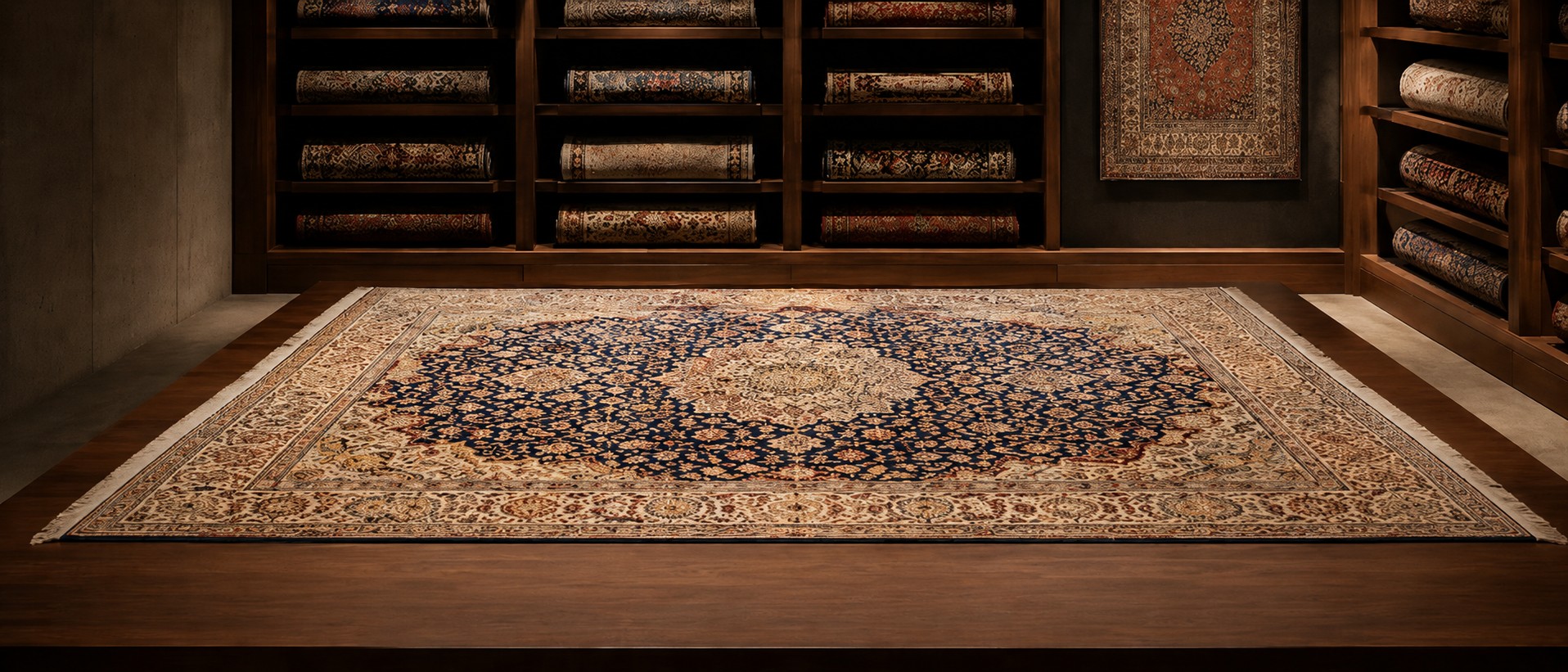
Oriental rugs and hand-knotted rugs
With antique or handcrafted pieces, caution is paramount. Home remedies can cause colours to run. Blot the stain gently, use as little moisture as possible and contact a specialist promptly.
Light-coloured rugs
Red wine is particularly visible on a light background. The basic rules apply here too, but take additional care to avoid using agents that could themselves leave discolouration. No coloured cloths, no unrinsed bicarbonate of soda.
Mistakes that make the stain worse
- Rubbing: Spreads the stain and pushes it deeper into the fibres.
- Hot water: Heat fixes the dyes in the material.
- Hairdryer or radiator: Dries the stain in before it has been completely removed.
- Bleach: Destroys colours and fibres, particularly with natural fibres and coloured rugs.
- Untested cleaners applied directly to the visible area: Always test first on an area that is normally concealed.
- Leaving the stain untreated for days: The longer you wait, the deeper the red wine sets.
When professional cleaning is the right decision
There are situations in which attempting to treat the stain yourself causes more harm than good. Professional rug cleaning is recommended for:
- dried red wine stains on delicate materials such as wool, silk or viscose
- hand-knotted, antique or very high-quality rugs
- stains that have not completely disappeared despite several attempts
- large-area soiling
A good rug cleaning service works in a material-specific way and can often remove stains that stubbornly persist at home. This is particularly the wiser choice for an expensive designer rug or a family heirloom.
Prevention: so the next evening stays relaxed
Anyone who wants to protect their rug has various options. Impregnation with a suitable rug protection spray forms a barrier on the fibre surface and provides more time to react if something does spill. A good rug underlay prevents moisture from soaking straight through to the floor.
Those who frequently have guests or have a rug in a heavily used area benefit from an easy-care synthetic fibre rug or a robust flat weave. High-pile rugs are particularly cosy, but they require considerably more attention when stains occur than a short-pile model.
Regular vacuuming and occasional professional cleaning maintains the quality of the rug in the long term, regardless of which material is chosen.
FAQ
How do I remove fresh red wine stains from the rug?
Take a white cloth or kitchen paper immediately and blot the red wine from the outside inwards. Never rub. Then add a small dash of cold water or sparkling water to the area to dilute the stain, and blot again. Repeat this process two to three times until as little colour as possible remains in the cloth. Leave the area to dry in the air afterwards.
Does salt really help against red wine stains on the rug?
Salt can help with a very fresh stain by absorbing the liquid at the surface before it penetrates deeper into the fibres. It does not remove the dyes completely on its own, however. Never rub salt in; sprinkle it loosely and vacuum thoroughly after drying. With delicate rugs such as wool or viscose, caution is advised, as salt residue can put a strain on the fibres.
What should I do about dried red wine stains in the rug?
Dried stains are considerably more difficult to treat. First carefully rehydrate the stain with a little cold water and leave it to work for a few minutes. Then blot gently without scrubbing. Always test a suitable stain remover on a concealed area first. For wool, silk, viscose or high-quality hand-knotted rugs, professional cleaning is recommended at an early stage before further attempts make the damage worse.
Can I remove red wine stains from a wool rug myself?
A wool rug requires the greatest care. Cold water and a clean, light-coloured cloth are the safest tools. Soak the rug as little as possible in the process. Aggressive acids such as vinegar or lemon juice as well as bleach should be avoided with wool, as they can attack the fibres and alter colours. For stubborn or large stains, professional cleaning by a specialist is the more reliable choice.
Which mistakes should I definitely avoid with red wine on the rug?
Rubbing the stain instead of blotting: this spreads the red wine and pushes it deeper into the material. Using hot water: heat fixes the dyes in the fibres. Using a hairdryer or heat sources: dries the stain in before it has been completely removed. Applying bleach: attacks colours and fibres. Applying cleaners or home remedies directly to the visible area without prior testing. Leaving the stain untreated for days: with each day, removal becomes more difficult.