Buying a Rug: What Really Matters
The Most Common Mistake When Buying a Rug
I see it time and again: a rug is bought because it looks beautiful in the shop, and six months later it ends up rolled up in the basement. Most of the time it is not a question of quality, but rather that the rug simply did not suit the room, the use, or everyday life. Too small for the seating group, too light for the hallway with a pet, too high in pile for the dining table. A good rug buying guide therefore begins not with the question "What do I like?" but with the question: "What do I really need?"
Size, material and pile height determine long-term satisfaction more than pattern or colour. Anyone who clarifies these three points first will rarely make a poor choice.
First Things First: Room and Use
Every room has different requirements. In the living room, the rug should define zones, provide warmth and bring the seating group together. In the dining room, stain resistance and sufficient size are key. In the hallway, robust, flat goods are needed that can withstand dirt and daily through traffic. In the bedroom, on the other hand, it can be softer and more generous, because there is less wear.
With every rug, I ask myself first: Who walks here? How often? Are there children or pets? Is food eaten here? Is it in direct sunlight? These answers set the framework within which all further decisions are made.
The Right Size: Plan Generously
Rugs that are too small are the most common mistake I see in furnished rooms. A rug that sits only between the sofa legs loses its effect. It fragments the room instead of organising it.
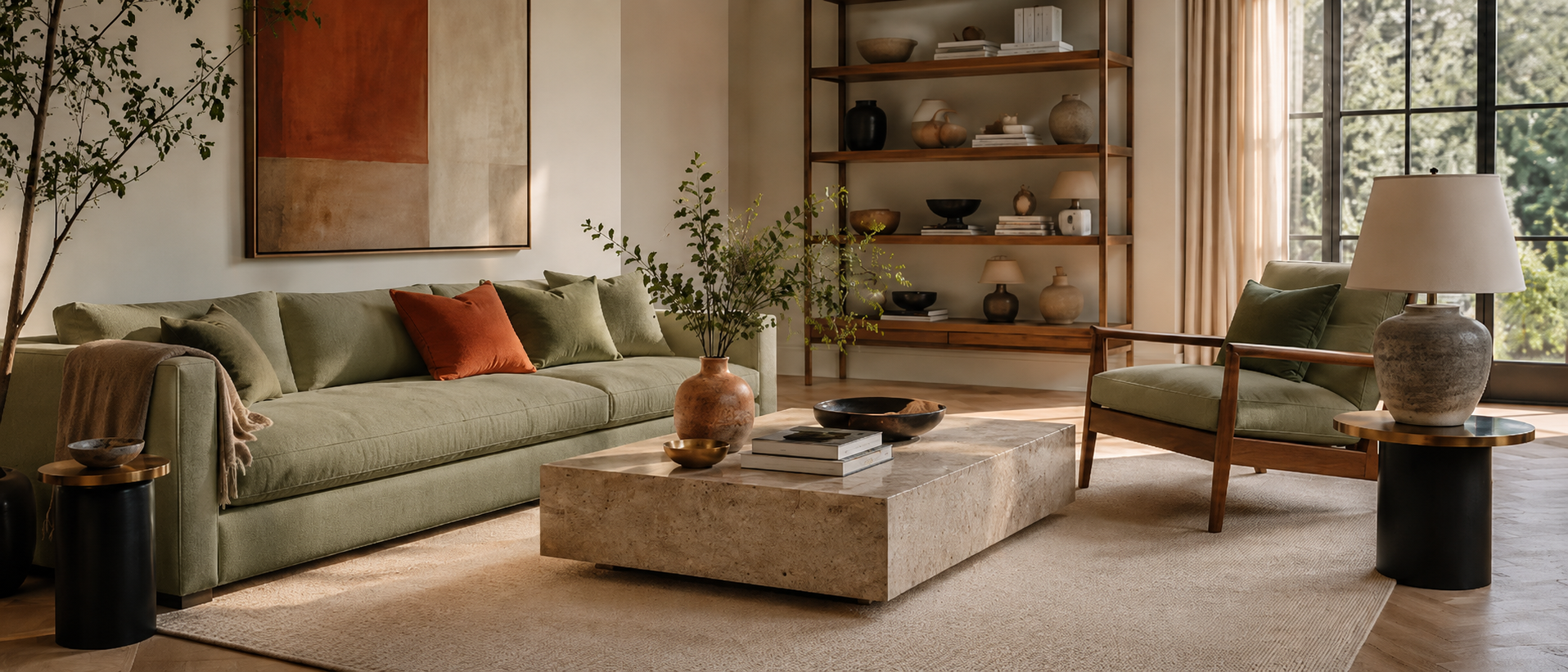
For the living room, the rule is: ideally, the front legs of sofas and armchairs should rest on the rug. This connects the seating group visually and makes the room appear larger. I recommend measuring generously and, if in doubt, going one size up.
For the dining room, a clear rule of thumb is helpful: the rug should be large enough that the chairs remain fully on it even when pulled back. This prevents trip hazards and protects the rug from chair legs slipping off.
In the hallway, the rug width is guided by the corridor width; a runner should be laid with a gap from the wall, not stuffed from wall to wall.
- Living room: aim to have the front legs of all furniture on the rug
- Dining room: chairs remain on the rug even when pulled out
- Hallway: runner with a lateral gap from the wall
- Bedroom: overhang on both sides and at the foot of the bed
Choose Material According to Everyday Life
Material is the decision that determines long-term satisfaction the most. I like to divide it into four groups:
Wool
Wool is my personal favourite for living rooms and bedrooms. It is durable, pleasant underfoot, regulates moisture and is naturally dirt-repellent. A good wool rug lasts for decades when properly cared for. Another argument for buying a wool rug is that it settles and becomes firmer over time.
Synthetic Fibre
Polypropylene, polyester and similar synthetic fibres are robust, easy to clean and often considerably cheaper. They are well suited for heavily used areas, dining rooms, hallways or rooms with children and pets. Anyone looking for an easy-care rug is well served here.
Natural Fibres such as Jute and Sisal
Jute and sisal bring texture and a natural look. They are less soft underfoot and less forgiving of stains than wool or synthetic fibre. Best used in areas with low moisture exposure and as a design element in calm rooms.
Silk and Viscose
Silk and viscose look refined and have a characteristic sheen. They are more sensitive to moisture and abrasion and are best suited to representative areas with low use. Anyone choosing these materials should realistically factor in the care requirements.
Short Pile, High Pile or Flatweave?
Pile height influences how a rug feels, how easy it is to clean and where it can be sensibly used.
Short pile and flatweave are by far the easier to care for. Dirt does not sit deep, the vacuum cleaner works well, and robot vacuum cleaners also cope better with them. For the dining area, the hallway and rooms with pets, short pile is the pragmatic choice.
High pile feels more homely, softer and more inviting. It encourages walking barefoot or sitting on it. High pile requires more care, however: it tends to flatten, stores more dust and makes stains harder to reach.
For underfloor heating, the rule is: the thinner and shorter the pile, the better the heat transfer. Flatwoven rugs or short pile work significantly better with underfloor heating than high pile rugs.
Honestly Assessing Care Requirements
A rug is only a good purchase when the care effort suits one's own everyday life. With every recommendation I ask myself: how much time and willingness does the person really have?
- Children and pets: short pile or flatweave, synthetic fibre or treated wool, dark or patterned colouring
- Underfloor heating: flatweave or short pile, maximum 2,500 g/m² total weight
- Dining area: prefer stain-resistant materials, short pile, easily wipeable surfaces
- Sun exposure: choose lightfast colours, light rugs can yellow
- Allergy sufferers: short pile or flatweave store less dust and pollen
Anyone who uses a robot vacuum cleaner daily should avoid fringes and high pile. That may sound pragmatic, and it is, and it ends up saving many a purchase.
Recognising Quality and Craftsmanship
High-quality rugs are not always recognisable at first glance, but there are reliable signs. I always pick up a rug and look at the back.
With hand-knotted rugs, the pattern on the back is almost as clearly visible as on the front. The knots sit firmly, the edges are even, and the material feels pleasant. Hand-knotted rugs are more labour-intensive to produce and correspondingly more durable.
Hand-tufted rugs have a glued backing, often made of latex. They are less expensive but constructed differently. They can look convincing visually; however, anyone buying a rug as a long-term investment should know the difference.
With Oriental rugs, knot density is an important characteristic, but not the sole proof of quality. Origin, material, age, condition and artistic quality play an equally important role. An older rug made from high-quality wool with vivid natural colours can be more valuable than a newer one with a higher knot count made from inferior fibre.
Style, Colour and Room Effect: Decide Last
I always advise my acquaintances: clarify everything else first, then the aesthetic follows naturally. Anyone who has defined room, size, material and care usually already has a clear idea of which colour and pattern will work.
Light rugs open up a room visually and make it feel more airy. Dark rugs give rooms depth and calm. Anyone with a minimalist interior can afford a characterful rug with a bold colour or expressive pattern. Anyone who already has many patterns in their interior benefits from a calmer, plain rug that holds the composition together.
A good rug does not have to stand out in every respect. Sometimes the best rug is the one that works quietly and still brings everything together.
Checklist Before Buying
- In which room will the rug lie, and how intensively will it be used?
- What size do I really need? (Measure the space, include the furniture)
- Which material suits my everyday life and my willingness to care for it?
- Short pile, high pile or flatweave: what makes sense in this room?
- Are there any special requirements: pets, children, underfloor heating, allergy sufferers?
- How do I recognise quality: back, edges, material, craftsmanship?
- Does the design suit what is already in the room?
High-Quality Rugs as a Long-Term Decision
Anyone who buys a high-quality rug is often making a decision for decades. A hand-knotted wool rug or a classic Oriental rug develops its own patina over time, becomes firmer and more characterful. That is not a romantic notion, but a question of material physics: wool settles, compacts and wears more beautifully.
For me personally, a good rug is one of the few furnishing objects that improves with use. Buying a rug means, in this case, investing in something that gains value, character and beauty over the years.
FAQ
What is the right rug size?
Start by measuring the room and taking the furniture arrangement into account. In the living room, the rug should be large enough for the front legs of the sofa and armchairs to rest on it; this connects the seating group visually. In the dining room, the rule is: chairs must remain fully on the rug even when pulled back. In the bedroom, it is advisable to let the rug overhang on both sides and at the foot of the bed. The general rule of thumb is: go one size up rather than too small. Rugs that are too small fragment a room instead of organising it.
Which material suits my everyday life?
Wool: High-quality, durable and naturally dirt-repellent. Ideal for living rooms and bedrooms with normal to high use. Synthetic fibre (polypropylene, polyester): Easy to care for, robust and often less expensive. Well suited to dining rooms, hallways and rooms with children or pets. Silk and viscose: Refined with a characteristic sheen, but sensitive to moisture and abrasion. Better suited to representative rooms with low use. Jute and sisal: Natural look and texture, less soft underfoot and less forgiving of stains. Suitable in dry rooms with low wear.
Is short pile or high pile better?
It depends on where the rug will be used and on everyday life. Short pile and flatweave are significantly easier to care for: dirt sits less deep, the vacuum cleaner works better, and robot vacuum cleaners function without difficulty. Short pile is therefore very well suited to dining rooms, hallways and rooms with pets or children. High pile, on the other hand, feels more homely and softer and invites barefoot walking. It requires more care, however, stores more dust and makes stains harder to reach. For underfloor heating, short pile or flatweave is also the better choice, as heat is transferred upwards more effectively.
How do I recognise a high-quality rug?
Material: A high-quality rug feels pleasant and springs back. Wool and silk have a characteristic sheen and handle. Back: With hand-knotted rugs, the pattern is clearly visible on the back. A glued latex layer indicates a hand-tufted product. Edges and fringes: Even, neatly finished edges are a sign of good craftsmanship. Fringes should grow from the rug, not be sewn on. Oriental rugs: Knot density is a reference point, but origin, age, material and artistic quality are equally decisive for value.
What should I pay particular attention to before buying?
Clarify room and use: Who walks here every day? Children, pets, shoes, dining? Determine size: Measure the room and include the furniture before choosing a model. Realistically assess care requirements: A beautiful rug is only a good purchase when care and use are compatible. Choose material consciously: Wool for durability, synthetic fibre for easy care, silk for representation. Decide on design last: Derive colour and pattern from the room's effect and existing furnishings, once all functional questions have been answered.