Sustainable rugs: which label stands for what?
You want a rug that didn't come at someone else's expense. Nothing off-gassing into the air, no children at the loom, no environmental footprint you'd rather not look at. Sounds like a clear ask. Then you stand there before the purchase, reading 'eco,' 'natural,' 'conscious,' looking at a little green leaf, and you still can't tell whether there's substance behind it or it's pure decoration. This guide sorts the rug labels that matter: what each one checks, what it doesn't, and how you catch an empty eco-promise.
Sustainable is a big word. Break it into three.
The first mistake happens before the first seal. 'Sustainable' gets used as if it were a single trait. It isn't. A rug holds at least three questions that have little to do with each other.
- Health: Does the rug load your indoor air? Do harmful substances off-gas that you and your kids breathe every day?
- Fair production: Under what conditions was it made? Child labor, wages, safety on the job?
- Ecology: What is it made of, how was it produced, and what happens at the end of its life?
Not one seal covers all three. One can ace indoor air and stay completely silent on who made the rug. The next vouches for fair knotting and never looks at a single toxin. Once that clicks, every green logo reads differently.
The material decides more than any logo
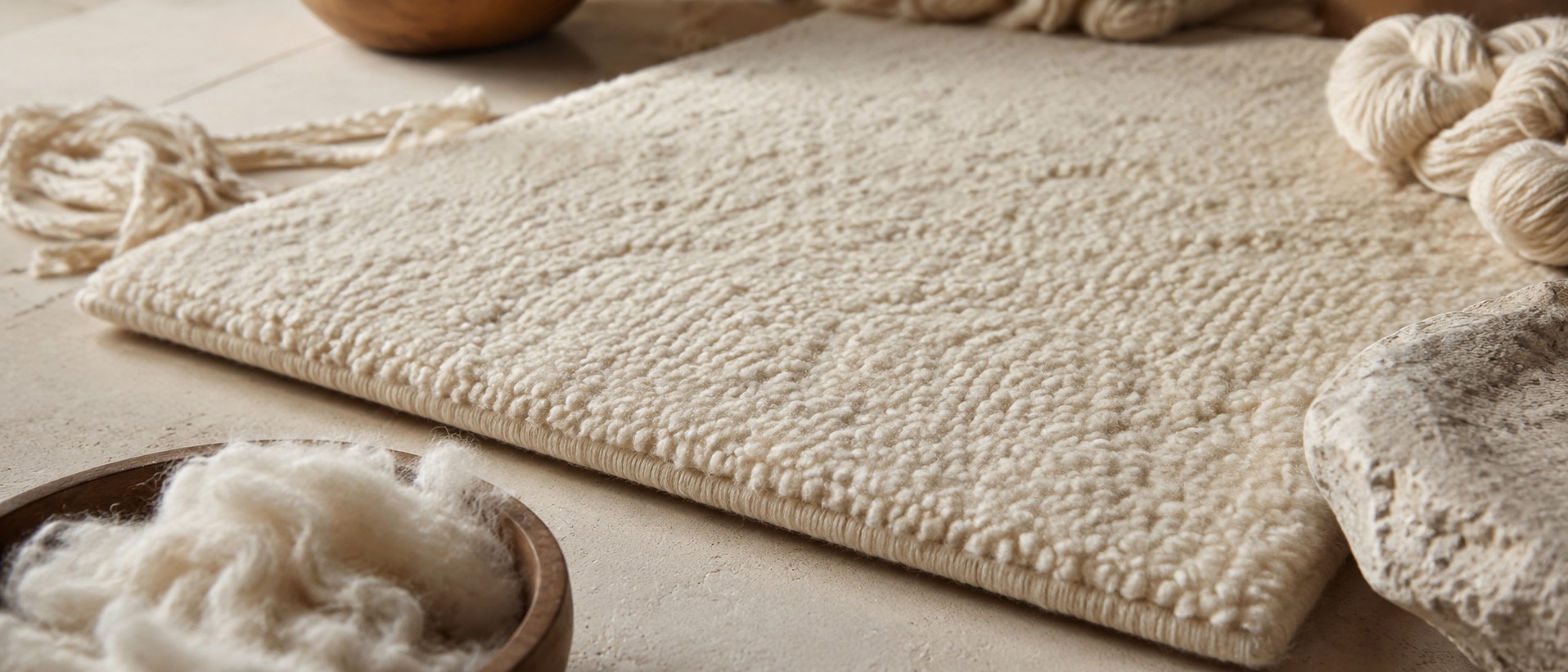
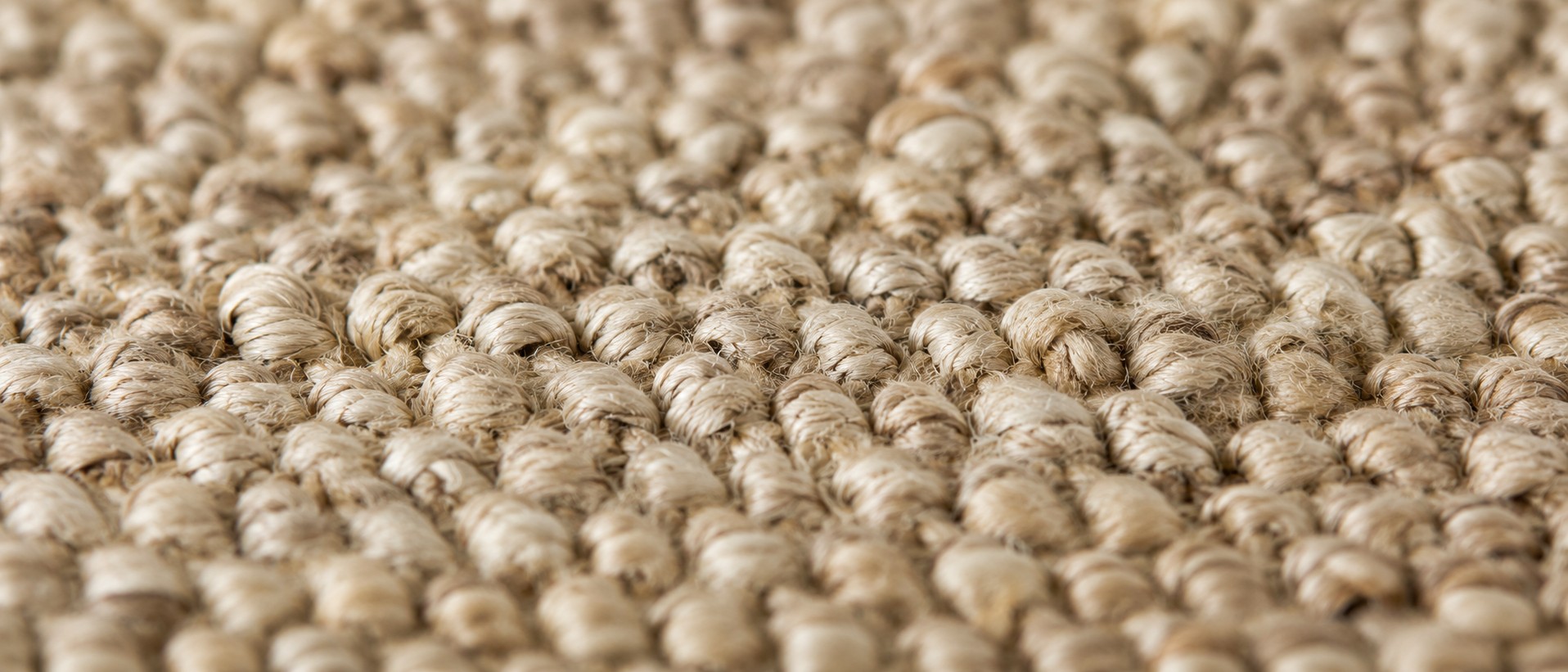
Before you even look at a seal, the fiber sets most of the environmental balance. Natural fibers like wool, cotton, jute and sisal grow back and biodegrade in the end. Wool has a second ace: it lasts for decades if you let it. Recycled PET, pulled from old plastic bottles, gives plastic a second life instead of burning through new material. It gets more critical with pure polypropylene and polyester from crude oil. The fibers are cheap and tough, but they don't break down, and every step across them loosens tiny amounts of microplastic.
Still, it pays to stay nuanced. A cheap natural rug worn out after two years isn't greener than a rugged synthetic that lasts ten and gets recycled afterward. Longevity is the factor almost everyone underrates. The most sustainable rug is often the one you simply don't replace.
Five labels that carry weight on a rug
Among dozens of logos, five actually say something on a rug. Here's the quick overview, then we take them apart one by one.
| Label | Checks | Doesn't check | You recognize it by |
|---|---|---|---|
| GoodWeave | no child or forced labor | toxins, carbon footprint | tag with its own number |
| Label STEP | fair conditions on hand-knotted rugs | toxins in the product | STEP logo, a Swiss label |
| GOTS | organic natural fiber plus social criteria | fully synthetic rugs | logo with certifier and number |
| Oeko-Tex Standard 100 | toxins in the finished product | fairness, ecology, production | test number plus institute |
| Blue Angel | indoor-air emissions | fairness, climate footprint | code DE-UZ 128 |
Oeko-Tex and the Blue Angel: clean on air, blind to the rest
If what you breathe every day is your priority, these are your two seals. Both come with one clear limit that hardly any shop spells out.
Oeko-Tex Standard 100 is the seal you'll bump into most. Its job is narrow and useful: it screens the finished rug for health-relevant substances against fixed limits, with four product classes and the toughest thresholds reserved for baby textiles. Here's the catch nobody prints on the tag. Fair wages, child labor, CO2, water use, none of that is on Oeko-Tex's radar. For years Greenpeace has pointed out the gap: the test reads the end product, not the factory, so a chemical that harms during dyeing and vanishes before the rug ships never lands on the certificate. Read it as tested for toxins, not as sustainable. If you want the production in scope as well, 'Oeko-Tex Made in Green' adds a mill audit and traces the rug back to its maker.
The Blue Angel is a German government ecolabel; the version that applies to rugs and carpet goes by DE-UZ 128. It sets ceilings for how much VOCs and formaldehyde the covering may release, keeps carcinogens out, and puts even the odor on the test bench. It was built with wall-to-wall carpet in mind, not so much a single hand-knotted piece. Spot it, and indoor air is one less thing to worry about; about the people who made it, it says nothing.
GOTS: when organic should really mean organic
GOTS stands for Global Organic Textile Standard and ranks among the strictest textile standards out there. It only kicks in with natural fibers, so wool from certified organic animal farming or cotton from certified organic growing. On a purely synthetic rug GOTS has no business, and that's exactly what makes it meaningful when it shows up. The reach is the point: GOTS checks not just the fiber but the whole chain to the finished rug, ecological and social at once. Toxic chemicals, heavy metals and genetic engineering are banned. Alongside that, the social standards of the International Labour Organization apply: no child labor, no forced labor, fair pay, safety at work. Independent, accredited bodies run the checks. See GOTS on a wool rug, and you're looking at one of the strongest guarantees the market puts on a label.
GoodWeave and STEP: against child hands at the loom
Hand-knotted rugs often come from regions where child labor is a real issue. Two seals take aim right there, and for Switzerland the two belong together.
GoodWeave, once known as RugMark, shuts out child, forced and bonded labor across the whole production, all the way into outsourced home work, and the inspections arrive without warning. What makes it work: each tag comes with a unique number, and that number leads straight back to the licensed maker. One honest footnote belongs here. By GoodWeave's own account the ecological and wage pieces aren't part of the binding certification yet, and campaigners note that keeping kids off the loom doesn't, by itself, improve their lives. A strong signal, then, not a cure-all.
Label STEP is the Swiss reference point and shows up in many Swiss furniture stores. Founded in Bern in 1995, it goes a step beyond a plain child-labor ban: STEP checks hand-knotted rugs along a fair-trade standard covering working conditions, health, safety, wages and the environment, with unannounced inspections several times a year in countries like India, Nepal, Pakistan and Morocco. If you're buying in Switzerland, STEP is the label you'll run into most on hand-knotted goods.
One mix-up worth clearing up: Care & Fair is not a seal in the same sense. The industry initiative funds schools and clinics in the weaving regions, which is good and important. It does not, however, inspect the individual production for child labor. So a Care & Fair note replaces neither GoodWeave nor STEP.
You catch greenwashing with a single question
The question: can I look the seal up online with a number? If yes, it's real. If no, it's decoration. That's the toughest test, and it's that simple. Reputable seals like Oeko-Tex, GOTS or GoodWeave carry a test number and a testing institute, both verifiable in their database. Everything else stays a claim.
These signals give away an empty promise:
- No number, no institute. A logo with no traceable proof is worthless, however green it glows.
- Vague words with no standard. 'Eco,' 'natural,' 'green,' 'conscious': with no named standard behind them, they say nothing.
- Homemade brand seals. A company's own green badge, checked by nobody on the outside, borrows the look of trust without the substance.
- A seal in the wrong context. Waving an Oeko-Tex tag around as if it proved fair production is the usual sleight of hand.
- 'Made from recycled material' with no percentage. One percent or eighty? Without a number it stays a claim.
Politics is starting to back that skepticism. An EU study flagged about half of all green advertising claims as vague or misleading, with more than two hundred sustainability labels floating around the bloc. Starting September 27, 2026, a new EU rule outlaws catch-all eco-wording and only lets a sustainability label stand if an independent certifier backs it. Switzerland isn't bound by it directly, but the direction is unmistakable. For a closer read, consumer-protection groups and the SRF program 'Kassensturz' publish independent assessments regularly.
Your buying checklist
It all circles back to your own priority. Pick the seal that answers it, and let the greenest-looking logo go.
- After clean indoor air? Look for Oeko-Tex Standard 100 or the Blue Angel.
- After fair production without child labor? Watch for GoodWeave or, in Switzerland, Label STEP, and check the number.
- Want real organic natural fiber? GOTS is your seal, useful on wool and cotton.
- Every time: run the certificate number through the online database and weigh how long the rug will last. A rug that stays saves the next production run.
The bottom line
There's no single seal that covers everything, and anyone who promises you that is selling you something. Get clear on what counts for you: clean air, fair hands, organic fiber, or all of it. Then you look for the right label on purpose and check its number. A certificate you can verify is worth more than the prettiest green leaf with no proof. That way you don't buy a rug on luck, you make a call you can stand behind.
FAQ
Which label guarantees a rug made without child labor?
GoodWeave and Switzerland's Label STEP. Both ban child and forced labor and inspect production unannounced. Every GoodWeave tag carries its own number that traces the producer. Care & Fair doesn't count here: the initiative funds social projects but doesn't inspect the individual production for child labor.
Does the Oeko-Tex label mean a rug is sustainable?
No. Oeko-Tex Standard 100 only checks whether the finished rug carries toxins above the limits. It says nothing about fair wages, child labor or the environmental footprint. Good for indoor air, but no proof of sustainability or fair production.
How do I recognize greenwashing on rugs?
By the missing proof. A real seal has a test number and a testing institute you can look up online. Vague words like 'eco' or 'natural' with no named standard, and homemade green brand logos, are the most common warning signs.
What's the difference between GOTS and Oeko-Tex?
GOTS is an organic and social standard across the whole supply chain, and it applies only to natural fibers like wool or cotton. Oeko-Tex Standard 100 tests solely for toxins in the finished product, regardless of material. So GOTS says more about origin and fairness, Oeko-Tex more about being free of harmful substances.
Which rug materials are most sustainable?
Natural fibers like wool, jute and sisal grow back and biodegrade, and recycled PET gives plastic a second life. Crude-oil polypropylene and polyester are more of an ecological problem. What stays decisive is lifespan: a long-lasting rug is more sustainable than one you replace after two years.