Virgin Wool Rugs: What Makes the Material So Special
Why Virgin Wool Is So Valued in High-Quality Rugs
Anyone who looks more closely at rugs will sooner or later come across the term virgin wool. It appears on the labels of expensive designer rugs as well as on hand-knotted classics from the Orient. That is no coincidence. Virgin wool combines properties that no synthetic material can fully replicate: a lively texture, natural functionality and a durability that makes itself clearly felt in everyday life. This guide explains what lies behind the material, what benefits it offers in a living space and what to look out for when buying.
What Exactly Is Virgin Wool?
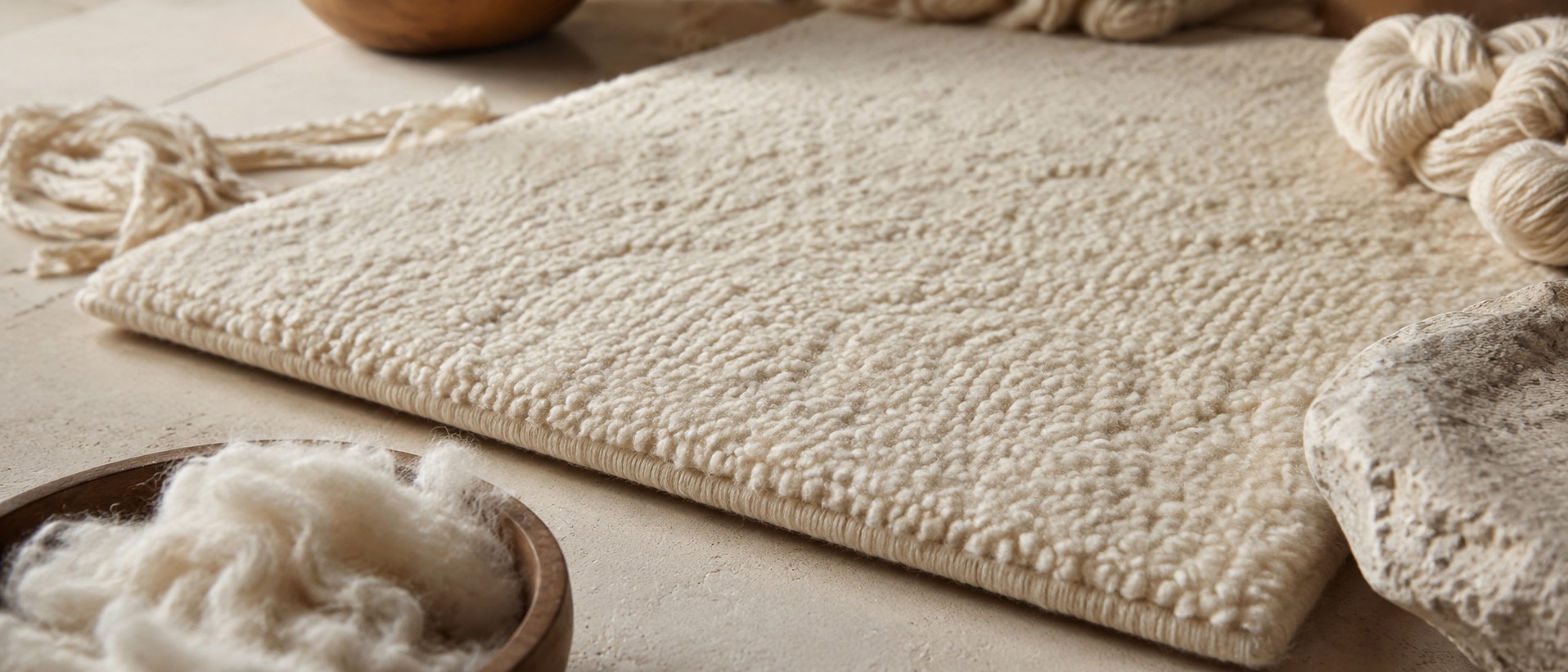
Virgin wool is fresh, unused wool shorn directly from the living sheep. Unlike recycled or shoddy wool, which is obtained from old wool products, virgin wool comes from the first cut. The fibre is intact, elastic and retains all the natural properties that characterise the material.
The fibre structure is decisive for quality: virgin wool fibres are naturally crimped and surrounded by fine scales. It is precisely this structure that gives the material its special properties with regard to warmth, moisture and texture.
The Most Important Material Properties at a Glance
Warmth and Softness Through the Fibre Structure
The natural crimp of the wool fibre traps fine air pockets. This air acts as insulation and ensures that a virgin wool rug feels warm and soft underfoot. Especially on hard floors such as parquet or stone, this difference makes a significant impact in everyday life. Walking barefoot over a wool rug in the morning is a different experience from standing on a synthetic flat-weave.
Moisture Regulation and Indoor Climate
Wool is one of the few fibres that can actively absorb and release water vapour without feeling damp in the process. Virgin wool fibres can bind up to one third of their own weight in moisture before they feel wet. This mechanism helps to balance the humidity in a room to some degree. Specialist circles and studies also describe how wool textiles can bind certain indoor pollutants such as formaldehyde, nitrogen dioxide or sulphur dioxide. Absolute claims about air purification would be an exaggeration, but a well-crafted virgin wool rug can positively influence the indoor climate in several ways.
Natural Resistance to Dirt
The scale-like surface of the wool fibre and the natural wool fat (lanolin) make it difficult for dirt and liquids to penetrate deeply. Dust and dirt particles tend to settle on the surface of the fibre rather than working their way into the pile. When vacuuming, they can be removed easily. This makes virgin wool rugs more robust in everyday use than many buyers expect.
Fire Behaviour and Electrostatic Properties
Virgin wool is naturally difficult to ignite. It catches fire at significantly higher temperatures than most synthetic fibres, does not melt and tends to char rather than continue burning. This is a safety-relevant advantage in living spaces. In addition, wool barely builds up static charge. The unpleasant crackling when crossing a synthetic fibre rug is a familiar sensation for many. With virgin wool, this does not occur.
Everyday Care: What Really Matters
Regular Vacuuming as a Foundation
The most important care measure for a virgin wool rug is regular vacuuming. Dirt that adheres to the fibre surface can be reliably removed before it becomes worked into the pile. It is advisable to use a vacuum cleaner without a rotating brush system, or with a reduced brush speed, to protect the fibres.
Treat Stains Quickly and Carefully
With liquids, the rule is: act immediately. Blot with a clean cloth, never rub. For more stubborn stains, lukewarm water with a small amount of mild wool detergent is suitable. Aggressive cleaners, bleaching agents or intensive wet cleaning can damage the fibre structure and should be avoided.
Initial Fluffing: Normal and Temporary
Particularly with hand-tufted or high-pile virgin wool rugs, fibres may come loose during the first few weeks after laying. This is not a quality defect, but a normal process. The loose short fibres from production detach during use and largely disappear after a few vacuuming sessions.
How to Recognise a Good Virgin Wool Rug
The material alone does not tell the whole story about quality. Anyone looking for a high-quality virgin wool rug should pay attention to the following points:
- Pile height and density: A dense pile cushions better, is more durable and feels more premium underfoot.
- Weight: Heavier rugs generally contain more material per square metre and last longer.
- Backing: A solid backing (e.g. cotton or jute) indicates careful craftsmanship.
- Dyeing: High-quality wool rugs are dyed with genuine colours or plant-based dyes that are colourfast and hard-wearing.
- Origin and production: Hand-knotted rugs from traditional manufacturing regions stand for exceptional workmanship quality.
Virgin Wool in Comparison: When the Material Convinces
Virgin Wool vs. Synthetic Fibre
Synthetic fibres such as polypropylene or polyester are less expensive to purchase and are generally more moisture-resistant. For outdoor spaces or heavily used areas with direct water contact, they can be a sensible choice. However, in terms of living comfort, feel, naturalness and fire behaviour, virgin wool has clear advantages. Synthetic fibres can build up static charge, melt under heat and are barely biodegradable.
Virgin Wool vs. Cotton
Cotton rugs are soft and washable, but less elastic and insulating than wool. They flatten more quickly and tend to lose their shape sooner. Virgin wool springs back more durably due to the natural crimp of the fibre.
Virgin Wool vs. Jute and Viscose
Jute scores with a natural, rustic character, but is sensitive to moisture and less soft. Viscose imitates the silky sheen of high-quality fibres, but requires intensive care and is sensitive to dampness. Virgin wool offers a more balanced combination of durability, comfort and ease of care.
Who Benefits from a Virgin Wool Rug?
A virgin wool rug is particularly well suited to all those who value natural materials, a pleasant sense of space and lasting quality in their home. It is an excellent choice for:
- Living rooms as a central design element
- Bedrooms for a warm, cosy feel underfoot
- Reading corners, home offices and representative living areas
- Families who prioritise a dense weave and robust colours
On the question of whether virgin wool is suitable for allergy sufferers: wool can bind dust particles and release them again during vacuuming. However, individual sensitivities to wool are possible. Anyone who is unsure should consult a doctor before purchasing.
The higher purchase price of a high-quality virgin wool rug becomes relative over the period of use. A well-crafted rug made from pure virgin wool accompanies a room for many years, often decades, and even gains character over time.
FAQ
What is special about virgin wool?
Virgin wool is fresh, unused wool from the living sheep and is considered one of the finest natural fibres for rugs. Its naturally crimped fibre structure traps air, providing a warm, soft feel underfoot. In addition, virgin wool regulates moisture, balances temperature fluctuations and is naturally difficult to ignite. With good craftsmanship, it is exceptionally durable and springs back permanently thanks to its crimp.
Is a virgin wool rug easy to care for?
In everyday use, regular vacuuming is usually entirely sufficient. The natural fibre surface of virgin wool makes it difficult for dirt to penetrate deeply, which simplifies cleaning. With stains, acting quickly is key: blot carefully and use lukewarm water with a mild wool detergent. Aggressive cleaners and intensive wet cleaning should be avoided. Initial fluffing, especially with high-pile rugs, is normal and settles after a few weeks.
Is a virgin wool rug worth the higher price?
When the period of use is factored in, the investment in a high-quality virgin wool rug proves worthwhile in the long run. The material is durable, retains its shape and appearance over many years. Added to this are tangible everyday benefits: a pleasant feel underfoot, a more balanced indoor climate and a natural quality that synthetic alternatives can rarely match. For high-quality living spaces, virgin wool is one of the most compelling material choices.
Is virgin wool better than synthetic fibre?
In terms of living comfort, feel and naturalness, virgin wool has clear advantages over synthetic fibres. It is difficult to ignite, barely builds up static charge and is biodegradable. Synthetic fibres can be more practical in certain applications, such as outdoor use or in areas subject to very high moisture exposure. For living spaces, where comfort, indoor climate and durability are the priority, virgin wool is the more convincing choice in most situations.
Which rooms are suitable for a virgin wool rug?
Living rooms as a central design and comfort element Bedrooms for a pleasant feel underfoot on hard floors Reading corners and representative living areas Rooms where a high-quality ambience is desired In heavily frequented areas, a model with a dense weave and a colour that suits everyday use is recommended.