Outdoor Rug in Winter: Store, Protect or Use Indoors?
My Recommendation, Right from the Start
When autumn fades and winter arrives, I ask myself the same question every year: what do I do with the rug on the terrace? My honest answer, the same one I would give a good friend: bring it inside. Clean it thoroughly, let it dry completely, roll it up loosely and store it somewhere dry, frost-free and well ventilated. That is the simplest way to enjoy it for a long time.
Not because outdoor rugs are fragile. A little care in autumn means that in spring you bring out a rug that looks exactly as it did on the first day.
Why Winter Can Be Problematic for Outdoor Rugs
"Weatherproof" is a good promise, but it means: robust against normal outdoor conditions, rain, sun, moisture. It does not mean: lying under snow, in ice and waterlogging for months without consequences.
What really takes a toll on the rug in winter is above all the combination of moisture and lack of air circulation. When snow lies on the rug, melts, freezes again and the moisture has nowhere to go, the ideal conditions for mould, green growth and odour develop. Added to this is material stress from frost: fibres become more brittle, backings can crack, colours fade more quickly.
That is no reason to panic, but a good reason to take care of the rug before the first frost.
Step by Step: How to Prepare Your Outdoor Rug for Winter
1. Remove Dirt
First shake it out and vacuum it thoroughly. Leaves, sand and soil that have worked their way in over summer should be removed completely before the rug gets wet. Residues that remain trapped encourage mould growth.
2. Clean
Outdoor rugs made of polypropylene or polyester can be treated well with a garden hose and a mild cleaning agent. Brush gently, rinse thoroughly. Work on stubborn spots with a soft cloth. Important: no aggressive scrubbing, as that attacks the fibre structure.
3. Dry Completely
This is the crucial step. Both sides must be truly dry, including the back. It is best to hang the rug up or lay it on an elevated surface so that air can circulate. Rolling up a damp rug is the most common mistake, and it makes itself known through mould and odour.
4. Roll Up, Loosely
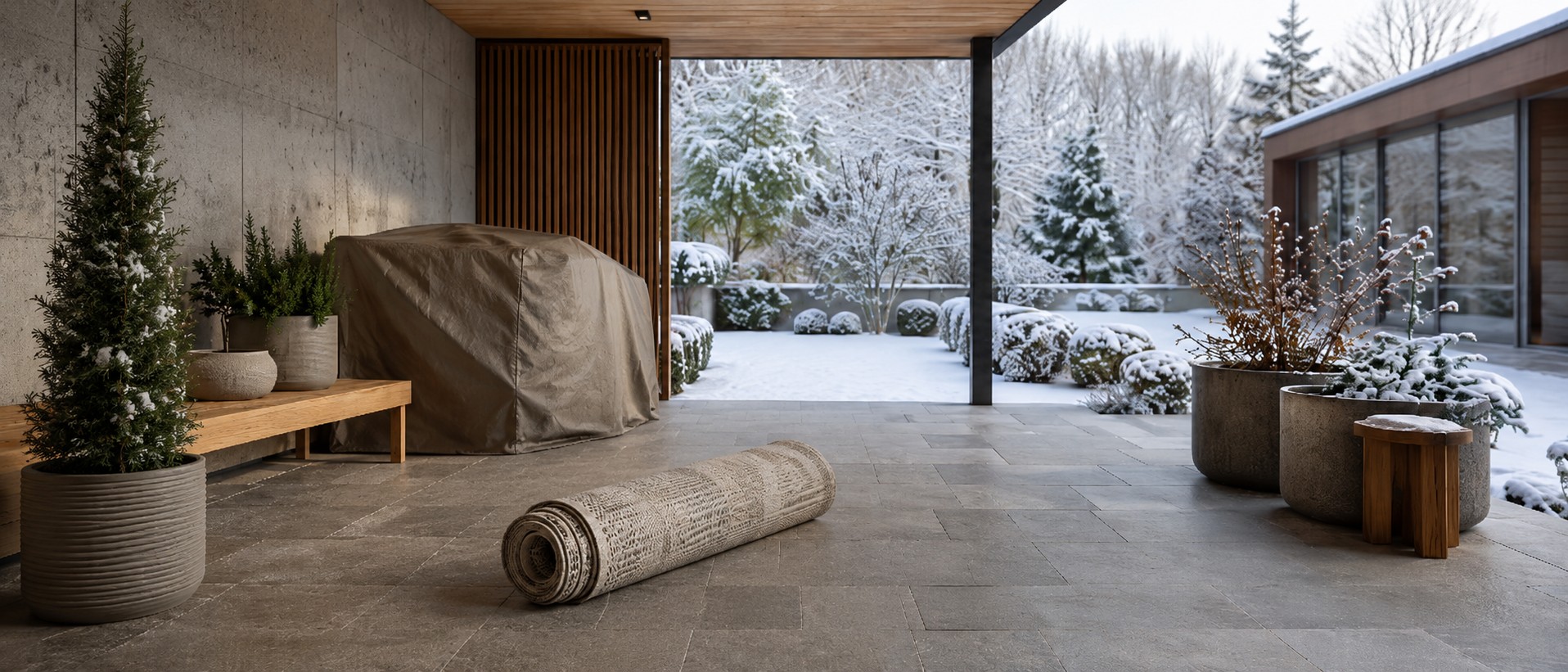
Rolling is better than folding. Folding leaves permanent creases that can damage the structure of the rug and the backing. Roll up loosely, with the pile facing inward, and secure with a breathable cloth if needed. No plastic film, as that traps moisture.
5. Store Dry, Frost-Free and Ventilated
A cellar or garage is well suited, provided there is no permanently high humidity there. Store the rug on a pallet or a shelf so that it has no contact with the concrete floor. Check the storage location occasionally, especially after damp periods.
Can the Outdoor Rug Stay Outside in Winter?
Short-term, in dry winter weather without persistent snow, that is possible. I know people who leave their rug on the balcony and get through spring without any problems. But long-term, over weeks with snow, frost and waterlogging, that is not a solution I would recommend.
If the rug does stay outside: check it regularly, clear it after snowfall and make sure water can drain away. Store the rug slightly elevated so that it does not lie directly on wet ground.
Which Materials Are Suitable for Winter?
Here the material makes a big difference:
- Polypropylene (PP): Water-repellent, easy to care for, robust. The best choice for balcony, terrace and garden. Handles moisture well, but still needs drying before winter storage.
- Polyester (PET) and PE: Also suitable for outdoor use. Good UV resistance, dimensionally stable, easy to clean.
- Natural fibres (jute, seagrass, coir): Beautiful, but very sensitive to direct contact with moisture. These rugs need special protection and should definitely be stored indoors in winter conditions.
What to Do About Mould, Odour or Green Growth?
If you bring out the rug in spring and notice mould spots or a musty smell: no reason for despair. Treat extensively with water and a mild cleaner, rinse thoroughly and allow to dry very thoroughly before using it again. Green growth can be removed with a bit more effort and gentle brushing. With deeply ingrained mould on the backing, it is possible that the rug can no longer be fully saved. However, this is almost always avoidable if it was stored dry.
Practical Tip: Using the Outdoor Rug Indoors in Winter
My personal favourite tip, because it is so obvious and yet so often forgotten: an outdoor rug does not have to be a seasonal product. In winter it works wonderfully in the hallway, the kitchen, the entrance area or the conservatory. It is easy to care for, hardwearing and brings a different texture to the feel of a room. That is an elegant solution for anyone who has no storage space, and at the same time a way to use the full potential of the rug all year round.
What to Look for When Buying a Winter-Proof Outdoor Rug
Anyone looking for a rug that keeps up season after season should pay attention to a few things:
- Material: Polypropylene or polyester are the most robust choice for moisture resistance and ease of care.
- Flat weave structure: Low-pile or flat-woven rugs dry more quickly and show less risk of mould.
- UV resistance: Prevents fading from sun exposure, relevant also for late summer and early autumn.
- Water-repellent fibres: Dirt and moisture bead off more readily, which makes care considerably easier.
A good outdoor rug is an investment that pays off over many years, provided you treat it with a little attention at the right time.
FAQ
Can an outdoor rug stay outside in winter?
Short-term, this is possible in dry, mild winter weather. However, prolonged contact with snow, frost and waterlogging noticeably shortens the lifespan. Mould, green growth, odour and material stress from freeze-thaw cycles are the most common consequences. Anyone who leaves the rug outside should check it regularly, clear it of snow and store it elevated so that water can drain away.
How do I store an outdoor rug correctly in winter?
Remove dirt, sand and leaves, then clean thoroughly. Allow both sides to dry completely, especially the backing. Roll up loosely with the pile facing inward. Store dry, frost-free and well ventilated, for example in a cellar, garage or storage room. Store the rug on a pallet or shelf, never directly on the concrete floor.
Does the rug need to be cleaned before storage?
Yes, this is important. Dirt, leaves and moisture that remain trapped encourage mould growth and odour. First vacuum and shake out, clean gently if needed and rinse well. Only when the rug is truly dry on both sides may it be rolled up.
Which material is best suited for winter?
Outdoor rugs made of polypropylene, polyester or PE are the most robust choice. They are water-repellent, easy to care for and more resistant to moisture than natural fibres. Rugs made of jute, seagrass or coir are considerably more sensitive to direct moisture and should always be stored dry and protected in winter conditions.
What to do if there is no storage space available?
The rug can easily be used indoors instead. In the hallway, the kitchen, the entrance area or the conservatory, an outdoor rug looks great and is perfectly at home there. Anyone who must leave it outside should place it in an elevated and sheltered position, check it regularly and consistently avoid waterlogging.