Light or dark? How to choose the right rug colour for your room
The question almost every customer asks
"I don't want to get it wrong." I hear that sentence at least three times a week. Most of the time it comes down to the same underlying worry: a light rug is too delicate, a dark one makes the room feel smaller, and somehow nothing seems to go with the sofa anyway. I understand that. A rug is not a cushion you can shove in a drawer if you have regrets. But the good news is: the decision is far less risky than it feels, once you clarify a few things beforehand.
What rug colour really does to a room
The old rule of thumb says: light makes a room feel bigger, dark makes it feel smaller. It is true, but it is about as complete as "more salt makes food better". Sometimes right, sometimes it ruins everything.
Light rugs in cream, sand, beige or light grey reflect light and give a room visual openness. The eye glides across the surface without stopping. In a small living room or a bedroom without large windows, this can make the difference between "cosily snug" and "cramped".
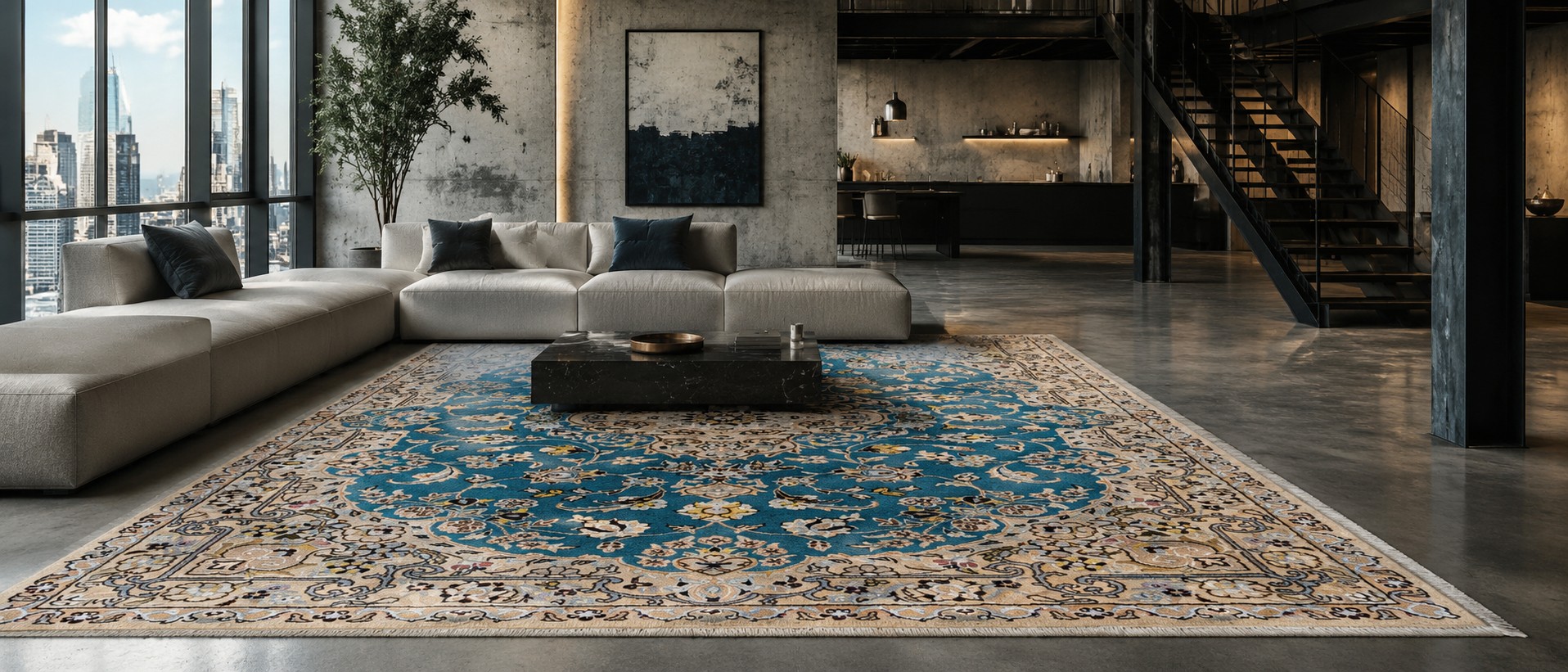
Dark rugs in anthracite, black, dark blue or bordeaux do something different: they ground the room. Furniture gains weight and stability. In a generous, light-filled living room a dark rug often looks more refined than a light one, because it brings contrast and depth that the room would otherwise lack.
What really decides the outcome is the interplay of light, room size, floor colour and furniture. The rug colour alone is only one part of the equation.
Small rooms: calm beats drama
I had a customer who absolutely wanted a black rug in her 14-square-metre student flat. For the aesthetics. I listened to her, and then we ordered a warm greige rug. She thanked me two weeks later.
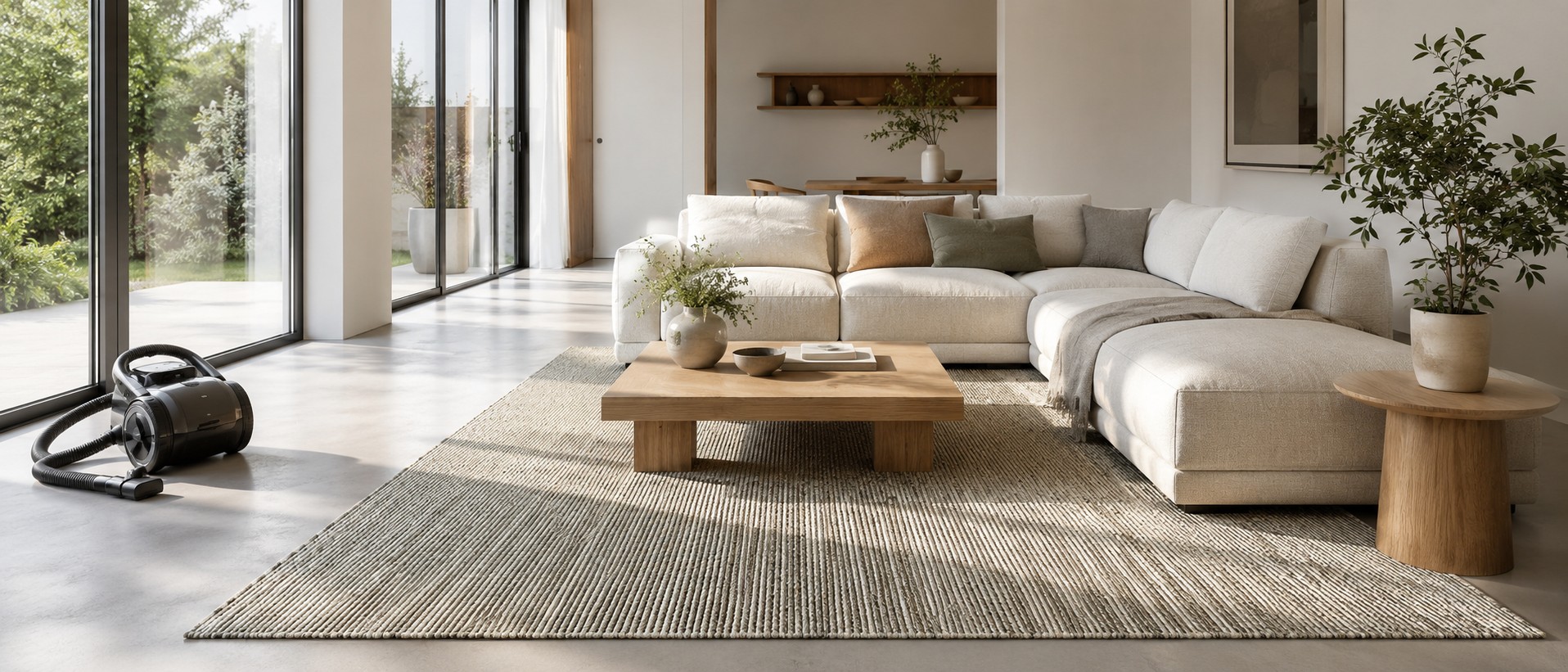
In small or narrow rooms, the rule is: the closer the rug colour is to the floor or wall colour, the calmer the surface looks. A light, subtly textured rug in cream or sand lets the eye flow rather than stopping it. Little pattern, low pile, light tone: that is the safe formula for rooms that need air.
- Light, calm colours (cream, sand, light grey, beige) make small rooms feel more open.
- Little or no pattern reduces visual restlessness.
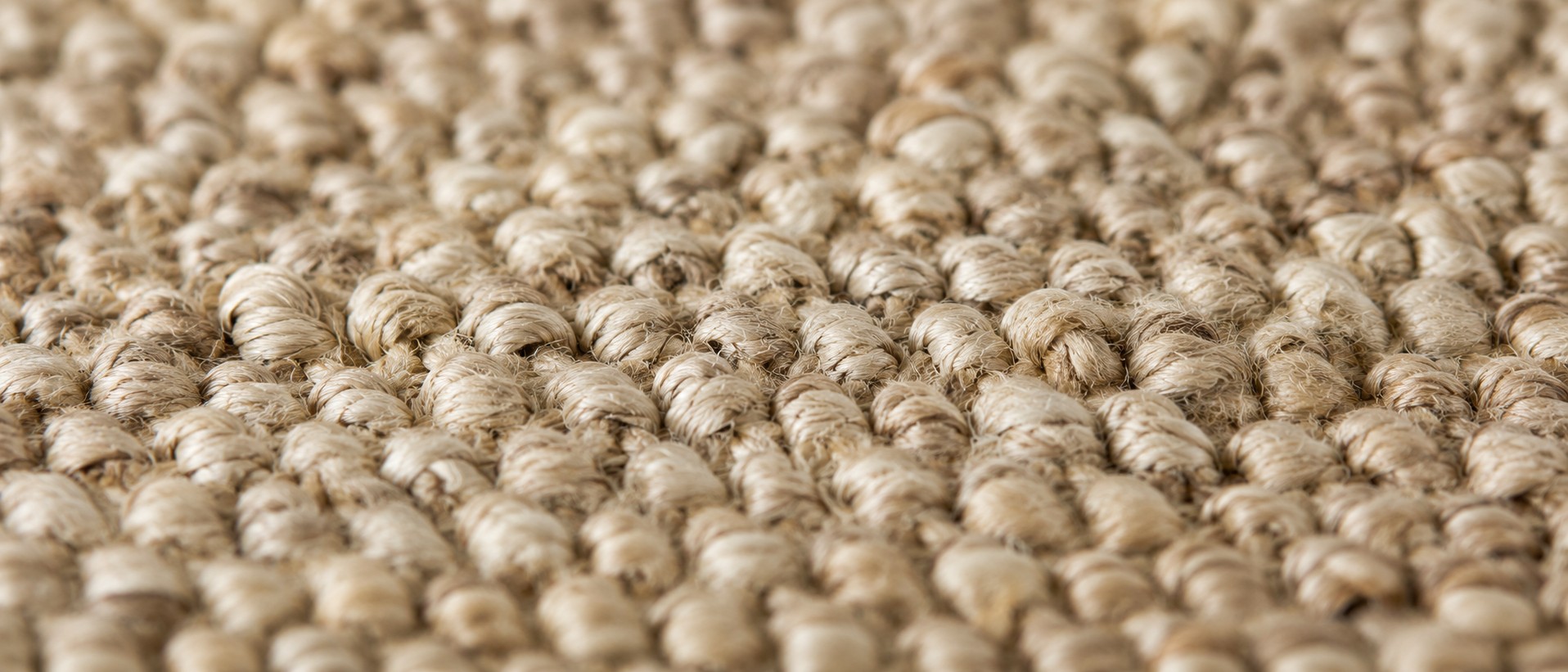
- Lower pile heights look lighter and cleaner than high-pile rugs.
- Mind the rug size: a rug that is too small fragments the room, regardless of colour.
Large rooms: this is where dark works
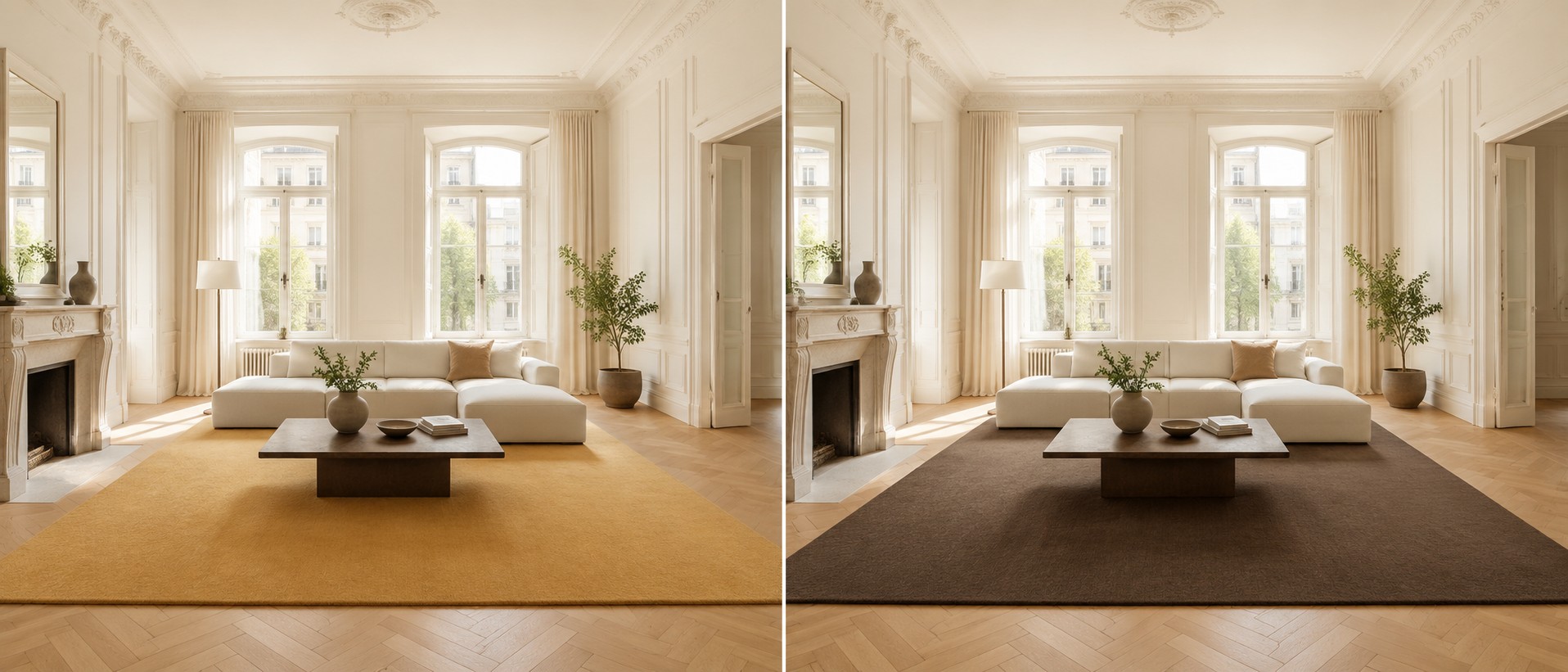
Large, bright rooms have a different problem: they can look empty and cold. A cream-white rug on light oak parquet with white walls? It looks great on Instagram and in real life sometimes resembles a waiting room.
Mid-tone or dark rugs bring exactly what such rooms are missing: structure, warmth, and the feeling that someone actually lives there. A deep brown tone or a rich dark green can transform a living room from showroom mode into a real home.
Dark rugs are also excellent for zoning: they define the seating area clearly, without needing to put up a wall.
Floor colour and furniture: the logic of combinations
Two questions I always ask before making a recommendation:
What is your floor like?
Dark parquet or dark tiles? A light rug creates contrast and brightness, which is almost always the right call. Placing a dark rug on a dark floor requires a very deliberate overall concept and enough light, otherwise everything looks heavy and dim.
Light floor? Good news: almost anything works. Dark rugs set clear accents, natural tones such as taupe or brown stay elegant and timeless.
What is your sofa like?
Light sofa? A darker rug creates lovely contrast and anchors the room. An equally light rug looks soft and flowing, but can quickly become contourless.
Dark sofa? A light rug lightens the weight. A dark rug works too, but requires plenty of natural light and clear planning so the room does not feel too heavy.
Care anxiety: who is really right?
"Light rugs are impractical." I hear that often. The truth is somewhat more nuanced. A completely plain white or cream rug is indeed delicate: every coffee stain immediately looks like a work of art. But a rug in beige or greige with a subtle tone-on-tone texture? It conceals everyday marks surprisingly well.
Dark rugs show stains less, but they show dust, pet hair and fluff all the more clearly. That is particularly relevant in a bedroom with a cat.
The easiest option to care for: mid-tone, mottled or lightly patterned rugs. They hit the sweet spot between delicacy and visible everyday dirt.
The safe middle ground: why natural tones almost always work
When I am asked which colour I would recommend for most living rooms, my answer is: warm neutrals. Greige, taupe, sand, ivory, wool white, muted brown. These tones bring brightness and warmth at the same time, without dominating. They work with almost any wall colour, any floor, any furniture style.
Strong black-and-white contrasts can look very refined, but are stylistically less flexible. Natural tones stay right for years, even when the furniture or wall colour changes.
Decision guide: which rug suits me?
A short matrix for everyone still hesitating:
- Small room, little light: Choose a light rug, calm, little pattern, generous size.
- Large room, lots of light: Mid-tone or dark is possible, ideal for zoning and depth.
- Dark floor: Light rug for contrast; dark rug only with plenty of light and a clear concept.
- Light floor: Free choice; set dark accents, natural tones for timeless elegance.
- Family with children or pets: Mottled mid-tone, textured, easy to care for.
- Calm, understated look: Tone-on-tone, light neutrals, low pile.
- Dramatic, high-end look: Contrast, dark tone, generous format.
And once more on size: the most beautiful colour looks unprofessional if the rug is too small. Better to go one size larger than one size too small.
FAQ
Does a light rug make a room look bigger?
Yes, in most cases. Light rugs in cream, beige or sand reflect more light and make the floor area feel more open and calm. Especially in small or low-light rooms this is a real advantage. Important: the effect always depends on the overall picture. A light rug that is too small can still fragment the room visually.
Does a dark rug make a room feel smaller?
It looks visually heavier and more compact, but feeling smaller is not an automatic consequence. In large, bright rooms a dark rug can look very refined and cosy, bringing depth and grounding the furniture. For small or dark rooms a light tone is advisable, but in a generous flat with plenty of daylight, dark is often the better choice.
Which rug colour is the safest choice for a living room?
Warm neutrals such as greige, beige, taupe, sand or warm grey are the most reliable choice for a living room. They combine brightness with homely depth, suit almost any floor and furniture style, and remain right even when the rest of the furnishings change. Strong black-and-white contrasts are stylistically interesting but less flexible in everyday life.
Which rug colour is easier to care for?
Mid-tone and mottled rugs are the most straightforward in daily use. Dark rugs conceal stains well, but show dust and pet hair more clearly. Very light plain rugs in white or pure cream are more sensitive to everyday marks. A rug in beige or greige with a subtle texture strikes the best balance between easy care and visual freshness.
What matters more: colour or size?
Both play a role, but size is frequently underestimated. A rug that is too small almost always looks restless and cheap, regardless of how beautiful the colour is. A more generous format ties the furniture together into a unit, defines zones and makes the entire living area look more high-quality. When in doubt, go one size larger and then match the colour to the overall picture.