Weather-Resistant Outdoor Rug: Choosing the Right Rug for Balcony and Terrace
Function first: What an outdoor rug really needs to deliver
A balcony rug or terrace rug has to withstand more than its counterpart in the living room. Rain, intense sunlight, temperature fluctuations and the occasional puddle are all part of everyday life outdoors. The key question when buying is therefore: which material, which weave and which location go together? Once you have understood this, you will make a choice that lasts several seasons.
This guide addresses the functional questions first, before turning to style and interior effect. Because a beautiful rug that smells musty after the first summer or has faded simply does not serve its purpose.
Material comparison: Which fibres hold up outdoors?
The choice of fibre is the single most important decision. Here is a problem-oriented overview:
Polypropylene: the all-rounder for rain and sun
Polypropylene is the most frequently recommended material for genuine outdoor use. The synthetic fibre absorbs virtually no moisture, is stain-resistant and, in many versions, UV-stable. This means: after a rain shower, a flatwoven polypropylene rug dries quickly, and intense sunlight puts less strain on the colours than with more sensitive fibres. Add to that an attractive price-to-performance ratio, which makes it the first choice for open balconies and uncovered terraces.
Polyester and PET: weather-resistant with a softer look
Polyester and the PET derived from it (often made from recycled bottles) are also suitable for outdoor conditions. They dry well, are easy to clean and often offer a slightly softer feel than polypropylene. Recycled PET rugs combine weather resistance with a sustainable approach and are well suited to terraces and balconies. With very prolonged sun exposure, it is worth checking the UV-stability rating of the specific model.
Natural fibres: homely, but only in sheltered spots
Jute, sisal, coir and cotton feel warm and natural. However, these materials quickly reach their limits with prolonged moisture: they absorb water, dry slowly and react sensitively to waterlogging. Anyone who favours such a garden rug should use it exclusively on covered balconies, in loggias or under a sun canopy, where rain has no direct access.
Wool: high quality, but generally unsuitable for outdoor use
Wool has no place outdoors: it absorbs moisture, dries slowly and is susceptible to mould and odours with prolonged outdoor use. Beautiful wool rugs belong inside the home.
Weave and pile height: Why flatwoven wins outdoors
Alongside the material, construction plays an important role. Flatwoven outdoor rugs without a pile dry fastest, because water is not stored in dense loops or long fibres. An open, low structure allows air to circulate and prevents moisture from being retained permanently.
High-pile rugs, on the other hand, should be used outdoors with caution. The dense fibre retains water for longer, which increases the risk of mould and makes the rug unpleasantly heavy after rain. For balconies and terraces, the rule is: the flatter the weave, the more weather-suitable the rug.
Can an outdoor rug stay outside in the rain?
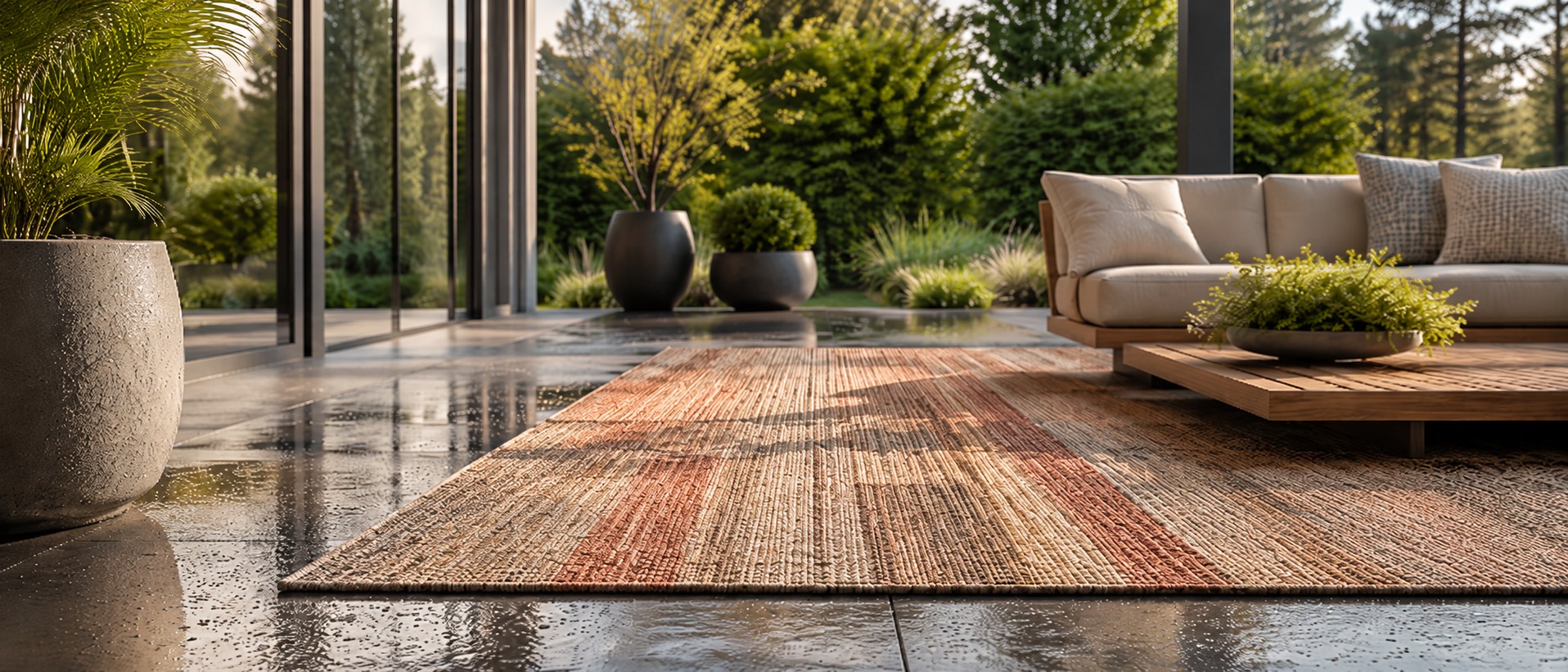
This question concerns many people, and the answer depends on the material and the situation. An outdoor rug made from polypropylene or polyester withstands a normal rain shower without any problems, provided the surface allows drainage and air can circulate underneath the rug. If the rug remains permanently on wet concrete or tiles without ever drying out properly, the risk of mould spots increases even with weather-suitable fibres.
During prolonged periods of bad weather, frost or snow, it is advisable to roll up the rug, let it dry completely and store it in a dry place. This simple measure considerably extends its lifespan.
Preventing mould: ventilation and drying are crucial
Mould develops where moisture is permanently trapped. With outdoor rugs made from synthetic fibre, the risk is low, as long as a few basic rules are observed:
- Lift the rug regularly and allow the surface beneath to dry.
- On smooth floors such as tiles or painted concrete, ensure good ventilation underneath.
- After heavy periods of rain, stand the rug up or hang it so that both sides can dry.
- Keep the surface clean: leaves and dirt beneath the rug encourage moisture.
- At the first signs of a musty smell: clean with a mild soapy solution; for stubborn spots, treat carefully with diluted vinegar and dry completely in the open air.
UV stability: Why colourfastness is not a luxury
Anyone placing a rug on a south-facing balcony or an uncovered terrace in full sun should pay attention to UV stability. Intense sunlight can strain colours, particularly with cheaper products that have not been treated accordingly. Polypropylene and polyester are generally better protected against UV exposure than natural fibres, although the exact UV resistance varies by model and production method.
Practical tip: heathered and muted shades tolerate slight colour changes caused by sun better optically than bold solid colours. Anyone who does not want to forgo intense shades should look for products that are explicitly labelled as UV-stable or colourfast.
Balcony, terrace or loggia: What are the differences?
Balcony rug: compact format, secure grip
On the balcony, compact formats that fit the available area precisely are what count. Smooth surfaces such as tiles or concrete are best met with an anti-slip underlay or a rug with a non-slip backing. Weight also plays a role: a lightweight rug can shift in the wind, and heavy furniture helps to keep it in position. Raised edges on the sides should be flat and unobtrusive.
Terrace rug: large format, robust construction
A terrace offers more space and therefore the opportunity to use more generous formats. Here, UV stability deserves particular attention, as the area is often exposed to direct sunlight. A robust outdoor rug can define a clear furniture zone on the terrace and give the outdoor space a homely feel. Anyone using chair castors under terrace furniture should choose a flat, dense weave that also tolerates mechanical stress.
Loggia and covered balcony: more flexibility
Anyone with a covered outdoor space enjoys greater freedom when choosing a rug. Here, natural fibres with a homely texture can also work, as direct rain is largely absent. That said, moisture travels through the air, and a quick-drying synthetic fibre rug remains the safer choice.
Care: as simple as possible
The great thing about a high-quality outdoor rug made from synthetic fibre: care is straightforward. Here are the most important steps:
- Shake out or vacuum regularly to remove dirt and leaves.
- Rinse with water, for example with a garden hose.
- For stains: apply a mild soapy solution, leave to work, then rinse off.
- Afterwards, always allow to dry completely before laying the rug flat again.
- For winter storage: roll up dry and keep in a well-ventilated place.
Aggressive cleaning agents, pressure washers at close range and machine washing are not suitable for most outdoor rugs and can damage the fibre or colour.
Checklist: What a weather-resistant outdoor rug should offer
- Material: polypropylene, polyester or PET for full weather suitability.
- Weave: flatwoven or low pile height for quick drying.
- UV stability: particularly important for south- and west-facing locations.
- Non-slip: anti-slip underlay or non-slip backing on smooth floors.
- Format: suited to the area, with sufficient border for furniture legs.
- Easy care: rinsable, quick-drying, no specialist care required.
- Natural fibres: for covered, sheltered areas only.
FAQ
Which rug is truly weather-resistant for balcony and terrace?
The safest choice for open balconies and uncovered terraces is outdoor rugs made from polypropylene, polyester or PET. These synthetic fibres absorb barely any moisture, dry quickly and reliably withstand rain and temperature fluctuations. Flatwoven models perform particularly well because water is not retained in dense fibres. Natural fibres such as jute, sisal or cotton have a homely feel but should only be used on covered balconies or in loggias where direct rain is absent.
Can an outdoor rug stay outside in the rain?
An outdoor rug made from polypropylene or polyester withstands a normal rain shower without any problems. The condition is that the surface allows drainage and air can circulate underneath the rug so that it dries again after the rain. During prolonged periods of bad weather, heavy frost or snow, it is advisable to roll up the rug, let it dry completely and store it in a dry place. This measure protects colours and fibres and extends the lifespan over several seasons.
Which outdoor rug fades least quickly?
For sun-exposed locations, such as a south-facing balcony or an uncovered terrace, it is worth specifically looking for UV-stable models. Polypropylene and polyester are often better protected against sunlight than natural fibres, although the exact UV resistance varies from model to model. Heathered or muted shades show slight colour changes caused by sun less visibly than bold solid colours. Products that are explicitly labelled as UV-stable or colourfast offer the greatest assurance.
How do you prevent mould under an outdoor rug?
Do not leave the rug lying on wet ground permanently. Lift it regularly so that the surface beneath and the rug's backing can dry. On smooth floors such as tiles or concrete, ensure good ventilation underneath. Keep the surface clean, as leaves and organic debris retain moisture. After heavy periods of rain, stand the rug up or hang it until both sides are completely dry. If a musty smell develops, treat with a mild soapy solution or carefully with diluted vinegar, then allow to dry thoroughly.
Which outdoor rug is the easiest to care for?
A flatwoven balcony or terrace rug made from synthetic fibre is the easiest-care option. Cleaning is limited to regular shaking out or vacuuming, occasional rinsing with a garden hose and, when needed, treatment with a mild soapy solution. Afterwards, allow to dry completely and that is all. No specialist cleaners, no complicated routines. Polypropylene and polyester are also stain-resistant, which further reduces the effort involved in everyday care.