Which Rug Suits Which Interior Style? Your Blueprint for Scandi, Boho, Japandi, Loft and Classic
The rug decides. Not the sofa.
I like to say this at the start of every consultation, because customers usually begin with the sofa. Understandable. The sofa is large, expensive and sits at the centre. But do you know what holds a room together or lets it fall apart? The rug. I once had a customer with a perfect Scandi living room: light furniture, oak floor, clean lines, and then a burgundy wool rug with a floral border was lying there. Not because she wanted it that way. But because she had "inherited the rug from her parents" and thought it would somehow work out. It did not.
The rug sets the tone. It defines the warmth, the anchor, the colour mood and the material language of a room. Anyone who treats it as an afterthought is giving away the greatest style tool that can be placed on the floor.
This article gives you five concrete blueprints: Scandi, Boho, Japandi, Loft and Classic. For each style you get clear rules on colour, pattern, material and pile height. And a few honest words about what goes wrong when you get it wrong.
The Rug Matrix: Five Styles at a Glance
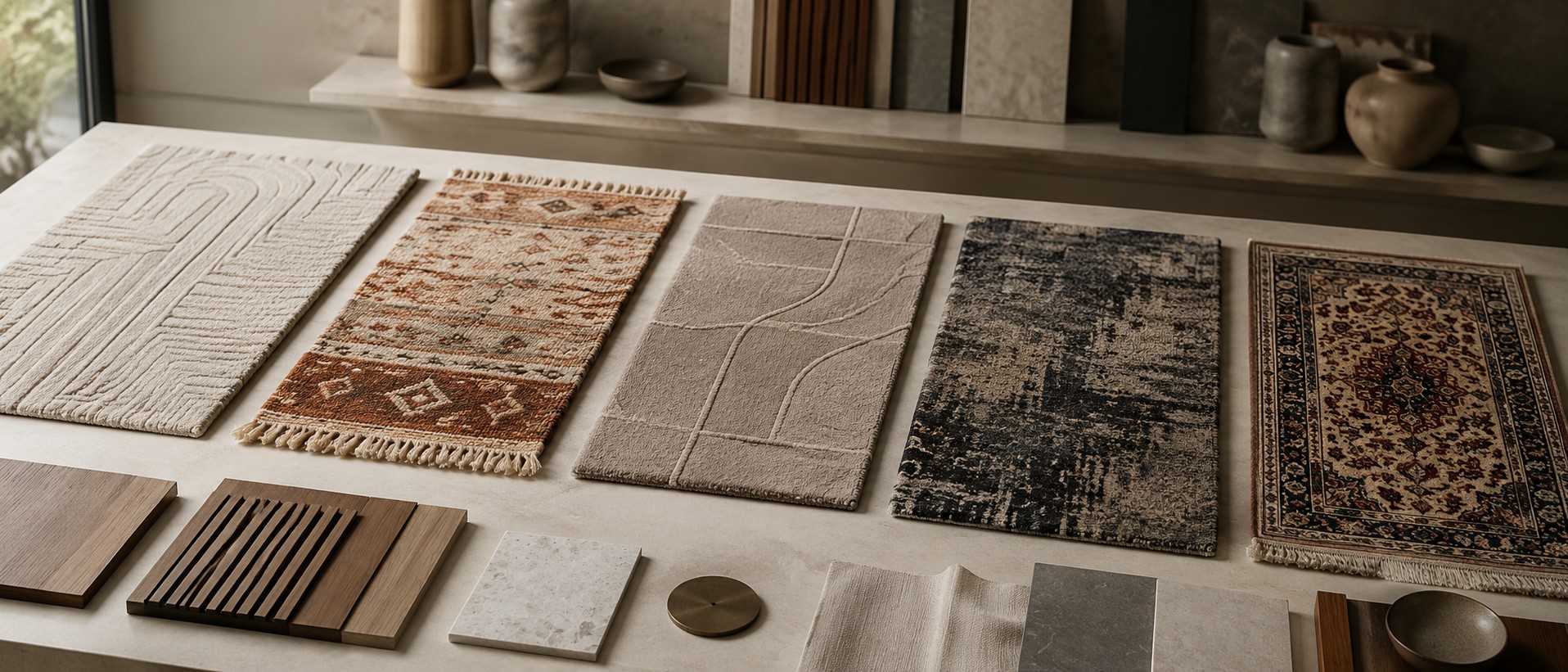
Before we go into detail, here is the overview. Each style has its own code of colour, pattern, material, pile height and spatial effect:
- Scandi: White, cream, light grey | geometric, reduced | wool, jute, cotton | flat to medium pile | bright, calm, homely
- Boho: Sand, terracotta, rust, ochre | ethnic, fringe, kilim, Berber | jute, virgin wool, cotton | variable, richly textured | warm, relaxed, layered textiles
- Japandi: Cream, beige, taupe, warm grey | minimal, organic | wool, jute, bamboo | flat to softly textured | still, balanced, natural
- Loft / Industrial: Anthracite, grey, greige, rust | graphic, abstract, used look | robust qualities, wool or performance fibres | short pile, flat | urban, striking, architectural
- Classic: Cream, bordeaux, gold, dark blue | ornament, medallion, border | wool, silk, hand-knotted | fine, dense, noble surface | representative, timeless, cultivated
Blueprint Scandi: Bright, calm, and no surprises please
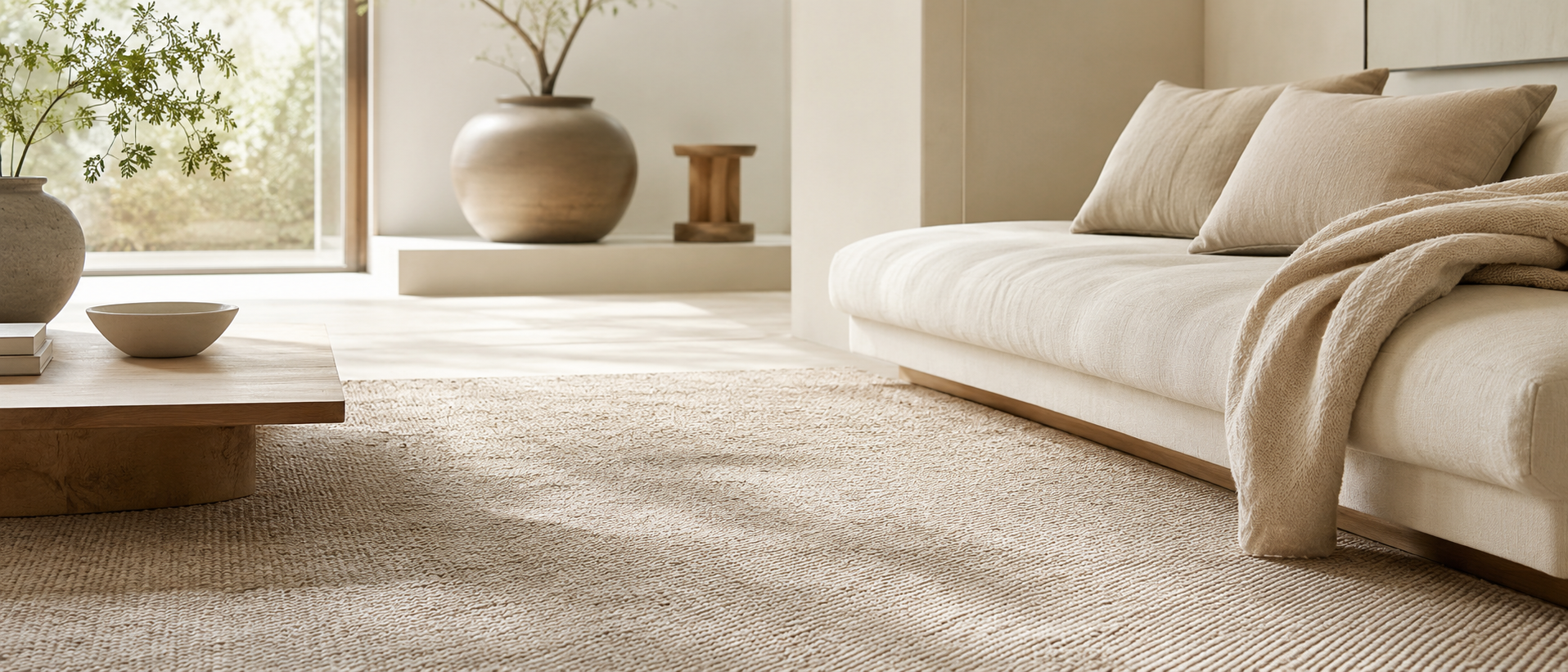
Scandinavian living thrives on light. Lots of light, bright walls, natural materials, visual calm. The rug takes on this language: tones such as white, cream, beige, light grey or greige. Patterns are welcome, but please keep them geometric and reduced. A tone-on-tone diamond pattern? Perfect. A vivid kilim? No.
Materials in a Scandi room are wool, cotton and jute. The pile can be flat to medium height, pleasantly soft underfoot, but the material should feel natural rather than synthetic. That is exactly the point: hygge comes from texture and warmth, not from decoration.
Typical Scandi mistake
Too much of a good thing. Anyone who fills a pure white room with a pure white rug gets no hygge, but a dentist's waiting room. A minimal texture or a subtle pattern keeps the room lively. Even a hint of warmth in the rug, cream instead of cool white, prevents the room from feeling sterile.
Blueprint Boho: Not colourful. But rich.
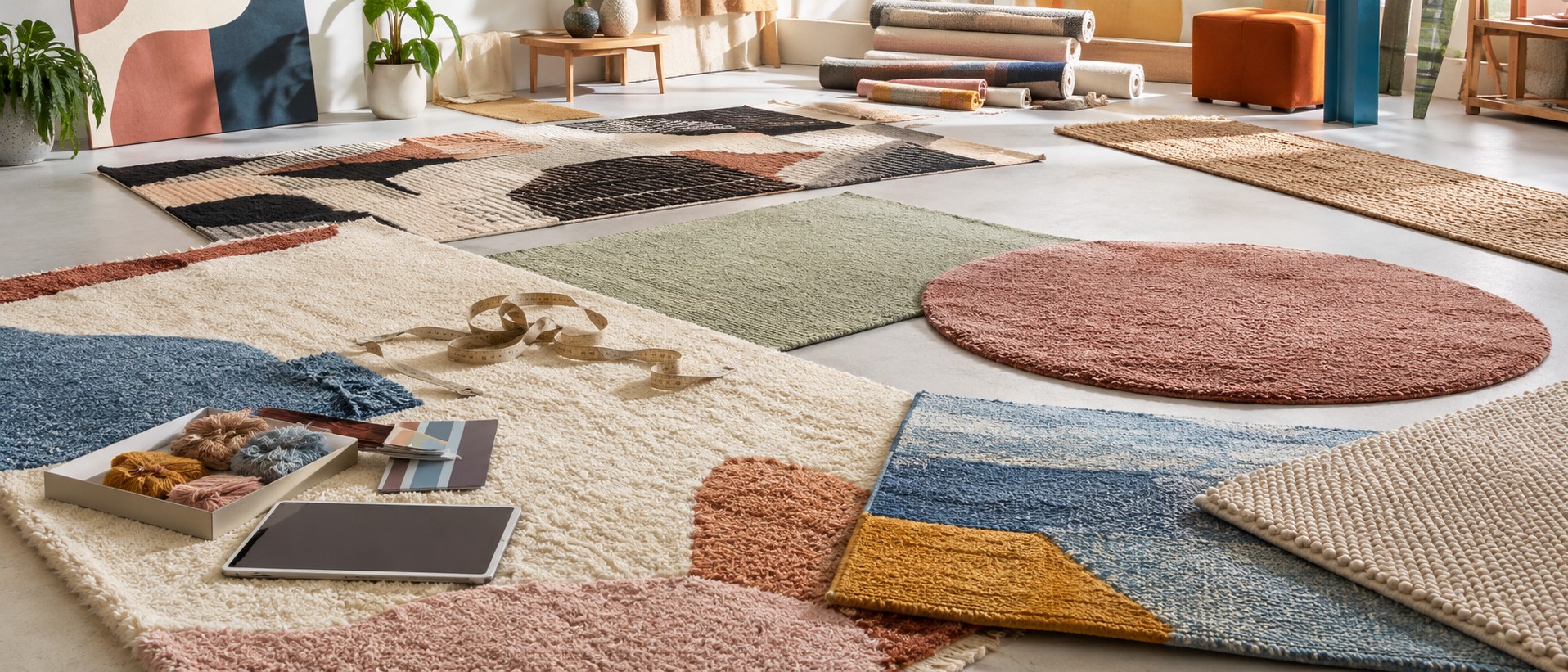
This is the biggest misconception: Boho does not mean everything at once. Modern Boho is earthier, calmer and considerably more textile than the cliché from the early 2010s. The colour palette ranges from cream and sand through terracotta, rust and ochre to olive and brown. These are muted, warm tones with depth.
Patterns are allowed and should tell a story: ethnic motifs, kilim looks, Berber diamonds, fringe, vintage appeal or patchwork. In a Boho room the rug is not a quiet companion, but a true protagonist. Materials: jute, cotton, virgin wool, artisanal qualities. The surface may be richly textured; high-low effects are welcome.
Typical Boho mistake
Boho needs a colour anchor. This can be the wall colour, a large set of cushions or indeed the rug. Without this anchor the mix feels random rather than considered. My recommendation: let the rug establish the lead colour. Everything else aligns with it. That creates layering, not chaos.
Blueprint Japandi: The art of deliberate restraint
Japandi is not simply Scandi in beige. This is a common misconception, and I understand it, because both styles work with natural tones and reduction. The difference lies in the attitude. Japandi combines Japanese reduction with Scandinavian warmth. The result is calmer, earthier and more strongly material-oriented than Scandi.
Colours: cream, beige, taupe, warm grey, brown. Black as a deliberate accent, never as a large area. Patterns: minimal, organic, almost devoid of decoration. The rug should go unnoticed but anchor the space. Materials: wool, jute, cotton, bamboo. The surface is flat to softly textured, quiet in appearance, high quality to the touch.
Typical Japandi mistake
Too cold or too clean. Japandi lives from warmth through material, through the texture of the rug, through the quality of the yarn. Anyone who chooses a smooth-surfaced, soulless short-pile rug gets no Japandi room. They get an office.
Blueprint Loft / Industrial: Warmth in, coldness out
Loft spaces often share one characteristic: they are inherently hard. Concrete, metal, brick, large window fronts, little textile. The rug has a clear task here: it brings warmth and acoustics into a room that urgently needs both.
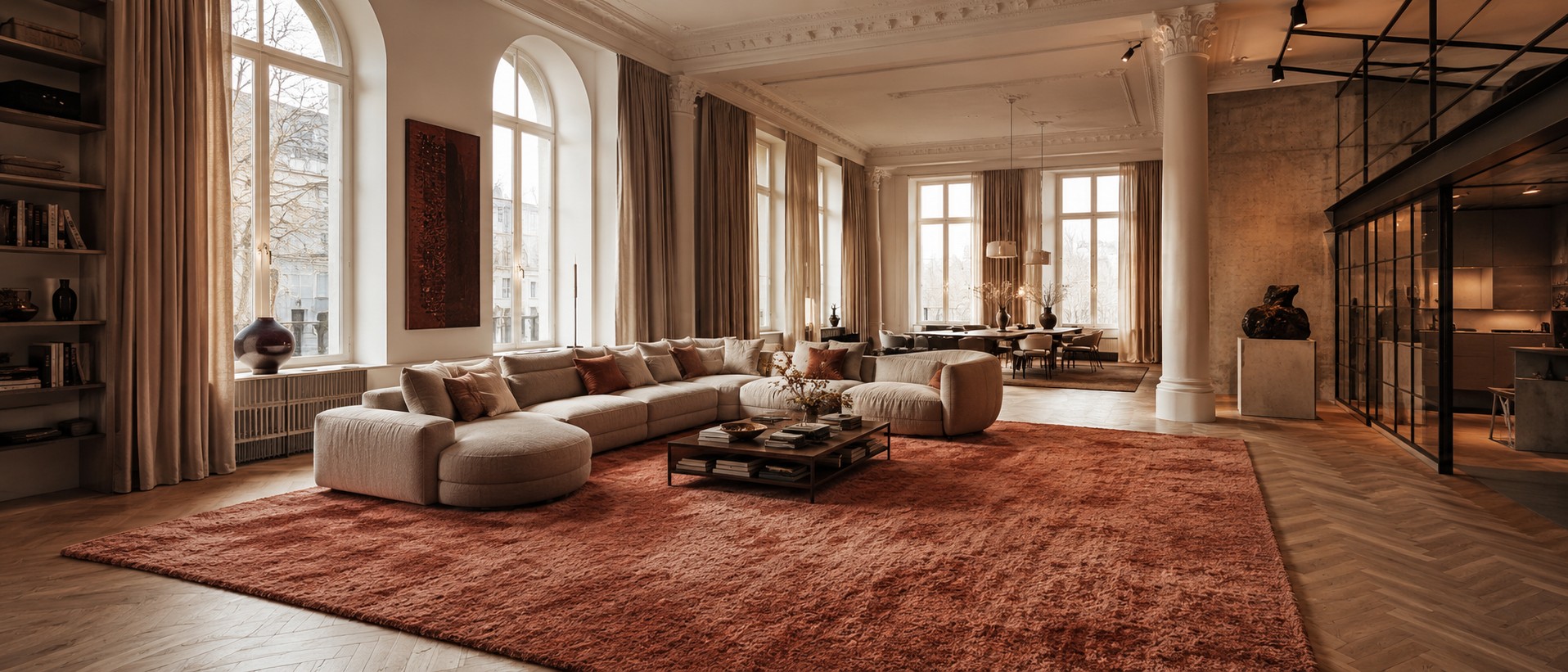
Colours in a loft rug are anthracite, black, grey, greige. But take note: rust, ochre, dark blue and muted earth tones work equally well. Anyone who thinks only in grey is missing possibilities. Patterns may be graphic and abstract; used looks or concrete-grey textures suit the aesthetic. Material: robust, easy to care for, either wool or performance fibres depending on the intensity of use. Pile: short, flat, clearly structured.
Typical Loft mistake
The room stays cold. This happens when the rug is chosen too small or too dark without a warm countercolour. A loft rug in deep anthracite needs either warm furniture, leather, wood, copper, or a rug with a warmer secondary colour such as rust or greige. Otherwise the room feels cold despite the heating.
Blueprint Classic: Timeless. Not old-fashioned.
Here I want to clear up a prejudice. Classic rugs are neither dusty nor old-fashioned. They are cultivated, craftsman-precise and in many cases genuine works of art. A hand-knotted oriental rug with a medallion pattern and fine wool quality has more character than nine out of ten designer rugs currently pictured in some trend magazine.
Colours: cream, bordeaux, gold, dark blue, rust, sage, muted accent tones. Patterns: ornament, medallion, border, floral elements, symmetrical composition. Material: wool, silk, high-quality mixed qualities. The pile is fine, dense and precise. The surface looks distinguished even from a distance.
Typical Classic mistake
Thinking classic only classically. A medallion rug in muted blue and cream can work as a deliberate style contrast in a modern, reduced room and give the space depth and history in one stroke. This combination, clear architecture with a cultivated patterned rug, is one of my favourite recommendations. It dares something.
Rug by room type: What works where
Living room
The rug defines the seating area. It must be large enough for all the front sofa legs to rest on it. In a Scandi living room: bright, soft, calm. In a Boho living room: patterned, warm, richly textured. In a Japandi living room: flat, natural-coloured, quality-conscious. In a Loft: robust, graphic, dark-toned. Classic: representative, patterned, room-filling.
Bedroom
Soft materials, pleasant underfoot. Medium to high pile suits Scandi, Boho and Japandi. Classic and Loft: the own style applies in the bedroom too, but pile height may be somewhat more generous than in the living area.
Dining area
Easy care counts. Short pile or flat textures are easier to clean. Loft qualities and flat natural fibre rugs are particularly well suited here. Boho rugs with fringe: better for calm dining situations, less suited to families with young children.
Hallway
High traffic, little space. Short pile, robust, colour-matched to the adjacent room. In a loft home: runner in anthracite or greige. In a Scandi hallway: light sisal rug or cotton runner. In a Boho home: narrow kilim runner with pattern.
Material and care: What belongs to which style
Wool is the most versatile rug material of all. Long-lasting, natural, temperature-regulating. Suits Scandi, Japandi, Classic and partly Boho. Care: vacuum regularly, blot stains immediately, have professionally cleaned occasionally.
Jute and natural fibres are the specialists for Boho and Japandi. Resilient, affordable, organic in appearance. Weakness: sensitive to moisture, so not suitable for bathrooms or damp rooms.
Silk and silk blends belong in classic rooms and high-quality living areas. Sheen, fineness and colour intensity are unmatched. Care: gentle, avoid strong direct sunlight, professional cleaning.
Synthetic performance fibres have their place in the loft sector and in heavily used rooms. Easy to care for, colour-stable, resilient. Less noble to the touch, but honest in their function.
How to find your rug code: Three decision questions
If you do not know where to start, ask yourself these three questions:
- Which style defines my room? Look at furniture shape, materials and colour palette. Clean lines and natural wood? Scandi or Japandi. Open structure, concrete, metal? Loft. Patterned cushions, many textiles? Boho. Fine woods, symmetrical furniture? Classic.
- What spatial effect do I need? A bright, friendly room does not need another bright rug; perhaps it needs one that adds some depth. A dark, heavy room benefits from a rug in a light natural tone. The rug balances; it does not double.
- How intensively will the rug be used? Little traffic, no pet, no child: you can choose whatever you like, silk included, fringe included, high pile included. Heavy traffic, children, dog: short pile, robust materials, dark or patterned colouring that forgives signs of wear.
Anyone who has answered these three questions knows their rug code. Everything else is selection.
FAQ
How do I find the right rug for my interior style?
Start with three questions: Which style defines your room (Scandi, Boho, Japandi, Loft or Classic)? What spatial effect do you need (brighter, warmer, calmer)? How intensively will the rug be used? The answers give you a clear rug code for colour, material and pile height.
Which rug suits a Scandinavian interior?
In a Scandi room, choose rugs in white, cream, beige, light grey or greige. Geometric, reduced patterns work well. The best materials are wool, cotton and jute with a flat to medium pile. A subtle texture or a touch of warmth in the tone prevents the room from feeling sterile.
What makes a Boho rug different from other styles?
A Boho rug is a protagonist, not a quiet backdrop. It features earthy tones such as sand, terracotta, rust and ochre, and tells a story through ethnic motifs, kilim looks, Berber diamonds or fringe. The key is a colour anchor: let the rug set the lead colour so the mix feels considered rather than random.
Which rug material is best for a loft or industrial interior?
In loft spaces, short-pile or flat rugs in robust materials work best. Wool is a good choice for warmth and quality; performance fibres suit heavily used areas. Colours such as anthracite, greige or muted rust soften the hard surfaces of concrete and metal while matching the architectural aesthetic.
Are classic oriental rugs suitable for modern rooms?
Absolutely. A hand-knotted oriental rug with a medallion pattern in muted blue and cream can act as a deliberate style contrast in a modern, reduced room, adding depth and character in one stroke. Classic rugs are not old-fashioned; they are cultivated works of craft that complement a wide range of interiors.