TENCEL in Rugs: What the Material Is, What It Can Do and Who It Suits
What exactly is TENCEL?
TENCEL is not a generic term but a registered trademark of the Austrian Lenzing Group. Behind the name lies mostly a Lyocell fibre, i.e. a regenerated cellulose fibre of plant origin. The raw material is wood pulp, which is processed into fine, smooth fibres using a solvent process.
The fibre can therefore be classified as neither purely natural nor entirely synthetic. Its origin is plant-based, its production industrial. TENCEL Lyocell stands alongside viscose and modal, but differs from these significantly in production technique and quality level. For rugs, the fibre is valued for its distinctive feel and appearance: soft, smooth, with a characteristic silky sheen.
Origin and Production: Wood as the Starting Point
The journey from wood fibre to finished rug begins with the extraction of cellulose from wood. Lenzing uses a so-called closed-loop process, in which the solvent used is recovered and reused to a very high degree. This process is regarded as a significant advantage over conventional cellulose processes, such as those used in the production of standard viscose.
For a well-founded sustainability assessment, it is worth looking beyond the production process. The certification of wood sources, dyeing methods, transport routes and the intensity of everyday care all influence the overall ecological footprint at least as much as the raw material itself. TENCEL Lyocell can be a better choice than many conventional cellulose fibres, but it is not a universal promise of sustainability.
How Does TENCEL Perform in a Rug?
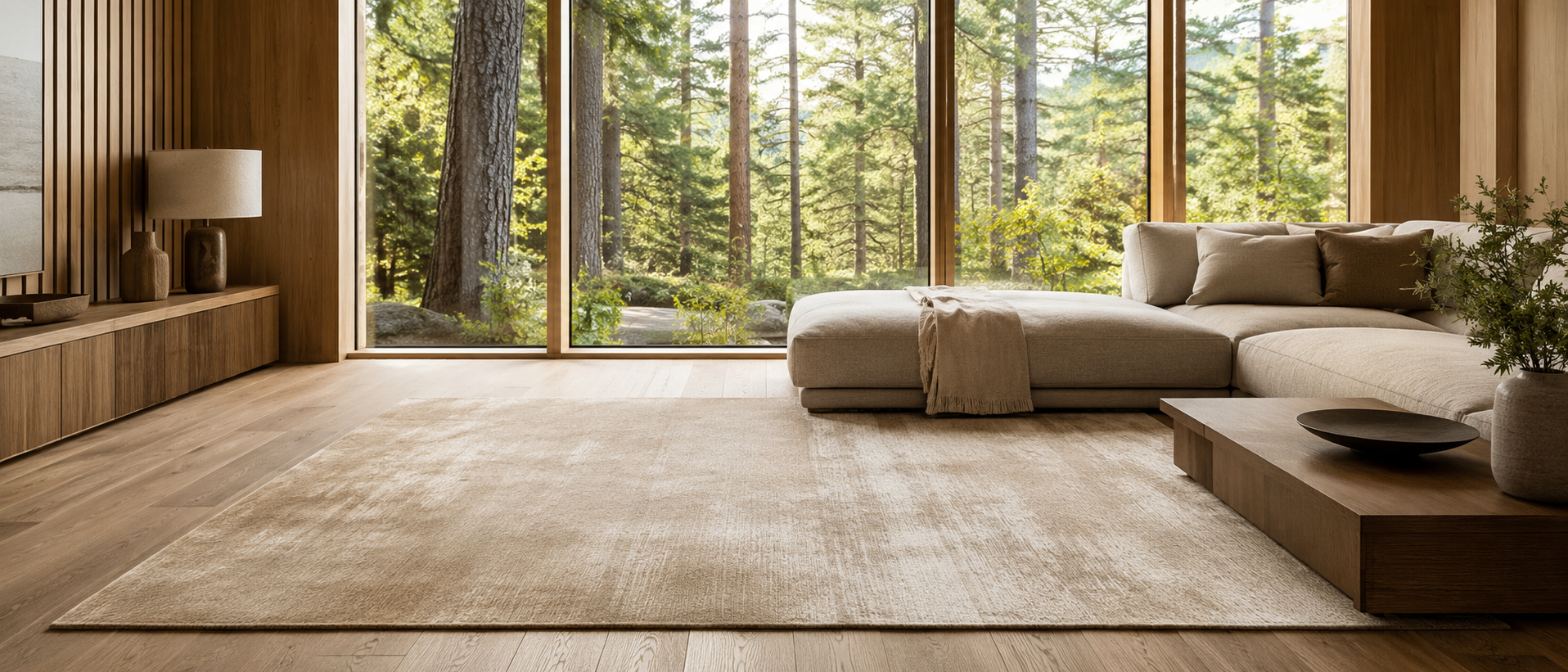
Anyone who touches a TENCEL rug for the first time immediately notices the difference: The surface is exceptionally soft and uniformly smooth. The pile lies finely and has a luminous sheen from within that is reminiscent of silk, without the coldness of synthetic fibres.
TENCEL unfolds its strengths particularly in calm, modern designs. Colours appear deep and clear, and the surface radiates a quiet elegance. Those who prioritise atmosphere and feel, and wish to enhance a room through the rug, make a very considered material choice with TENCEL. The result feels less rustic than wool and less clinical than pure synthetic fibres such as polypropylene.
Advantages of TENCEL in Rugs at a Glance
- Soft, fine feel: pleasant underfoot, especially in quietly used rooms.
- Silky sheen: lends the room an elegant, high-quality appearance.
- Intense colour depth: TENCEL takes dyes well; colours appear clear and vibrant.
- Plant-based origin: no petroleum-based raw material, cellulose from wood.
- Visual premium character: ideal for rooms where design ambition and living atmosphere matter.
Limitations and Restrictions: What TENCEL Cannot Do
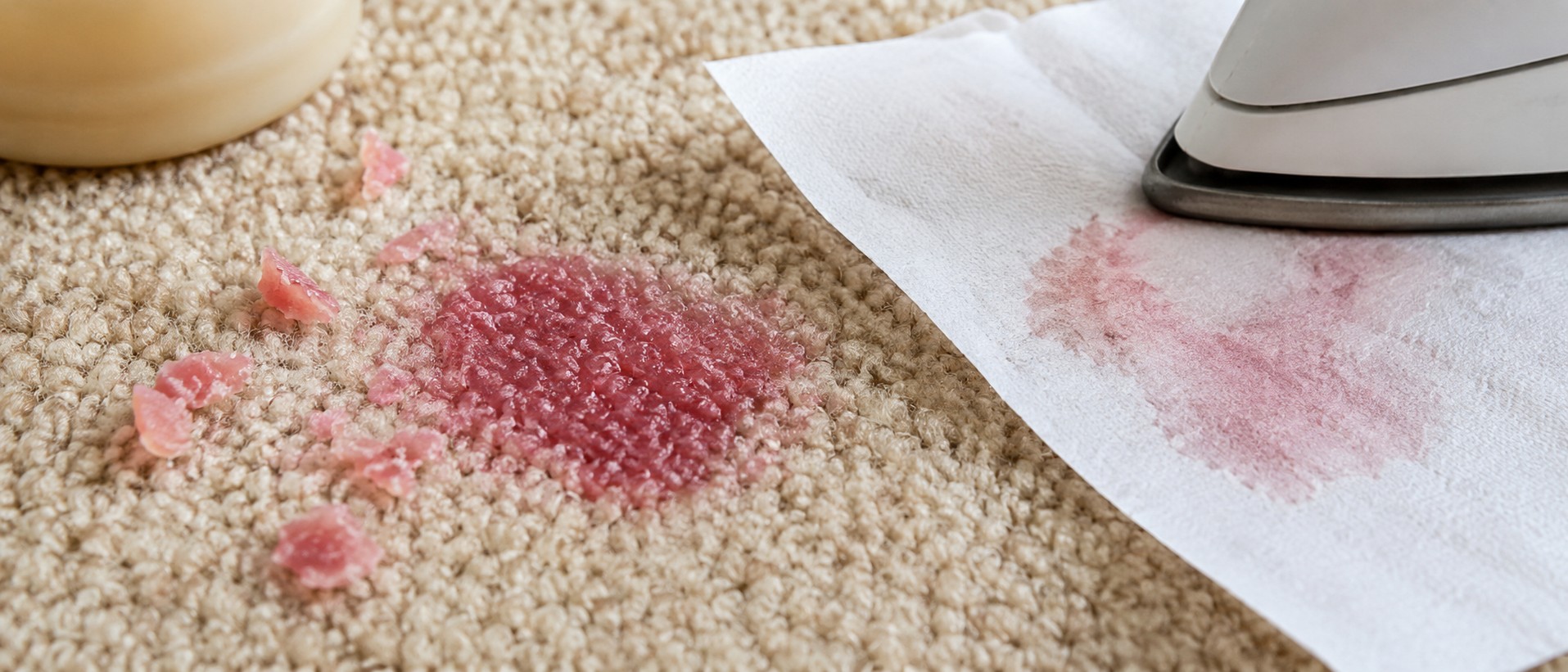
A TENCEL rug is not a material for every situation. Moisture is the greatest weakness: dampness can temporarily cause the fibres to swell, leading to structural changes or waving. Liquids should therefore be blotted immediately and without rubbing.
Under heavy mechanical abrasion, such as from heavy furniture with hard castors, frequent dragging, or intensive use by children and pets, TENCEL shows signs of wear more quickly than more resilient fibres such as wool or sisal. A more robust material is recommended for entrance areas, kitchens and dining rooms.
Restraint is also called for when cleaning. Aggressive household remedies, brushes or heavy soaking can permanently damage the pile. For high-quality pieces, professional cleaning is the safest choice.
Caring for a TENCEL Rug: The Key Principles
- Vacuum regularly: use a gentle brush roller or a suction-only nozzle without a brush, in the direction of the pile.
- Act on stains immediately: blot liquid dry, do not rub, work from the outside inwards.
- Minimise moisture: avoid excessive soaking, even when cleaning.
- No aggressive cleaning agents: prefer pH-neutral products; avoid household remedies such as vinegar or bicarbonate of soda.
- Professional cleaning: recommended for larger stains or heavy soiling.
- Use an anti-slip mat: protects the rug and prevents slipping on smooth floors.
TENCEL Compared: Wool, Viscose, Silk and Synthetic Fibres
TENCEL and Viscose
Both fibres come from cellulose and look visually similar. However, viscose is produced in a more complex, less closed process and is considered less environmentally friendly. TENCEL Lyocell is generally processed to a higher quality, is more durable and clearer in its sheen. Both materials require careful maintenance and are sensitive to moisture.
TENCEL and Wool
Wool is more robust, more elastic and tolerates significantly more everyday wear. It is the better choice for family households, pet owners or heavily used living areas. TENCEL, by contrast, offers a smoother, finer surface and a different visual character: less naturally rugged, but with a more velvety and modern appearance. Taking cotton and wool as a point of comparison, TENCEL sits closer to the more elegant end of home textiles.
TENCEL and Silk
Silk is the most demanding and exclusive rug material and achieves a sheen and fineness that TENCEL cannot fully match. TENCEL, however, is more accessible in price, more practical to care for and more widely available. For rooms that sit between everyday use and luxury, TENCEL can be a very convincing alternative.
TENCEL and Synthetic Fibres
Compared to polypropylene, polyester or similar synthetic fibres, TENCEL feels significantly more natural and higher in quality. Synthetic fibres score points for durability and easy care. TENCEL convinces in terms of feel, sheen and the desire for a material with a plant-based origin.
Which Rooms Are Suited to a TENCEL Rug?
The decision in favour of a TENCEL rug depends strongly on the room type and intensity of use. Very well suited are:
- Bedrooms: quiet use, barefoot, focus on feel and atmosphere.
- Dressing rooms and walk-in wardrobes: minimal abrasion, high design standards.
- Lounge and reception areas: representative, moderate use.
- Quiet living areas without children or pets.
Conditionally suitable for the living room, provided use is restrained and there are no children or pets in the household.
Less advisable for hallways, dining rooms, kitchens, children's rooms or rooms with heavy through-traffic. Here, wool, robust blended fabrics or a material such as sisal are the more fitting choice.
Who Really Benefits from a TENCEL Rug?
A TENCEL rug is a considered choice for people who prioritise atmosphere, material feel and appearance. Those who are design-minded, value a high-quality and rather elegant home aesthetic, and are prepared to treat the rug with appropriate care, will be very satisfied with TENCEL.
Those looking for an uncomplicated everyday rug that withstands heavy use, the occasional mishap and intensive wear are better served by other materials. TENCEL rewards care and a mindful approach. In those conditions, it is a material that can bring something truly special to a room.
FAQ
What is TENCEL in rugs?
TENCEL is a registered trademark of the Lenzing Group and refers in rugs to a Lyocell fibre. This is based on wood pulp and belongs to the regenerated cellulose fibres. In a rug, TENCEL produces an exceptionally soft, smooth feel and a characteristic silky sheen. The material is used particularly for high-quality designer rugs where elegance and colour depth are the focus.
Is TENCEL a natural or artificial material?
TENCEL cannot be clearly assigned to either category. The raw material is of plant origin: cellulose from wood. However, the processing into a finished fibre occurs industrially via a solvent process. TENCEL is therefore a so-called regenerated fibre, plant-based in origin, technical in production. It is neither purely natural like wool, nor petroleum-based like most synthetic fibres.
Is a TENCEL rug sustainable?
TENCEL Lyocell can be more sustainable than many conventional cellulose fibres, particularly thanks to the closed-loop production process, in which solvents are recovered to a very high degree. Wood sources can also be certified or controlled. Blanket eco-claims should nonetheless be treated with caution: dyeing, transport, care intensity and length of use also influence the overall footprint. TENCEL is a good argument, but not a free pass.
What are the advantages of TENCEL in rugs?
Very soft feel: pleasant underfoot, especially in quiet rooms. Silky sheen: lends the room an elegant, high-quality appearance. Intense colour depth: colours appear clear and vibrant. Plant-based origin: no petroleum-based raw material. High-quality design character: ideal when atmosphere and appearance are decisive.
Which rooms are suited to a TENCEL rug?
TENCEL is particularly well suited to bedrooms, dressing rooms, lounges and quiet living areas with moderate use. For the living room, TENCEL is conditionally suitable, provided no high level of everyday wear is expected. For hallways, kitchens, dining rooms and children's rooms, more resilient materials such as wool or robust blended fabrics are the better choice. TENCEL rewards restrained, careful use.