Which Rug Fits in My Dining Room?
Why a rug in the dining room makes such a difference
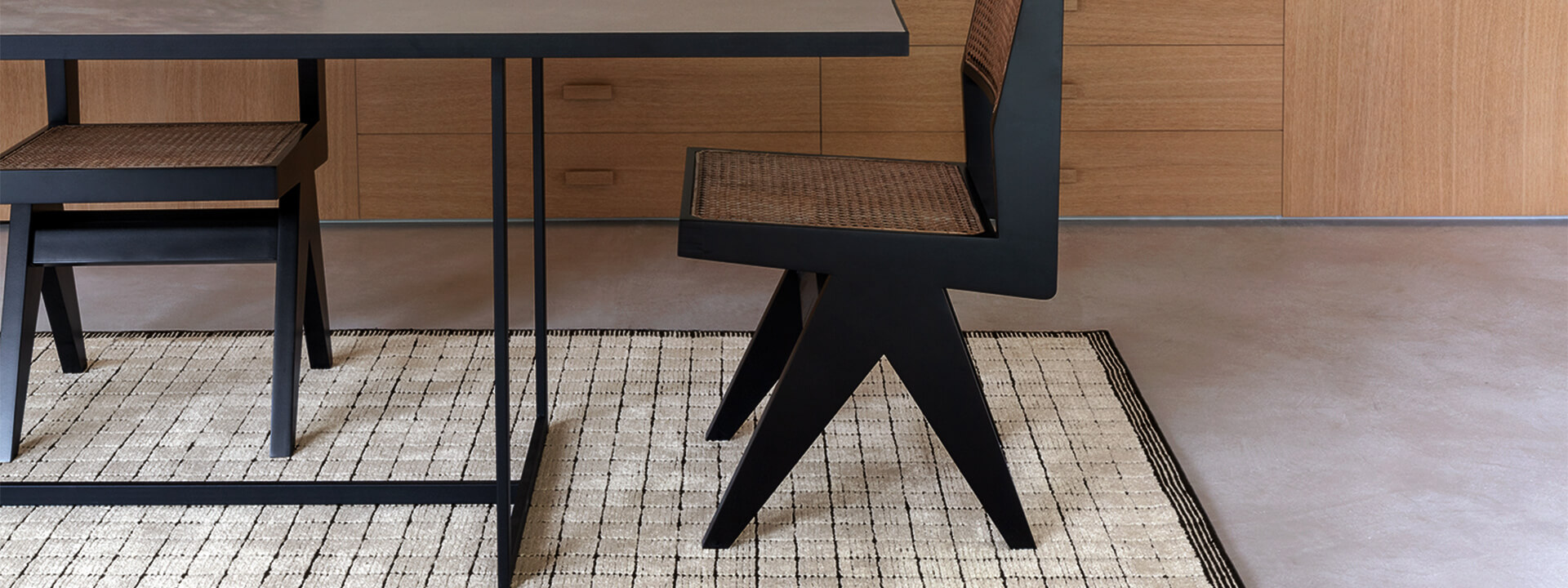
A rug under the dining table does more than is visible at first glance. It brings the table and chairs together as a coherent unit, adds warmth and colour to the room, and noticeably reduces footstep noise as well as chair sounds. Especially in open-plan living and dining areas, it also helps to clearly define the dining zone from the rest of the room.
The right size: the most important decision of all
When choosing a dining room rug, size is the decisive factor. The basic rule is: all chair legs should still be on the rug even when the chairs are pulled back from the table. In practice, this means the rug should extend at least 50 to 75 cm beyond the table edge on every side. As a rule of thumb: the rug should be at least 1.00 m larger than the table itself in both length and width.
If the rug is too small, the chairs will tip over the rug edge when pulled back, which is both uncomfortable and unfavourable for the material in the long run.
Rug sizes by table type
Round dining table
A round rug pairs particularly harmoniously with a round dining table, as both shapes echo and reinforce each other. For tables with extendable leaves, the maximum table size should always serve as the basis for calculation. The following guidelines have proven useful:
- Ø 170 cm round rug (recommended for tables up to approx. Ø 100 cm)
- Ø 250 cm round rug (recommended for tables up to approx. Ø 150 cm)
Small dining table
The same principle applies to compact dining tables: the rug should extend generously beyond the table on all sides, so the chairs remain securely on the rug when moved. Typical combinations:
- 170 x 240 cm rug (recommended for tables up to approx. 100 x 150 cm)
- 250 x 350 cm rug (recommended for tables up to approx. 100 x 180 cm)
Large dining table
For a large dining table seating six or more people, the same proportional rules apply. The larger the table, the larger the rug should be. A generously sized rug looks visually more assured than a tightly calculated format. The recommended minimum sizes follow the same guidelines as for the small table, shifted upwards according to the table surface area.
Pile height and material: low pile for everyday use
In the dining room, low-pile rugs are recommended. They are easier to vacuum, chair legs glide more evenly over them, and crumbs as well as food debris can be removed more quickly. High-pile or heavily textured rugs make it harder to move chairs and tend to trap dirt more deeply.
Those looking for a low-maintenance everyday rug are best served by synthetic fibres such as polypropylene or polyester. These are hard-wearing, often stain-resistant, and well suited to areas where spills occur regularly. Wool and natural fibres bring warmth and character, but require a little more care.
The design: border beats centre
Since the central area of the rug is permanently covered by the table and chairs, the design of the borders moves to the foreground. Those who choose an elaborate pattern or a striking border frame can show it to particular advantage in the dining room. Plain or subtly patterned rugs look timeless and blend into many interior styles, while bolder patterns give the room a distinct character.
FAQ
How large should a rug under the dining table be?
The rug should extend at least 50 to 75 cm beyond the table edge on all sides. As a guideline: the rug should be approximately 1.00 m larger than the table in both length and width, so that all chair legs remain securely on the rug even when the chairs are pushed back.
What shape should the dining room rug be?
The rug shape should match the table shape. A round rug fits particularly harmoniously under a round dining table. Rectangular tables are best complemented by rectangular rugs. In both cases, the key factor is that the rug is large enough to accommodate the chairs comfortably.
Which pile is best suited for the dining room?
Low-pile rugs are the best choice in the dining room. They are easier to clean, allow chairs to be moved without friction, and absorb dirt less deeply than high-pile rugs. Synthetic fibres such as polypropylene or polyester additionally offer good stain resistance for everyday use.
Why is the design at the rug border important?
Because the central area of the rug is permanently underneath the table and chairs and barely visible, the border becomes the main design surface. A beautiful frame, a border, or a striking edge pattern therefore stands out particularly well in the dining room.
What happens if the rug is too small?
If the rug is too small, the rear chair legs slide over the rug edge when pushed back. This is uncomfortable, puts strain on the rug edge over time, and looks visually unsettled. A sufficiently large rug provides a lasting remedy.