Viscose Rugs: Why They Shine and Where Their Limits Lie
How Viscose Changes the Light in a Room
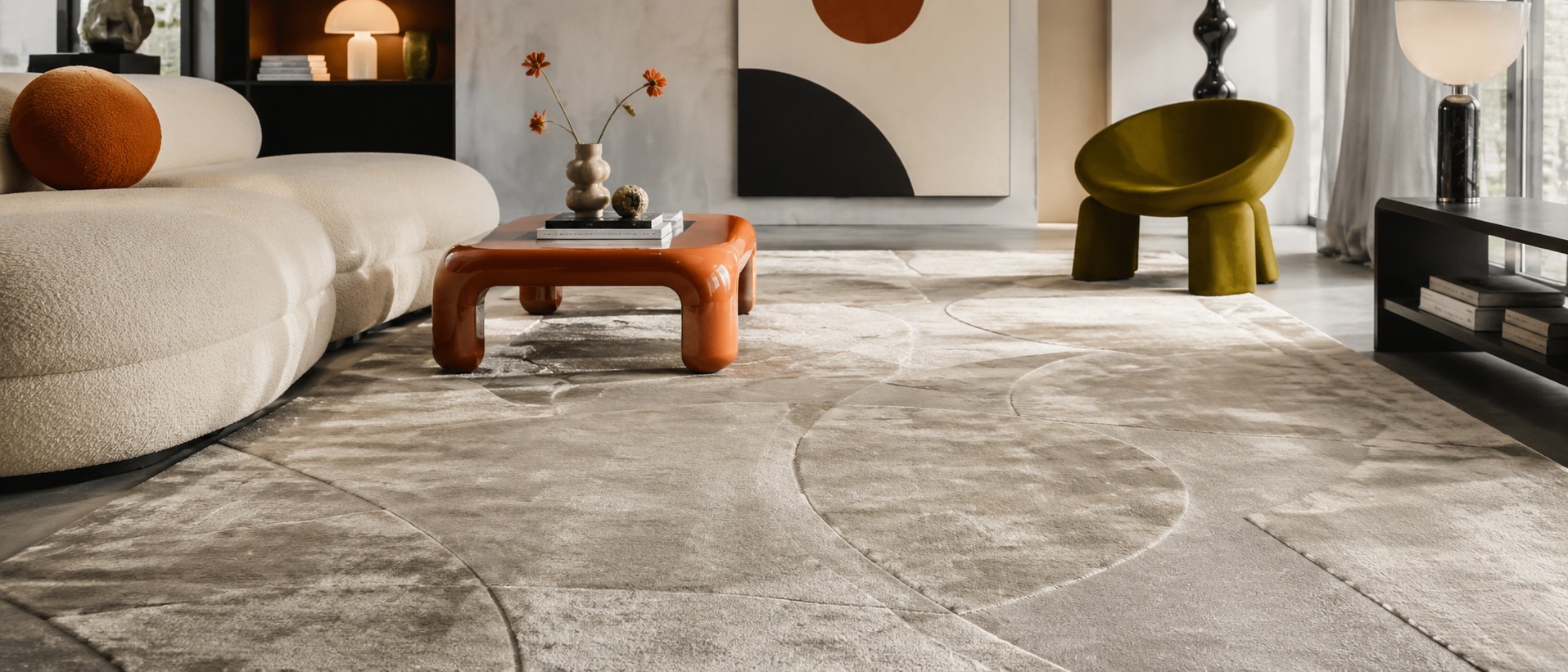
Imagine a living room with large windows. In the morning, light falls in at an angle, and a viscose rug catches it rather than absorbing it. The fiber reflects it gently back, the surface shimmers softly, and the room looks more open and brighter. That is exactly the strength of viscose: it plays with light.
In the evening, it works the other way around. In a dining area with indirect lighting, viscose reflects the lamplight and softens it. Not a harsh glare, but rather a quiet shimmer that makes the whole atmosphere warmer. Anyone looking for a hotel look at home will find this material hard to pass up.
From Wood to Fiber: What Lies Behind the Silky Sheen
Viscose is a semi-synthetic fiber made from cellulose, the main component of plant cell walls. Fast-growing woods such as beech, spruce, eucalyptus, and pine serve as raw materials, and bamboo, sugarcane, and soy also appear. The origin is therefore plant-based.
Pulp is extracted from the wood and pressed into solid sheets. To obtain the fiber, this pulp must be liquefied again, which is done by soaking it in sodium hydroxide solution. Further along in the process, chemicals such as carbon disulfide and sulfuric acid are used. After stretching, the fibers are freed from residues by hot washing, alkali salts, or bleaching agents. In simplified terms: wood becomes pulp, the pulp is chemically dissolved and reshaped into fiber.
The sheen comes from this process. Through treatment with sodium hydroxide, viscose can be produced with a strong or a silky-matte luster. The fiber absorbs a great deal of moisture and can therefore be dyed or printed very well. Colors appear more intense than with cotton, even after multiple washes. The former name "art silk" is no longer in common use today, though it can still be heard informally.
Natural or Synthetic? A Clear Classification of the Viscose Material
The short answer: neither entirely one nor entirely the other. Viscose belongs to the regenerated fibers, plant-based in origin and technically refined. The raw material is nature, the processing is chemistry. This is why viscose material is not a pure natural product like wool, but also not a pure synthetic fiber like polyester.
Even specialist sources classify it differently. One source says viscose is not a synthetic fiber because it is derived from cellulose. Others speak of a semi-synthetic chemical fiber. If someone promises you a crystal-clear category, be skeptical. The realistic classification lies in between: a fiber with a natural core and industrial production.
Where the Sheen Works and Where Viscose Reaches Its Limits
A viscose rug feels smooth and supple, and the silky texture invites barefoot walking. Visually, the material brings an elegant surface effect, and the sheen comes into its own particularly with intricate patterns or floral motifs. Where light plays a role, viscose enhances the brightness in the room.
There are, however, clear limits. Viscose is sensitive to moisture because it absorbs heavily and absorbed water remains in the fibers for a long time. If it dries too slowly, mold can develop. On contact with water, light tide marks form, similar to silk. Direct, prolonged sunlight can fade the colors and weaken the fiber. And in households with pets, viscose is rarely the best choice due to its sensitivity to moisture and dirt.
Viscose Rug Pros and Cons in Everyday Home Life
The briefest summary comes in two lists. First, what speaks in favor of viscose:
- Silky sheen and supple, soft surface
- Intense, brilliant colors that also carry floral patterns well
- Pleasant underfoot feel, ideal for bare feet
- Enhances the brightness in light-flooded rooms
- Luxurious feel at a lower price than genuine silk
And what you should keep in mind:
- Sensitive to moisture, can warp or develop mold
- Prone to creasing and can develop water marks
- Fades in strong sunlight
- Better suited to low to moderate use
- No machine washing, sensitive to excess water
A good compromise is blended fabrics. A viscose-wool blend with around 70% wool and 30% viscose is suitable for a living space with moderate use: the wool provides robustness and the viscose provides the sheen. For the bedroom, a viscose-cotton mix with the proportions reversed works well.
Gentle Vacuuming Instead of Wet Cleaning: the Right Care
The most important rule with viscose is: keep it dry. Cleaning in a washing machine is clearly inadvisable, because the material can lose its shape and color with too much water. You should also avoid aggressive cleaning agents, as they can damage the material and are ecologically questionable.
The central care measure is frequent vacuuming, especially with lighter colors or in more heavily trafficked areas. Important: a soiled rug that continues to be walked on works the particles deeper into the pile, which causes the material to age more quickly. Conventional brush attachments are too sharp-edged and can damage individual fibers if used in the wrong direction or at too high a setting. Specialized attachments for viscose rugs are available in stores.
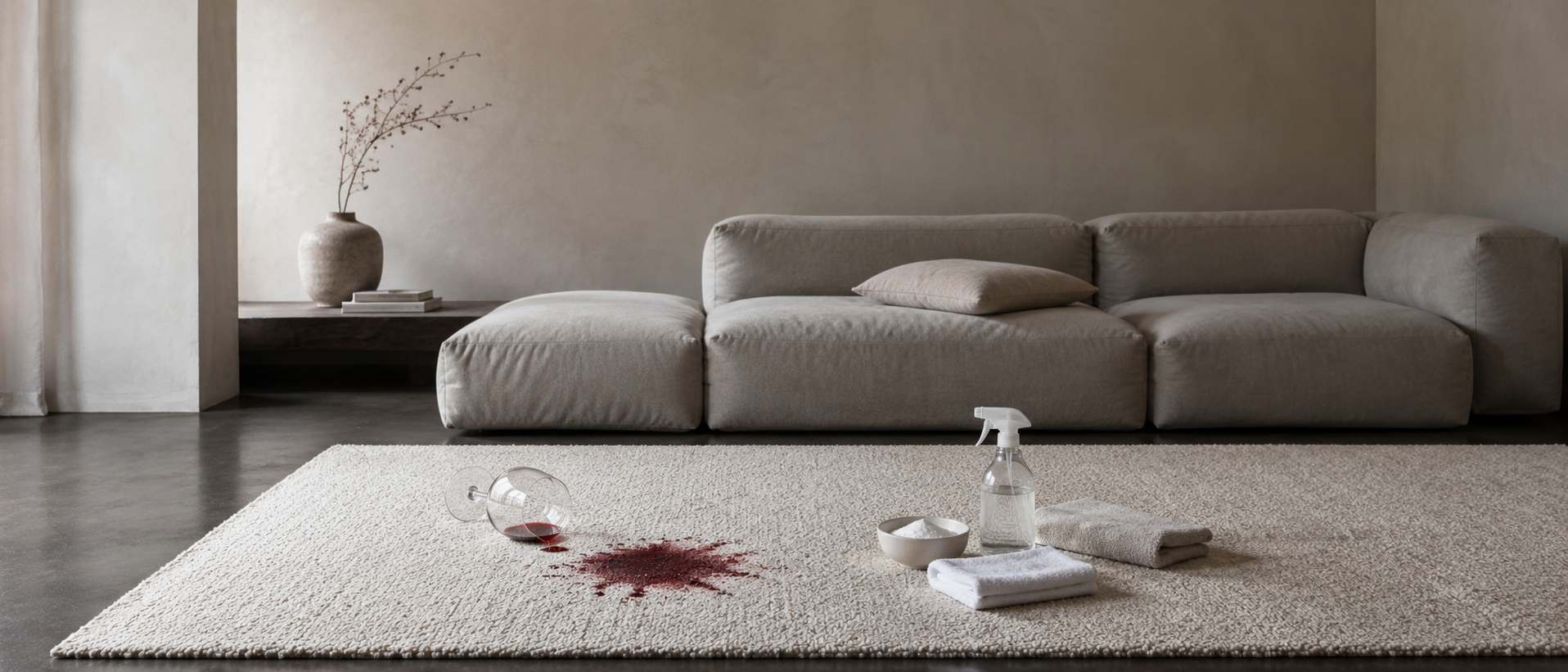
For stains: carefully scrape off solid dirt with a spoon or knife, and absorb liquid with an absorbent microfiber cloth. Do not rub, as the fiber breaks under strong pressure, and pressure marks cannot be reversed. After treatment, the rug should lie flat so that no creases form. For deep cleaning, some sources recommend professional cleaning approximately every 12 to 18 months. This is a guideline, not a fixed rule, and figures vary depending on the source.
Viscose Alongside Wool, Sisal, and Silk: a Material Comparison
Viscose was developed to offer a more economical alternative to expensive silk. Both impress with vivid colors and a beautiful sheen with good drape. Silk is smoother, softer, and more elastic because it consists of protein fibers, and viscose creases more easily. In terms of price, viscose is generally well below silk. As an alternative for the silk look, it is therefore a very sensible choice.
Compared to robust materials, the character becomes even clearer. Imagine an open living space in which a blue viscose rug lies next to a sisal rug. The viscose rug shimmers, catches the light, and looks soft and elegant. The sisal rug beside it is matte, textured, and robust, made for heavy use. Both have their place, just not in the same spot. Wool rugs, in turn, are the classic all-rounder for more heavily used areas, and a pink viscose rug brings exactly the soft, calm note to a bedroom that the material is made for.
Briefly on sustainability: the raw material cellulose is plant-based, and viscose is biodegradable. However, classic production is energy-intensive and uses chemicals that can be problematic for groundwater. Lyocell is considered a more environmentally friendly relative, as its production requires less water and fewer chemicals. A blanket judgment falls short; it depends heavily on the manufacturing process.
FAQ
Is viscose natural or synthetic?
A bit of both. Viscose is a semi-synthetic regenerated fiber: the raw material cellulose comes from wood and is plant-based, while the processing with sodium hydroxide and further chemicals is industrial. This means viscose is not a pure natural material like wool, but also not a pure synthetic fiber like polyester.
Why do viscose rugs have such a beautiful sheen?
Because treatment with sodium hydroxide gives the fiber a silky luster and viscose absorbs color very well. The smooth surface reflects light, which is why colors appear intense and the sheen comes into its own particularly with fine patterns and in sunlight.
Which rooms are suitable for a viscose rug?
Above all, living rooms and bedrooms with low to moderate use, where sheen and softness can work their effect. Bathrooms and entrance areas are unsuitable because viscose does not tolerate prolonged moisture well. In more heavily used rooms, a blended fabric is the better solution.
Is viscose a good alternative to silk?
Yes, for the silk look at a lower price. Viscose was developed as a more economical alternative to expensive silk and offers similarly vivid colors and a beautiful sheen. Silk is smoother, softer, and more elastic, and viscose creases somewhat more easily.
How do I vacuum a viscose rug correctly?
Gently and with the right attachment. Conventional brush attachments are too sharp-edged and can damage fibers if used in the wrong direction or at too high a setting. Use a specialized attachment for viscose rugs and vacuum more frequently and carefully, especially with light colors.