Rug for Pets: How to Find the Right One and Keep It Looking Great
When Your Dog or Cat Has the Final Say on the Rug
A new rug should make your home feel warmer, cosier and more inviting. At the same time, dog paws scratch across the floor, cat claws seek out every loose loop, and wet paws leave a trail from the hallway to the living room. This sounds like a dilemma, but it is not: with the right material, a suitable structure and a clear care strategy, you can find a rug that handles everyday pet life without any trouble and still looks good.
This guide explains which criteria really matter, which materials have proven themselves, and how to care for the rug in daily life.
The Most Important Criterion: Pile Height and Weave Type
The strongest practical lever when buying is pile height. Low pile and flatweave perform significantly better in everyday life with pets than long, soft or loose structures. The reasons are concrete:
- Pet hair sinks in less deeply and is easier to vacuum up.
- The vacuum cleaner grips dense, low surfaces more reliably.
- Stains can be treated more quickly and over a larger area, as they penetrate the pile less.
- Claws find fewer points of attack on tightly woven surfaces.
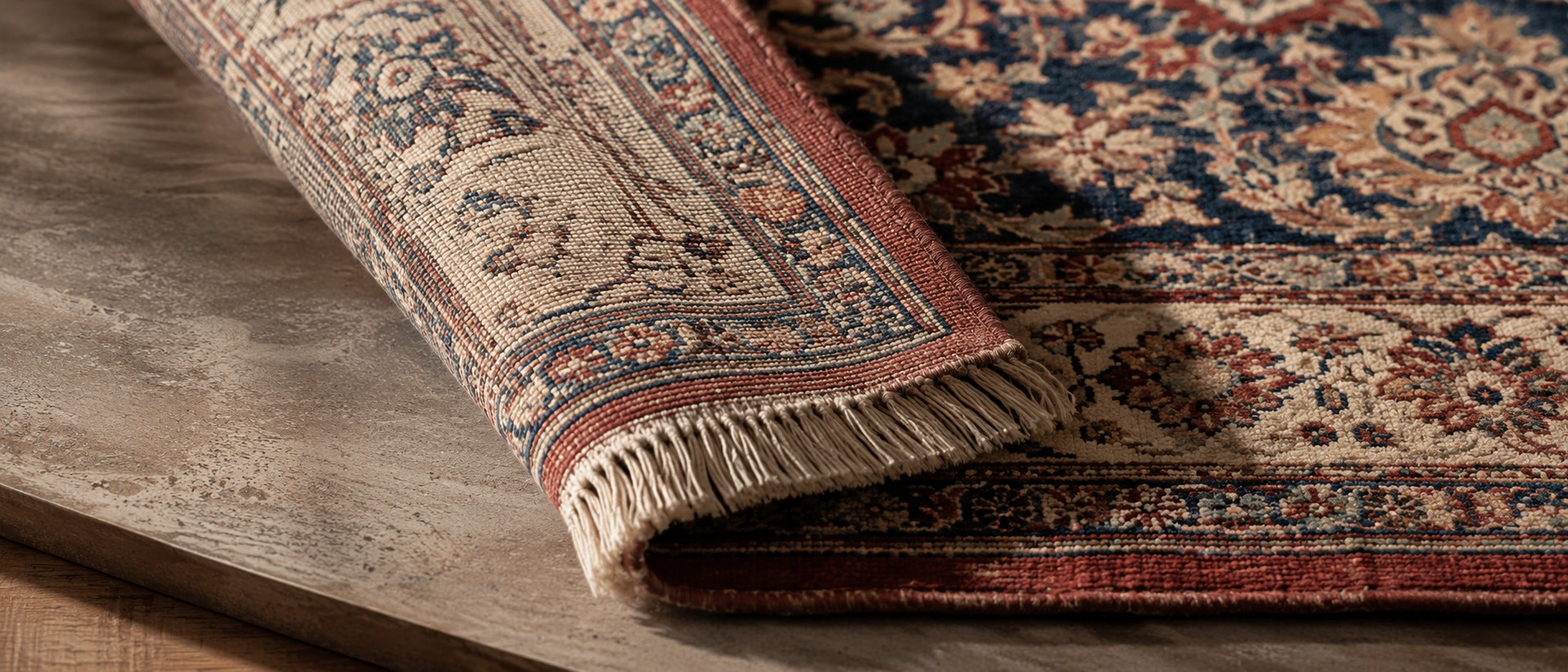
Loosely woven loop pile is problematic for another reason: cat claws and dog claws can pull out individual threads, which damages the rug surface over time. Flatweave and short-cut pile are significantly more resistant in this respect.
High pile and shaggy rugs feel luxurious, but are less advisable with active pets. Hair, crumbs, odours and moisture collect in deep pile layers, and cleaning becomes more demanding. This does not mean that high pile is fundamentally out of the question in a household with pets: a calm, older dog in the bedroom has different requirements than a young, active dog in the living room.
Materials Compared: What Does Each One Offer?
Polypropylene
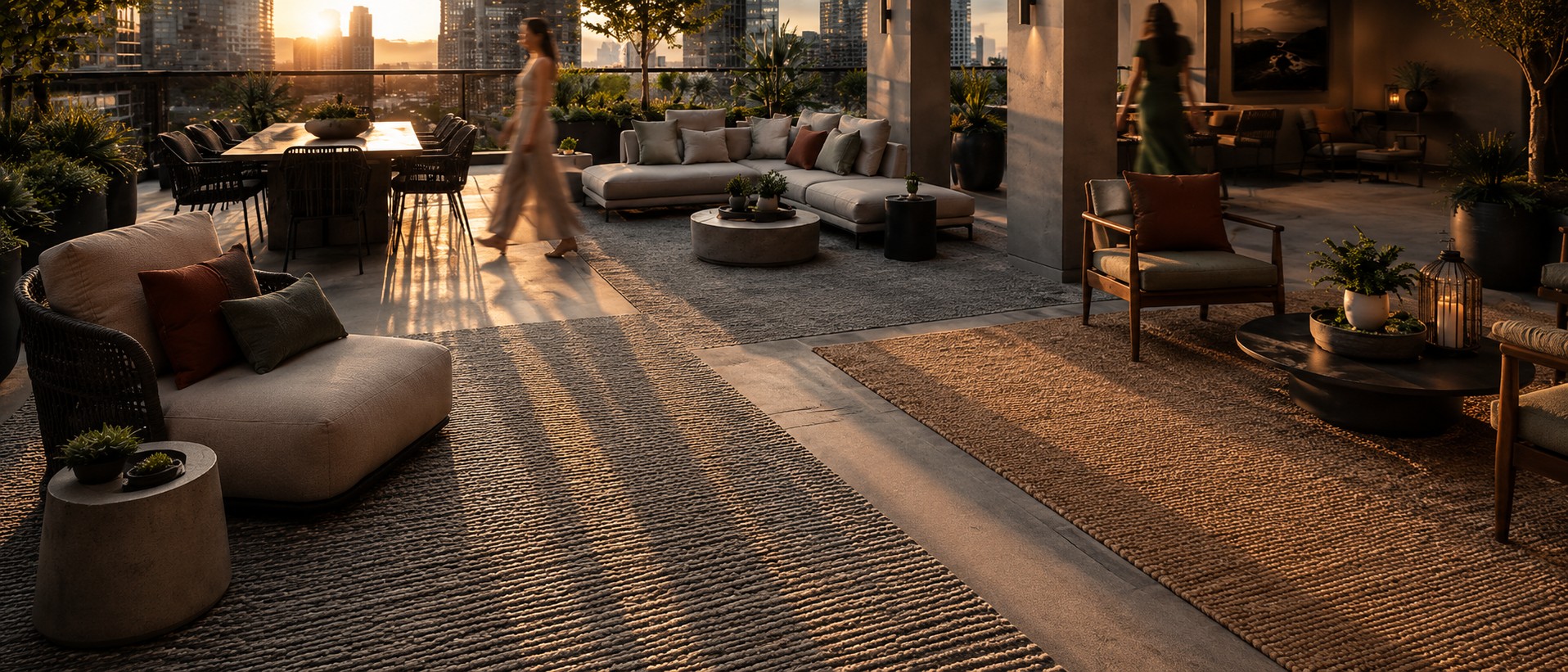
Polypropylene is one of the most durable materials for households with pets. The fibres are naturally dirt-repellent, absorb almost no moisture, and can be cleaned with mild wet cleaning if needed. Stains stay on the surface and can be blotted away quickly. Polypropylene is also affordable and available in many designs. Interestingly, polypropylene rugs are often used as outdoor rugs, precisely because they withstand weathering and moisture so well. This durability also pays off in the living area with animals.
Polyester and PET
Polyester, especially recycled PET, is soft, colourfast and easy to care for. It is less water-repellent than polypropylene, but handles light stains and pet hair well. Many washable rugs are made from polyester. Those who want a soft feel combined with uncomplicated everyday care will find a good solution here.
Wool
Wool is naturally elastic, dirt-repellent and long-lasting. Quality wool rugs withstand a great deal and recover well from pressure marks. To be honest, they require more attention with moisture and organic stains than synthetic fibres. Urine in particular should be treated very quickly, as wool fibres absorb more moisture than synthetic alternatives. Those prepared to put in this extra effort will get a rug with genuine warmth and a long service life.
Viscose and Silk
Both materials look elegant, but are very demanding in households with pets. Viscose is sensitive to moisture, can leave marks when wet and loses its structure. Silk is simply not made for heavy use. Those who value aesthetics will be better served by other materials that look equally premium.
Colour and Pattern: Cleverly Concealing Hair
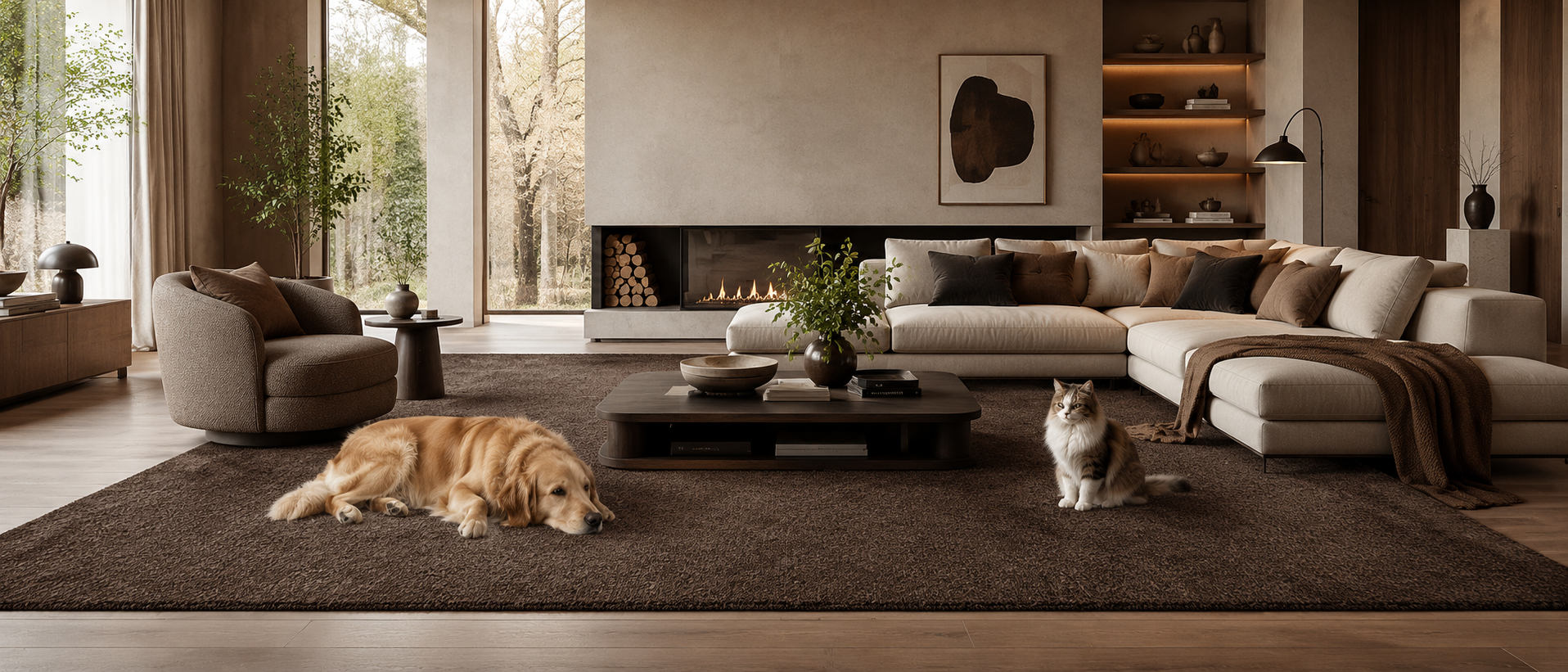
An often underestimated factor is the choice of colour. Solid, very light or very dark rugs show hair and small marks more clearly than mottled, patterned or mid-toned options. Earth tones, grey tones, mottled textures or calm geometric patterns conceal both light and dark pet hair more effectively. This makes a difference not only visually, but also reduces the subjective pressure to vacuum constantly.
Care Strategy in Everyday Life: Concrete Immediate Rules
Removing Pet Hair
Regular vacuuming with a powerful vacuum cleaner is the most important measure. A vacuum cleaner with a HEPA filter retains fine particles and does not release them back into the room air, which is particularly helpful for people with sensitivity to pet allergens. Low pile rugs can be vacuumed more evenly and efficiently than high pile variants.
Treat Stains Immediately
With any liquid, the rule is: act immediately. Blot with a white, absorbent cloth from the outside inwards, do not rub. Rubbing spreads the stain and drives it deeper into the pile. Then treat with a mild cleaner and allow to dry thoroughly.
Removing Urine Correctly
With urine, one point is particularly important: do not use heat. Hot water or steam can permanently fix the stain and odour in the fibres. Instead, blot cold, treat with an enzymatic cleaner (which breaks down organic residues at a molecular level) and dry thoroughly. Enzymatic cleaners are particularly effective on organic stains such as urine, vomit or food remnants.
Choosing Cleaning Products Carefully
Pets move very close to the floor with their paws, noses and tongues. For this reason, aggressive chemicals should be avoided. Certain household cleaners, including ammonia-based products and those containing tea tree oil, can be problematic for animals. Mild, pet-safe cleaners and enzymatic products are the better choice. The manufacturer's instructions for the rug should always be followed, and a test on an inconspicuous area is advisable before first use.
Non-Slip Safety
Dogs, especially young or large breeds, can slip on smooth floors. A non-slip rug pad gives the animal secure footing and at the same time prevents the rug itself from shifting. This is particularly relevant in the hallway and in open living areas with smooth flooring.
Washable Rugs: Practical, with Realistic Expectations
Washable rugs are a practical choice for smaller formats and lighter models: for the food bowl area, the entrance or a child's room with a pet. For large living room rugs, the concept quickly reaches its limits: the weight, the required machine and drum size, the drying time, and the subsequent moving of furniture back into place make the process demanding. Anyone looking for a washable rug should check size, weight, backing and machine compatibility carefully.
Pet Hair and Allergies: What a Rug Can Do
Rugs are not inherently the problem with pet hair, but they do bind dust and allergen particles. The shorter, denser and easier to care for a rug is, the better the level of exposure can be controlled. Those who react strongly to pet allergens should maintain a consistent cleaning routine and use a vacuum cleaner with a HEPA filter. A rug labelled as "allergy-friendly" is not a guaranteed claim, but a short pile, regularly cleaned rug is significantly easier to manage than a shaggy model.
FAQ
Which rug is best suited for pets?
Low pile and flatweave rugs with a dense, closed structure perform best. Loose loops should be avoided, as claws can pull out threads. In terms of materials, polypropylene and polyester stand out for their durability and easy cleaning, while wool is long-lasting and high quality but requires more care when it comes to moisture. Mottled colours and calm patterns conceal hair and small stains more effectively than solid, very light or very dark surfaces.
Which rug is good for dogs?
For dogs, low pile heights are recommended, as dog hair sinks in less deeply and the vacuum cleaner grips better. Synthetic fibres such as polypropylene or polyester are uncomplicated when it comes to dirt, wet paws and occasional accidents. A non-slip pad gives the dog secure footing, especially in the hallway or on smooth floors. With young or very active dogs, it is worth avoiding sensitive materials such as viscose or high pile.
Which rug is good for cats?
With cats, the weave is decisive: loosely woven loops are unfavourable, as cat claws can pull out individual threads. Tightly woven, short pile rugs with a robust surface hold up better against scratching behaviour. Offering the cat an attractive scratching post or scratching mat provides additional protection for the rug. Dark or structured patterns are practical, as they conceal light cat hair more effectively.
How do I remove pet hair, urine or odours from the rug?
Pet hair: Vacuum regularly with a powerful vacuum cleaner, ideally with a HEPA filter. Liquids: Blot immediately with a white cloth from the outside inwards, never rub. Urine: Do not use heat, as this fixes the stain and odour. Blot cold, then treat with an enzymatic cleaner and allow to dry thoroughly. Cleaning products: Always check for pet safety, follow the manufacturer's instructions and test on an inconspicuous area before first use. Ammonia-based products and tea tree oil should be avoided.
Are washable rugs really practical with pets?
Washable rugs are a good choice for smaller formats: for example in the entrance area, under the food bowl or in a room with a limited surface area. For large rugs, the effort is often considerable: weight, drum size, drying time and the subsequent moving of furniture back into place make regular washing impractical. Anyone looking for a washable rug should carefully check size, weight, backing and machine compatibility according to the manufacturer's specifications.