Removing pressure marks from rugs: which method suits your fiber
First identify the fiber: wool, synthetic or oriental rug
Before you do anything with ice cubes or a steam iron, think about what your rug is made of. The fiber determines which method will help you and which will make the damage worse. Broadly speaking, there are three cases: wool and other natural fibers, synthetic fibers such as polyester, nylon or polypropylene, and the classic oriental rug.
Wool tolerates heat and moisture only to a limited extent. Too much of either, and the rug shrinks or felts. In addition, wool contains natural, dirt-repelling wool grease that you can damage with improper treatment. Synthetic fibers are more robust, but they remain sensitive to heat: many synthetic rug floors are simply not sufficiently heat-resistant. If you are unsure which fiber you are dealing with, test every method on an inconspicuous area first.
The rest of this guide follows exactly this logic. We go through the techniques and state for each one which fiber it is suitable for. This way you can remove pressure marks from your rug without ruining the pile.
Why heavy furniture flattens the pile
Pressure marks form because the pile fibers are compressed over a longer period of time and lie differently from how they were intended. The longer a heavy piece of furniture stands in one spot, the more the rug gives way. With high-pile models this is more noticeable, because the longer fibers tend to stay flattened more easily.
The surface area of the furniture foot also plays a role. Narrow or thin furniture legs concentrate the entire weight on just a few square centimeters, making the indentation correspondingly deeper. And it is not only the fibers that are affected: the padding or backing layer is also compressed, which further reduces the volume.
To set realistic expectations upfront: the longer the furniture has been standing, the harder it is to get the dent out again. Very old or very deep indentations, for example from furniture that has stood for years, sometimes only partially recover, because the fibers can take on a permanent shape.
Heat and steam for natural fibers: how to use the steam iron
For wool and other natural fibers, the steam method is the most powerful approach. Steam loosens the fibers and allows them to stand back up. Think of the wool rug in the bedroom where the bed legs have pressed deep dents after years of standing in the same spot. This technique is made exactly for that.
The key safety rule is: the hot iron must never touch the rug directly, or you will burn the fibers. Always place a cloth between the iron and the rug.
- Place a cloth: Put a clean, damp cotton cloth directly on the pressure mark.
- Steam: Hold the steam iron approximately 1 to 3 cm above the cloth, depending on the thickness of the rug, and activate the steam function for a few seconds. Do not press it down.
- Brush up: Remove the cloth and carefully lift the fibers against the direction they were lying, using a soft brush or a fork.
- Dry: Allow the area to dry completely in the air before putting any load on it again.
If it does not work immediately, dampen the area thoroughly, brush it up again and repeat the process after drying. Even older indentations can often still be treated, but they usually require several rounds. For very large pressure marks, ice cubes and a steam iron reach their limits, and only a steam cleaner will then help.
Why synthetic fibers need different rules
With synthetic fibers the opposite applies: keep the steam iron away. A steam iron is not suitable for synthetic rugs because the fibers tolerate heat poorly and can be severely damaged. Lifting with steam often does not work on synthetic fibers anyway, because the fibers tend to kink rather than recover.
Think of the polypropylene rug in the children's room. Here the iron is off-limits, and the ice cube method is the right choice. If a kink does occur, stay realistic: kinks in synthetic fibers can hardly be fully repaired. A comb also carries the additional risk of pulling out individual tufts. Work carefully.
The ice cube method as a gentle all-round solution
The ice cube method costs nothing and works across fiber types, because it works with cold and a little water rather than with heat. That is exactly what makes it the first choice for synthetic fibers and the gentle alternative for wool.
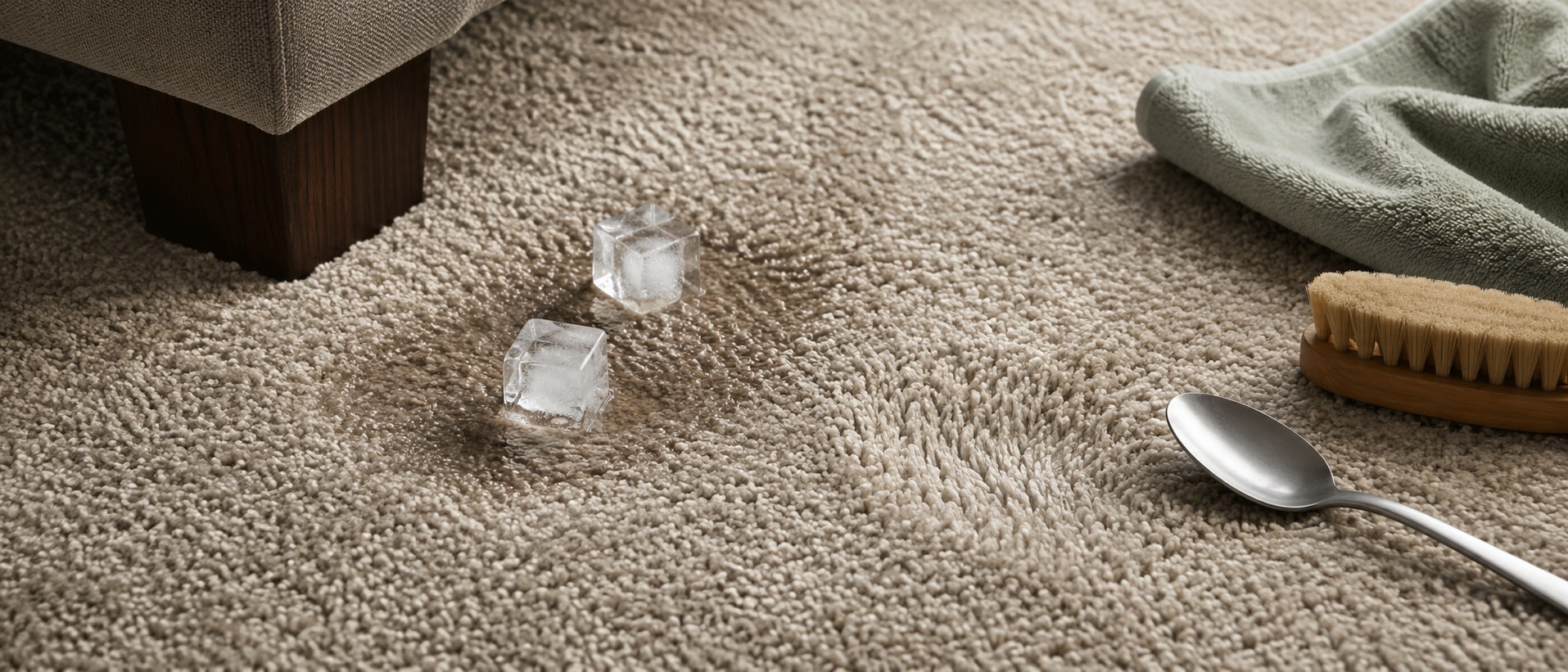
- Place ice: Put an ice cube on the dent. For larger pressure marks, use several cubes spaced about 1 to 2 cm apart; for round indentations, place the cubes at the edges.
- Let it melt: Depending on the depth of the dent, leave it to work for a few hours up to 12 hours. The melt water allows the fiber to swell and rise back up to the level of the surrounding area.
- Blot: Dab up excess moisture with an absorbent cloth or sponge. The rug does not need to be completely dry at this stage.
- Lift: Pull the flattened fibers up with a coin or a spoon, then dry the area with a hairdryer.
Two practical tips: on light-colored rugs, use distilled water for the ice cubes to avoid limescale marks. And if a rug runner lies on a hard floor, place a cloth underneath before adding the ice so that no moisture seeps into the underlay or the floor.
Lifting pile fibers by hand: fork, spoon, soft brush
For light indentations you often need neither ice nor steam. Start with the gentlest means: vacuuming, combing and brushing can sometimes lift compressed fibers on their own. When vacuuming, choose a high setting and go over the area several times from different directions.
If the dent remains visible, continue mechanically:
- Fork: On high-pile rugs, comb through the pile as you would when combing hair, and stand the pile fibers back up.
- Coin or spoon: Use these to deliberately lift individual flattened fibers.
- Soft brush: Run a rug brush continuously over the area. After a few minutes, a visible result usually becomes apparent.
With synthetic fibers, be especially careful so that the comb does not pull out any tufts. And keep in mind: very deep dents from furniture that has stood for years can sometimes only be partially removed, even with patience.
What Swiss rug professionals say about oriental rugs and underlays
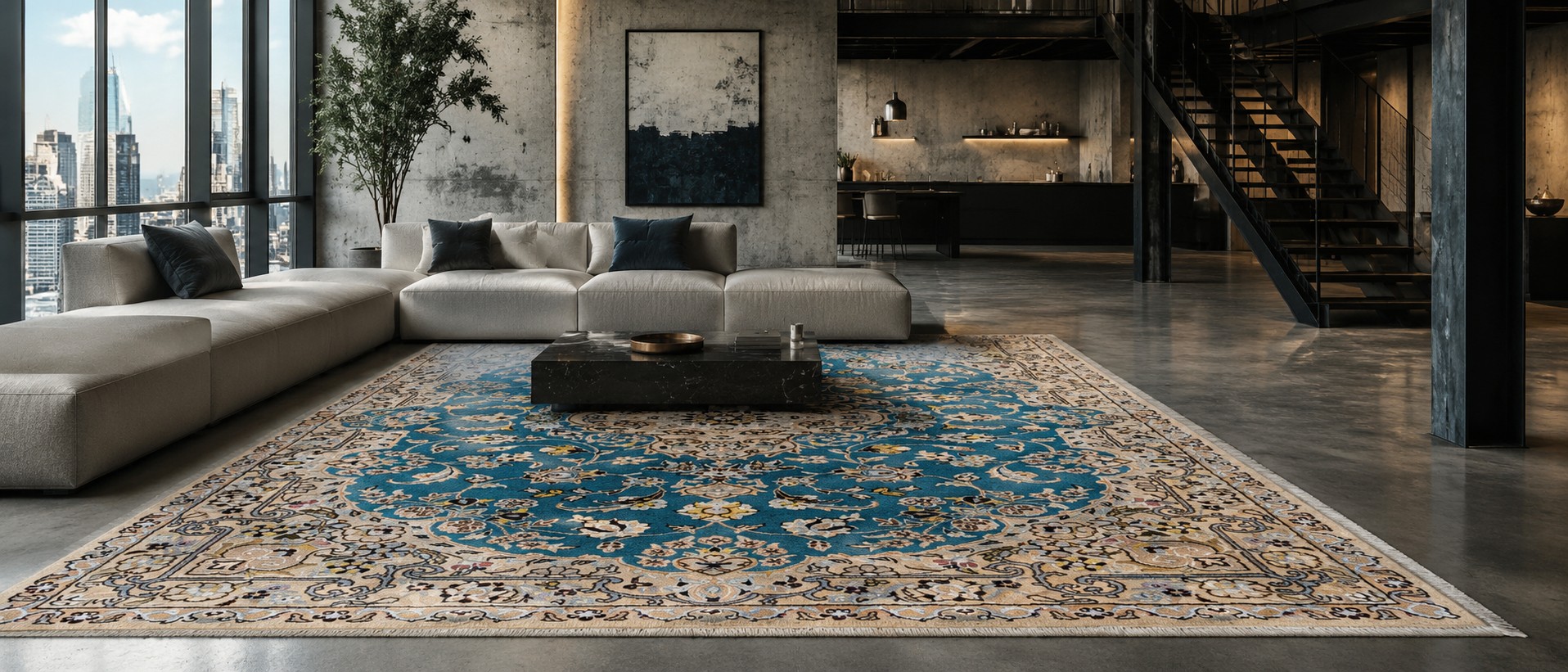
Back to the dining room with the old oriental rug, under whose dining table four indentations from chair legs are visible. The most common question about this: is it even acceptable to place a table with chairs on a valuable oriental rug? According to K-Tipp, Swiss rug professionals confirm that this is perfectly fine. An underlay is additionally recommended, which protects the rug and prevents it from slipping.
When it comes to restoring a valuable piece, K-Tipp in Switzerland refers to the Schweizerische Orientteppichhändler-Vereinigung (SOV) and the Interessengemeinschaft Orientteppich (IGOT) as specialist contacts.
Prevention so that no dent forms in the first place
The simplest solution is furniture glides or coasters under the legs of heavy pieces such as sofas, bed frames or shelving units. They distribute the weight over a larger area. One detail worth noting for rugs: felt pads are often not ideal here, because they can stick to the pile. On low-pile rugs, glides made of plastic, Teflon or stainless steel work better.
Movement also helps: shift the furniture a few centimeters every few months so that the pile can loosen up. Where possible, wider legs or larger base surfaces are an advantage. And if you have just moved a piece of furniture, leave the area undisturbed and flat so that the fibers can regenerate on their own.
FAQ
Which method suits a wool rug and which suits synthetic fibers?
For wool and other natural fibers, the steam method with the iron is suitable; for synthetic fibers, the ice cube method. Wool tolerates controlled heat, whereas synthetic rugs are often not sufficiently heat-resistant and their fibers tend to kink under steam rather than recover. Cold and a little water are the safer approach for synthetic fibers.
Is it acceptable to place a table with chairs on an oriental rug?
Yes. According to K-Tipp, Swiss rug professionals confirm that placing a table with chairs on a valuable oriental rug is perfectly fine. An underlay is additionally recommended, which protects the rug and prevents it from slipping.
Why is a steam iron risky for synthetic rugs?
Because many synthetic rug floors are not sufficiently heat-resistant and the fibers can be severely damaged by the heat. In addition, lifting with steam often does not work at all for synthetic fibers, as the fibers tend to kink rather than recover. Use the ice cube method instead.
How do you lift the pile fibers again after treatment?
With a fork, a coin, a spoon or a soft rug brush. On high-pile rugs, comb through the pile as you would when combing hair; with a coin or spoon you can deliberately lift individual fibers. With synthetic fibers, work carefully so that the comb does not pull out any tufts.
Can very old or deep pressure marks still be removed?
Often only partially. The longer a piece of furniture has stood in one spot, the harder it is to get the dent out again, and very deep indentations from furniture that has stood for years can take on a permanent shape. Several rounds with steam or ice help; for very large areas, a steam cleaner may be worth considering.