Moth Damage Rug: identify, treat and prevent permanently
Why moth damage on rugs almost always affects wool rugs
If you suddenly discover small holes in your wool rug, there is often a simple biological explanation behind it. The larvae of the clothes moth feed on keratin, meaning animal fibers such as wool, hair or feathers. This is precisely what makes your rug a food source. Plant-based fibers such as cotton and linen remain unaffected, as do synthetic fibers. Only once a rug contains more than 20 percent wool in a blended weave does it become interesting to moths.
A good example is the classic Berber rug made from dense, undyed wool. The rich keratin content is particularly attractive to moths. Added to this: clothes moths prefer heated rooms and are active all year round. A warm living room with a high-quality wool rug is almost an open invitation for them. Anyone who wants to avoid moth damage on their rug should therefore understand how these creatures behave.
Larvae, not moths: who actually causes the damage
This is the most important misconception many people have. The small, light-brown moth with its erratic flight does not eat your rug at all. The material damage is caused exclusively by the moth larvae. The moth only lays the eggs from which the voracious larvae hatch. These larvae can digest wool at all only thanks to specialized gut bacteria that break down keratin.
For you, this means two things. First: if you see moths fluttering around the room, that is a warning signal, but the actual feeding happens invisibly within the pile. Second: any treatment must target the larvae and eggs, otherwise it will have little effect. A measure that only catches the moths does not interrupt the cycle.
Identifying rug moth infestation: feeding holes, droppings and where larvae hide
You can identify a rug moth infestation by several signs together. Typical indicators are small, irregular feeding holes distributed across the entire piece, often running in circular or straight patterns along the feeding trail of the larvae. These are accompanied by thin, bare patches as well as small droppings with an irregular surface that frequently take on the color of the fabric.
Further signs include visible yellowish-white larvae, empty larval casings after molting, and in the case of severe infestation, a musty odor. Check in dark and undisturbed areas: along the edges of the rug, on the underside and under furniture that is rarely moved. It is precisely in these low-traffic zones that larvae feel most at home.
A common misconception: one vacuuming and that's enough. Household vacuum cleaners are usually not sufficient to remove larvae and eggs completely from the pile. Vacuuming remains important, but is rarely the complete solution.
Natural methods: parasitic wasps for rugs and other gentle approaches against moth larvae
With many wool rugs, it is worth starting with natural methods first. They are gentle and can be combined well.
Parasitic wasps as beneficial insects
Parasitic wasps of the species Trichogramma evanescens lay their eggs inside moth eggs, so that no larvae can hatch. They are harmless to humans and pets, and once their work is done, they disappear on their own. The tiny cards are used within the room, and the application requires a room temperature above 15 degrees.
The process requires patience. The cards are renewed approximately every two to three weeks; after around twelve weeks the infestation should have disappeared. For a complete cycle interruption, six releases at intervals of three weeks each are recommended. A practical consideration when using parasitic wasps on rugs: the larger the surface area due to a long pile, the harder it is for the beneficial insects to reach all the eggs.
Vinegar for cleaning
Vinegar has a deterrent effect on moths and is suitable for wiping down affected areas. As a standalone solution against an existing infestation, however, vinegar is not sufficient; it rather supports the cleaning process.
Fragrances as deterrents
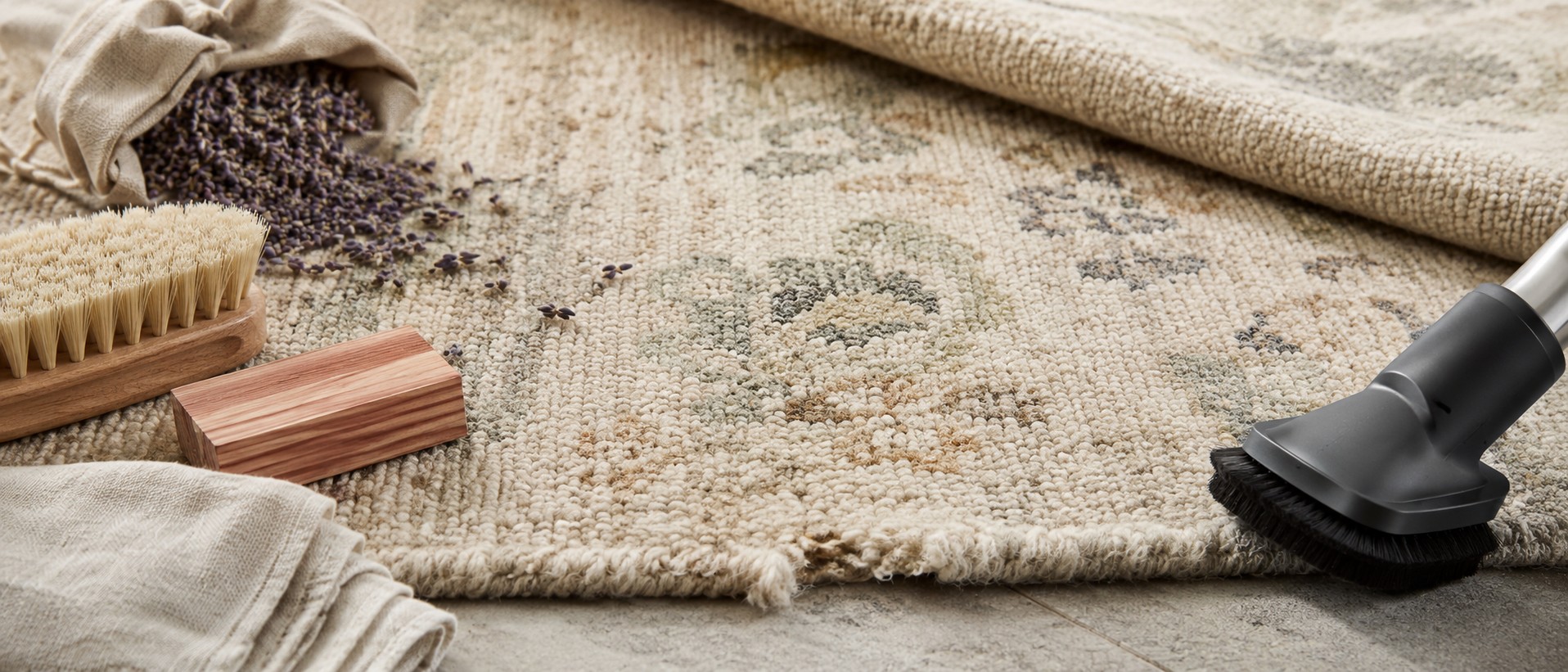
Essential oils such as lavender, cedarwood or cloves deter moths. However, they do not offer one hundred percent protection, and they are of little help during an active infestation. Scented sachets also have a limited effect: you should renew them approximately every three months to maintain their effectiveness.
Cold, heat and mechanical reduction: what kills eggs and larvae
Temperature is one of the most effective tools against moth larvae and eggs, and is manageable for many rugs.
Freezing
A temperature of minus 18 degrees over one week kills all developmental stages of moths. For dense or heavy textiles such as rugs, it is recommended to extend the freezing duration to 3 to 7 days so that the cold penetrates all layers of the material. A new wool runner can be treated this way: isolate it in the freezer for several days before it comes into contact with other textiles.
Heat
Clothes moths die reliably at washing temperatures of around 60 degrees, at which point larvae and eggs are safely destroyed. For pieces that cannot be washed, such as a wall rug that is simply too large for the machine, the Federal Environment Agency recommends treatment between 50 and 60 degrees for approximately one hour in a fan-assisted oven. Important: This oven method carries an increased risk of fire and requires the utmost caution. Do not leave the rug unattended for a single moment.
Vacuuming and beating
The infestation can be significantly reduced mechanically. Vacuum the rug thoroughly on both sides and dispose of the vacuum bag immediately outdoors afterwards. Moth eggs often lie loosely within the fabric and can be removed by vigorous beating. Make sure that the beaten-out eggs fall onto a surface with no nutritional value, meaning not onto a second wool rug.
When natural methods are not enough: traps, sprays and professional cleaning
In the case of a more severe or persistent infestation, chemical and professional methods come into play. These are the second line of defense, appropriate when the gentler approaches reach their limits.
Pheromone traps
Pheromone traps use a sex attractant to lure exclusively male moths. The larvae responsible for the feeding damage completely ignore the traps. This makes pheromone traps suitable for monitoring and detection; as a standalone control measure they are generally not sufficient. In Switzerland, sticky traps are considered unsuitable for actual control, precisely because only the males are caught.
Sprays
Insect sprays contain contact insecticides that must be sprayed directly into the hiding places of moths and larvae in order to be effective. Naphthalene has been banned as an active ingredient in moth products in the EU since 2008. The consumer advice center NRW advises against using chemical agents such as pyrethroids as a layperson, for reasons of health protection. Products containing permethrin can be particularly harmful to cats. If you reach for a spray, read the instructions carefully and keep pets away.
Professional cleaning
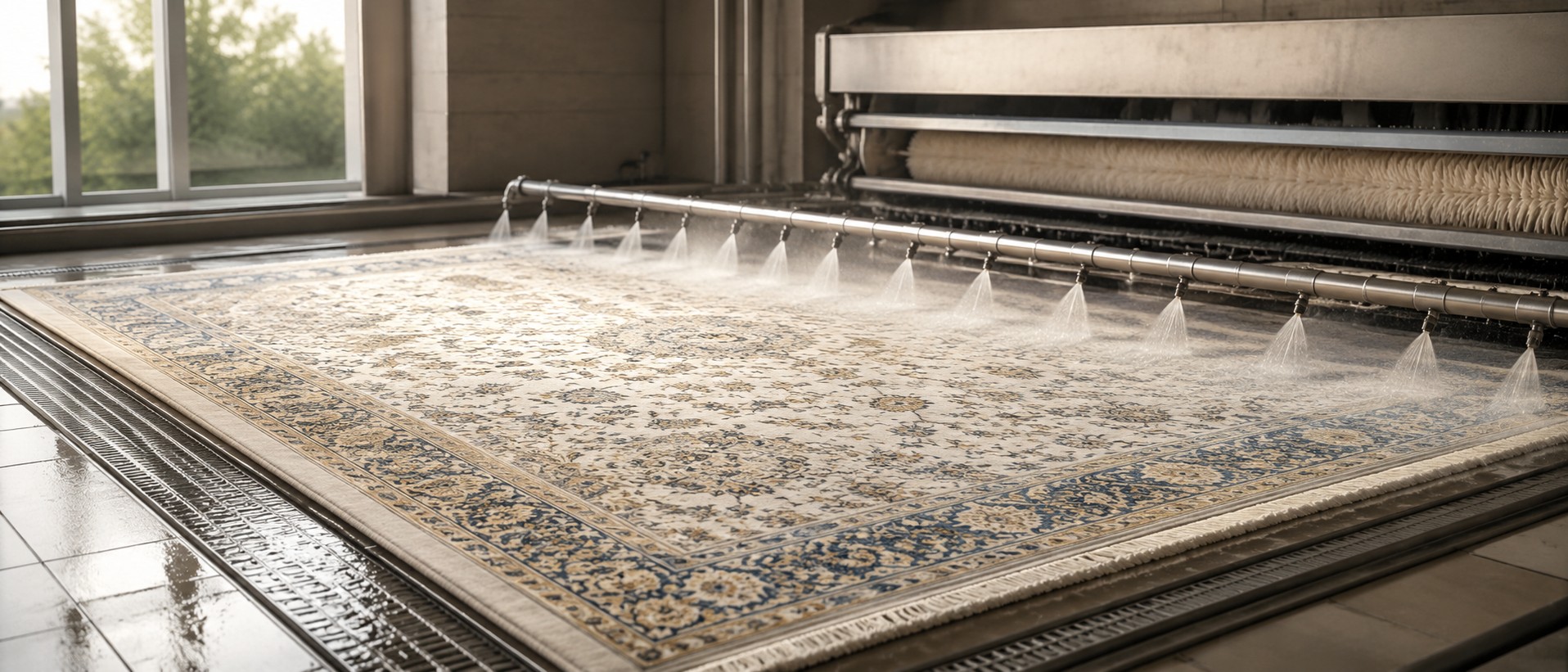
Professional rug cleaning is considered the method that reliably removes larvae and eggs even deep within the pile. This involves deep cleaning with water and thermal processes such as steam against all life stages. A subsequent moth-proofing treatment can protect the rug from renewed infestation for around two years. For valuable or large pieces, this is often the safest choice.
Pest control professionals
In the case of severe or recurring infestation, the use of professional pest control services is recommended, ideally with membership of a professional association.
Which method and when?
| Infestation | Appropriate approach |
|---|---|
| Light | Thorough cleaning, vacuuming, cooling or heating, supplement with parasitic wasps |
| Moderate | Combine cleaning, pheromone traps for monitoring, temperature treatment |
| Severe or recurring | Commission professional cleaning or pest control |
One point runs through all stages: measures often only work reliably in combination.
Wool rug moth prevention: storage, monitoring, combining
Once the infestation is gone, you want to keep it that way. To prevent moths in a wool rug, a regular routine helps. Vacuum regularly, air out the rugs, turn them over occasionally and expose them to the sun from time to time. Direct, prolonged sunlight damages moth eggs so severely that no hatching occurs.
Check specifically in the dark, undisturbed areas under furniture, as that is where moths prefer to nest. New or rarely used wool pieces should be stored clean and protected. A new wool runner benefits from being isolated in the freezer for a few days before being folded together with other textiles. Fly screens on windows keep moths outside. And anyone who stores items like an orderly keeper, meaning in an airtight and monitored manner, makes life difficult for moths.
Anyone who wants to treat rug moths and keep them away long-term needs a combination of prevention and success monitoring. Identify early, start with mechanical and natural measures, follow up with chemical or professional methods if needed: this is how your wool rug stays beautiful for a long time. What makes the difference is rarely a single measure, but the smart interplay of several.
FAQ
How do I recognize whether holes in the rug are moth damage?
Moth damage shows itself through several signs together: small, irregular holes distributed across the entire piece, thin bare patches and small droppings that often take on the color of the fabric. The feeding holes frequently run in circular or straight patterns along the feeding trail of the larvae. If you also find yellowish-white larvae or empty larval casings, especially at the edges and on the underside, an infestation is very likely.
Why are wool rugs affected and synthetic fiber rugs are not?
Because moth larvae feed on keratin, meaning animal fibers such as wool, hair and feathers. Synthetic fibers, cotton and linen contain no keratin and therefore remain unaffected. Only once a rug contains more than 20 percent wool in a blended weave does it become interesting to moths. Pure, dense wool as found in a Berber rug is particularly attractive.
How long does a treatment with parasitic wasps take for a rug?
Around twelve weeks. The cards are renewed approximately every two to three weeks; for a complete cycle interruption, six releases at intervals of three weeks each are recommended. A room temperature above 15 degrees is important. With a long rug pile, the treatment can be more difficult, because the large surface area makes the work harder for the beneficial insects.
Can I freeze a wool rug to kill moths?
Yes. A temperature of minus 18 degrees over one week kills all developmental stages of moths. For dense or heavy rugs, an extended freezing duration of 3 to 7 days is recommended so that the cold penetrates all layers of the material. This also allows new wool pieces to be safely isolated before being folded together with other textiles.
When should I hire a professional pest control service for the rug?
In the case of severe or recurring infestation that you cannot get under control with natural and simple methods. A specialist company is recommended, ideally with membership of a professional association. For valuable or large rugs, professional cleaning is also a worthwhile option, as it reliably removes larvae and eggs deep within the pile.