Jute Rug: What the Material Really Offers and Who Should Choose It
Jute in the Home: Warmth, Texture and an Honest Everyday Assessment
No material currently stands for natural interior design quite like jute. The golden-brown fibre appears equally in boho living rooms, Scandinavian-inspired bedrooms and minimalist lofts. It immediately brings texture, warmth and a calm earthiness to a space without visually dominating it. At the same time, a number of half-truths circulate about jute rugs: too robust, too easy to care for, too sustainable. This guide sorts out what is accurate, what is exaggerated and who jute is genuinely the right choice for.
What Is Jute? Plant, Fibre and Processing
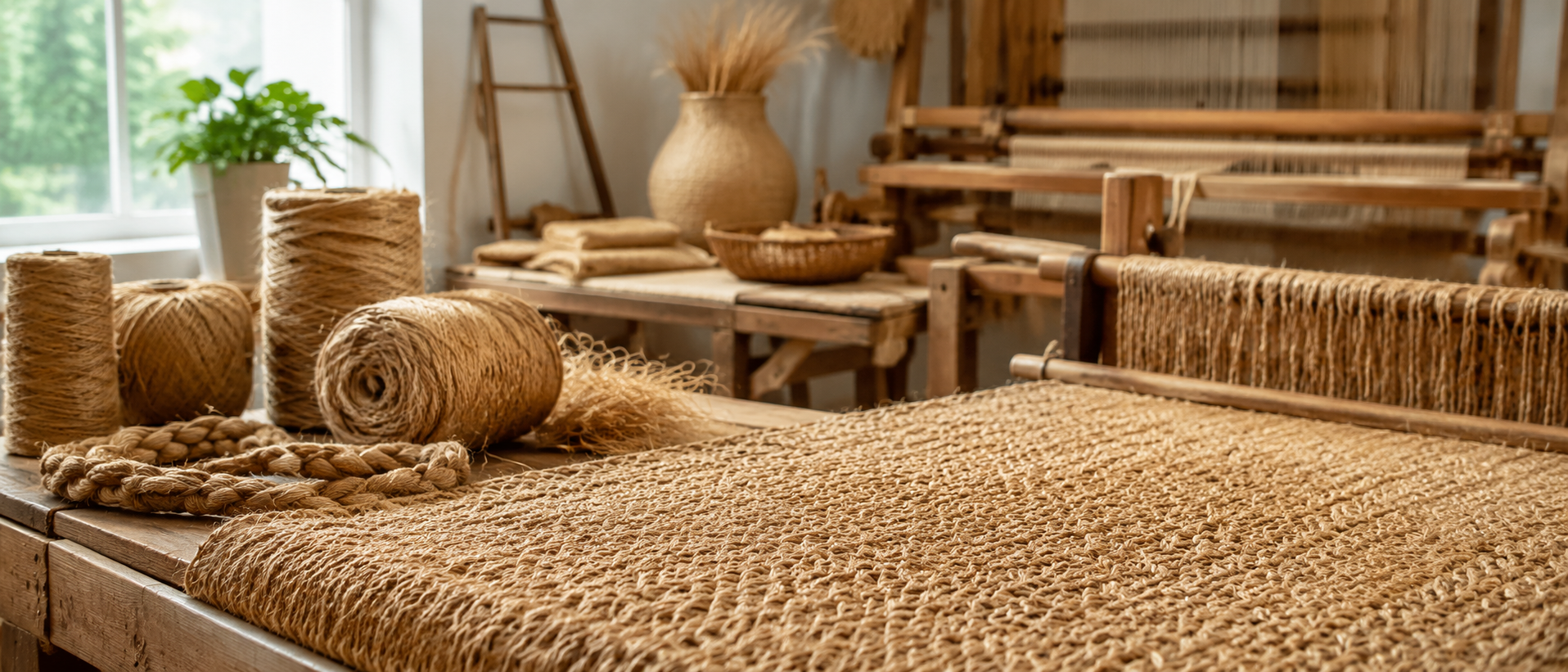
Jute is a plant-based natural fibre and belongs to the group of bast fibres. It is obtained from the stems of the Corchorus plant, a fast-growing tropical plant that, under favourable conditions, is ready to harvest within a few months. The fibres consist predominantly of cellulose and lignin, which gives them a firm, grippy structure while at the same time limiting their elasticity.
The characteristic golden-brown hue occurs entirely naturally: in Bangladesh, jute is therefore traditionally known as the "golden fibre". For rugs, the fibre is spun into coarse, durable yarns and subsequently woven, braided or processed in blends with cotton, wool or synthetic fibres. The artisanal look that results is not a by-product of chance, but a deliberate design element.
Origin: Where Does Jute Come From?
The most important countries cultivating jute are India and Bangladesh. Both countries are located in South Asia, where the warm, humid tropical climate with high rainfall creates ideal growing conditions. In particular, the region of West Bengal and large parts of Bangladesh are regarded as classic jute regions, where the fibre has been cultivated and processed for centuries.
Extraction is labour-intensive: the plant stems are harvested and then soaked in water, a process called retting, during which the fibres are separated from the remaining plant material. The fibres are then cleaned, dried and further processed into yarns. Jute holds great economic significance in South Asia and is an important source of income for many smallholder farmers.
Why Jute for Rugs? Appearance, Feel and Effect in a Room
The most important advantage of a jute rug lies in its immediate effect on a room. The coarse, natural woven structure brings depth and organic warmth to neutral or plain interiors without itself drawing attention. Jute does not "shout", but gives the room a grounding presence, in the best sense.
In terms of feel, jute is natural, grippy and textured. In direct comparison, it is noticeably softer than a classic sisal rug, but by no means as plush as wool or cotton. Those who walk barefoot over a jute rug will find the texture pleasant; however, for very sensitive skin the structure can also feel slightly rough. Children playing on the floor should take this aspect into account.
Advantages of Jute Rugs
- Natural material: Jute is a plant-based fibre with no synthetic additives in its raw form.
- Antistatic: Jute barely builds up static electricity, which is particularly pleasant for allergy sufferers and people with sensitive skin.
- Versatility in design: The earthy natural tone pairs well with wood, linen, bouclé, natural stone, leather as well as warm whites and beige tones, and equally with deep black.
- Value for money: Jute rugs are often considerably less expensive than high-quality wool rugs, yet offer a similarly natural character.
- Biodegradable: At the end of its life, pure jute can be composted.
Disadvantages of Jute Rugs
- Sensitive to moisture: Jute does not tolerate dampness. Water can cause water stains, mould or structural damage.
- Prone to staining: Liquids, grease and food residue are difficult to remove because aggressive cleaning agents attack the fibre.
- Limited elasticity: Jute absorbs pressure less effectively than wool and can wear prematurely under very intensive use.
- Fluffing: Especially new jute rugs can shed slightly during the first few weeks. This diminishes over time.
- Natural odour: Some jute rugs smell of natural plant fibres when new. The odour generally dissipates after airing out.
Which Rooms Are Suitable for a Jute Rug?
Living Room and Bedroom
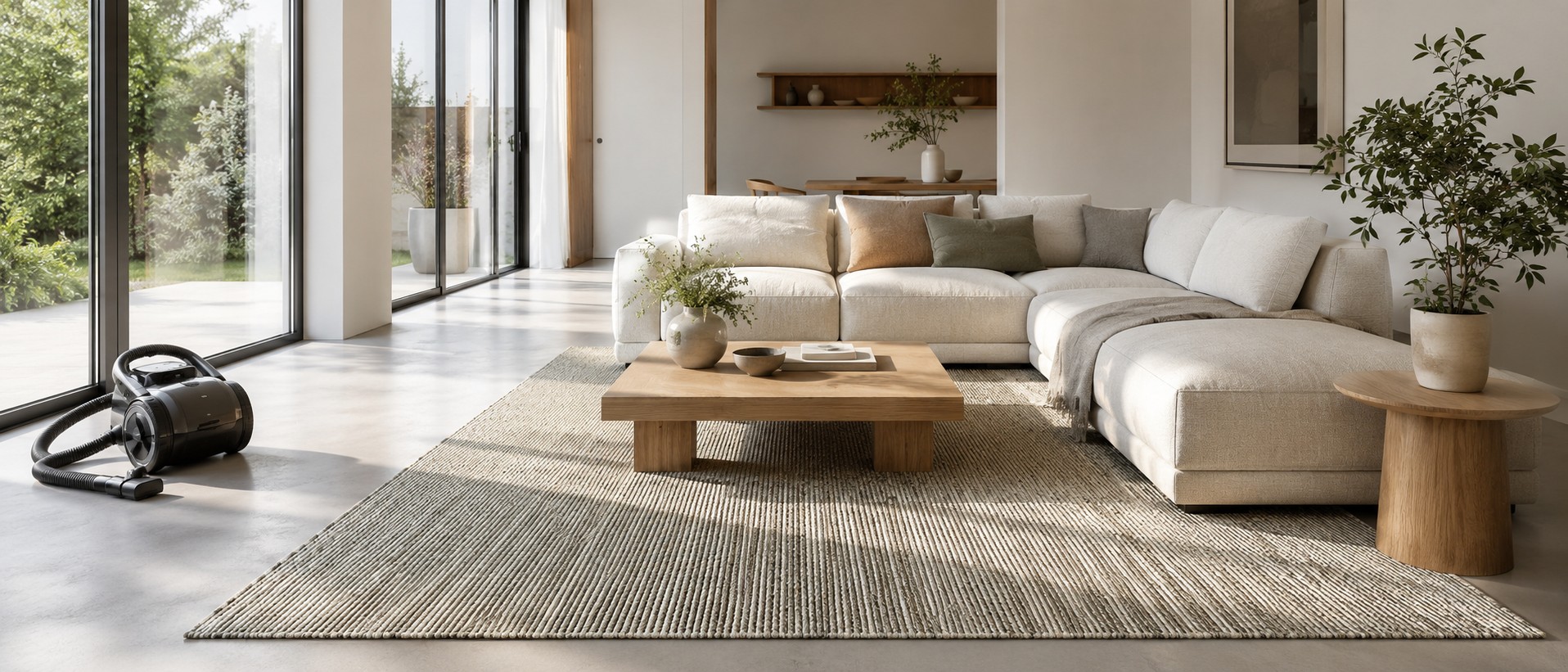
The living room is the ideal setting for jute. Use is typically dry, wear is moderate and the rug can fully play to its decorative strengths. In the bedroom, jute works particularly well as a calm base underneath the bed, where it is rarely subjected to intensive load.
Dining Room
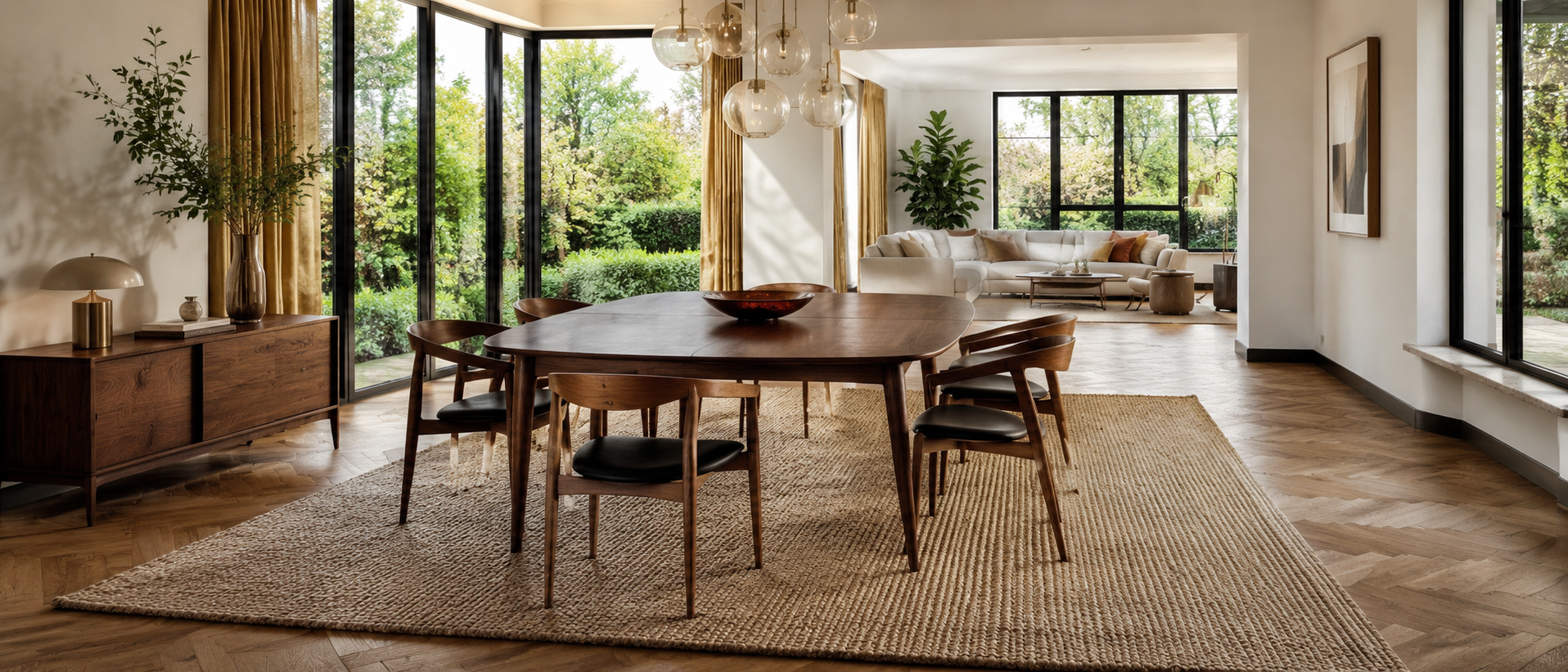
Caution is advisable in the dining room. Drinks, food residue and grease are difficult for jute to cope with. Those who opt for jute in the dining room should look for a dense weave structure and blot spills immediately with a dry cloth.
Hallway and Corridor
In the hallway and corridor, suitability depends strongly on the specific conditions. A dry, well-ventilated entrance area with moderate use is quite feasible. However, if wet footwear, sand and snow are frequently brought in, the fibre deteriorates quickly. For heavily trafficked corridors, a more robust material or a jute material blend is the better long-term choice.
Kitchen, Bathroom and Outdoor
These areas are unsuitable for pure jute rugs. Moisture, splashing water and intensive use permanently damage the fibre. There are specific alternatives with a jute-like appearance made from treated or synthetic fibres for these settings.
Jute Compared: Sisal, Wool and Cotton
A direct comparison is more helpful when making a purchase decision than general praise.
- Jute vs. sisal: A sisal rug is more robust and hardwearing than jute. In return, it is also rougher and less prone to fluffing. Those who prioritise homeliness over maximum robustness choose jute. Those who want to furnish a high-traffic area are better served by sisal.
- Jute vs. wool: A wool rug is more elastic, longer-lasting and considerably more resistant to soiling. It typically costs more, but justifies this through a longer lifespan and a more pleasant feel. Jute is the more affordable, decoratively strong alternative for calm living areas.
- Jute vs. cotton: Cotton is softer, often machine-washable and easier to care for. It appears less structured and less naturally rustic. Those who prioritise comfort and easy care choose cotton. Those looking for texture and organic character opt for jute.
Care and Cleaning: How to Treat Jute Rugs Correctly
Care is not a peripheral topic for jute rugs; it is central to the purchase decision. Those who understand the characteristics of the material will enjoy it for a long time.
- Vacuum regularly: Dry vacuuming removes dust and sand before they work their way into the fibres. Preferably use a setting without a rotating brush to protect the structure.
- Act on liquids immediately: Blot spilled liquids promptly with a clean cloth, working from the outside inwards, never rubbing. The faster, the better.
- Use as little water as possible: Jute and water are a poor combination. Keep damp cleaning methods to a minimum and allow the rug to dry completely afterwards.
- No aggressive cleaning agents: Solvents, bleach and strong chemicals damage the fibre. Use mild, pH-neutral products.
- Stubborn stains: For heavy soiling, consider professional rug cleaning by a specialist in natural fibres.
Buying Guide: Size, Shape, Quality and Material Blend
When choosing the right jute rug, it is worth thinking beyond pure decoration.
Size and Shape
In the living room, the rug should be large enough to accommodate all the front legs of the furniture. A common rule of thumb: at least 200 x 300 cm for an average living room. Round jute rugs work well as an accent underneath a coffee table or in a seating nook.
Quality Features
You can recognise good quality by a dense, even woven structure, neatly finished edges, a certain weight and stable shape retention. An anti-slip underpad extends the lifespan and prevents the rug from sliding on smooth floors.
Pure Jute or Material Blend?
Pure jute rugs are the most natural in appearance and feel, but the most sensitive in terms of care. A material blend of jute and cotton or jute and wool improves softness and often also stain resistance, without entirely sacrificing the natural character. For areas with moderate moisture or heavier use, a blended weave is the safer choice.
Sustainability: What Is Accurate and What Is Exaggerated?
Jute is renewable, biodegradable and, according to the Food and Agriculture Organisation of the United Nations (FAO), requires comparatively small amounts of fertiliser and pesticides. These are genuine advantages over many synthetic fibres. At the same time, the actual ecological footprint of a jute rug depends on further factors: transport routes from South Asia to Europe, dyes and chemical treatments, as well as social production conditions on the ground. Those who take sustainability seriously look for certifications, enquire about processing and buy the most durable quality available.
Conclusion: Who Should Choose a Jute Rug?
A jute rug is worthwhile for everyone who wants to furnish a calm, dry living area with natural texture and a warm atmosphere. In the living room or bedroom, jute plays to its full strengths. Those who expect significant moisture in the hallway or corridor, or who eat daily with children in the dining room, should consider a material blend or a more robust alternative. Jute is not an all-rounder, but in its element it is a remarkably convincing material.
FAQ
What is jute?
Jute is a plant-based natural fibre from the group of bast fibres. It is obtained from the stems of the Corchorus plant, spun into durable yarns and subsequently woven or braided for use in rugs. Its golden-brown natural tone occurs without dyeing and gives every jute rug a warm, structured appearance. The fibre consists predominantly of cellulose and lignin, which gives it a firm, grippy feel.
Where does jute come from?
Jute is grown mainly in India and Bangladesh. The plant requires a warm, humid tropical climate with high rainfall, such as that found in West Bengal and large parts of Bangladesh. Fibre extraction is labour-intensive: the stems are harvested, soaked in water so that the fibres separate, then cleaned and dried. Jute holds great economic significance in South Asia and secures an income for many smallholder farmers.
Is a jute rug sustainable?
Jute is a renewable raw material and biodegradable. According to the FAO, it is regarded as a versatile, environmentally friendly natural fibre that requires comparatively little fertiliser and pesticide during cultivation. These are genuine ecological advantages over synthetic fibres. The complete sustainability assessment, however, also depends on processing, dyeing, transport routes and the lifespan of the rug. Durable quality and fair production conditions are part of an honest evaluation.
Which rooms are suitable for a jute rug?
Jute rugs are best suited to dry living areas with moderate use. The living room and bedroom are ideal locations. In the dining room, jute is only partially suitable, as stains from food and drink are difficult to remove. For kitchens, bathrooms and damp entrance areas, pure jute is unsuitable. In the hallway or corridor, suitability depends on the specific conditions: if use remains dry and moderate, jute works well. Under heavy moisture exposure, a material blend or a more robust alternative is the better choice.
How do you clean a jute rug correctly?
Vacuum dry regularly, preferably without a rotating brush. Blot liquids immediately from the outside inwards, never rubbing. Use as little water as possible and allow the rug to dry completely afterwards. Use no aggressive cleaning agents or solvents; prefer pH-neutral products. For stubborn stains, consider professional cleaning by a specialist in natural fibres.