Arabesque Rug: the sweeping scroll pattern and its effect in the room
Why the arabesque guides the eye through the room
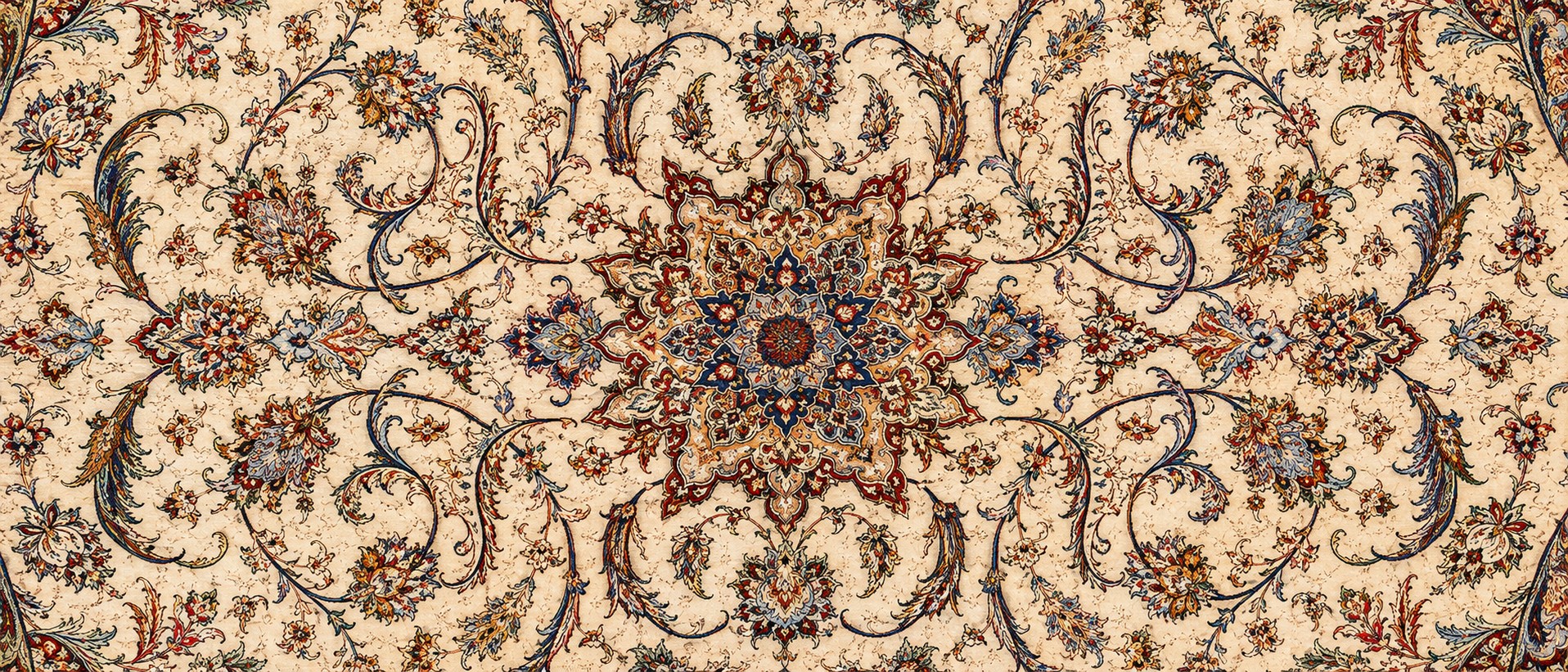
Imagine a scroll that sweeps across the border, curves into a partial spiral and then continues toward the center field. That is exactly what an arabesque rug does: it gives the eye a trail. You are not looking at a static surface, but following a movement that circles and comes back around.
Specialist texts and rug encyclopedias describe the arabesque as an artistic, sweeping ornament that winds in circles and partly as a partial spiral through oriental works of art and rugs. In a room this often feels elegant and calm at the same time. The pattern structures the floor visually, and as a result a seating group gains a clear focal point.
Arabesque rug: the ornament that orders surfaces and sets scrolls in motion
The arabesque ornament is essentially a stylized leaf and scroll pattern. It consists of a foliage scroll made up of two elements: a repeating, split leaf volute and a connecting stem. This basic figure can be extended with flowers, leaves or cloud motifs, and from this emerges the dense, flowing image that many associate with the Orient.
The term itself enters English via the French arabesque and the Italian arabesco, and traces back to the Arabic word for Arab. The arabesque was originally developed in the decorative art of the Romano-Hellenistic world. Islamic art adopted it and made it the predominant decorative element. One reason for this is the Islamic prohibition on figurative imagery: artistic imagination focused on the ornament and created from it a distinctive visual language.
Important for context: a rug with an arabesque ornament plays an ordering role in relation to the larger decorative motifs. The ornament structures, emphasizes, fills and frames. It holds the composition together, rather than becoming a loud centerpiece itself.
From the central medallion to the surrounding border: where the ornament sits
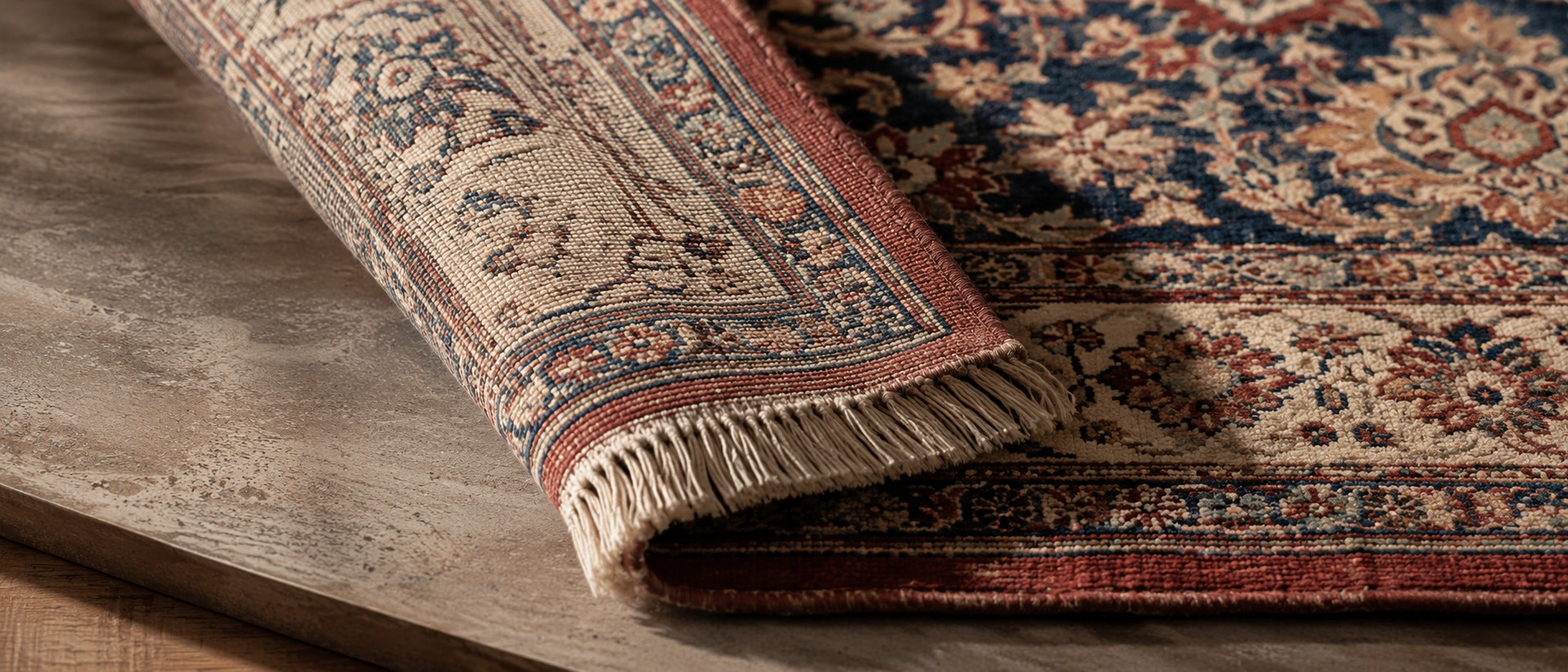
The arabesque appears in several places on a rug. It is particularly prominent in the medallion-focused Eslimi pattern, where it often terminates in forked scrolls. Around the center it adorns many florally patterned knotted rugs as a surrounding scroll border.
In classic medallion rugs a central motif sits in the middle, accompanied by four corner fields. These corner fields are filled with mirrored quarters of the medallion or with independent ornaments. Together this produces a composition that is symmetrical on both axes. On modern Isfahan rugs, for example, lines and arabesques create designs drawn from oriental architecture, and the medallion remains the most frequent motif.
A fine example of the delicate variant are Nain rugs: their motifs often consist of fine, sweeping arabesque and Khatai patterns. Such a rug works in a modern-classic living room as a calm focal point that carries the room without overwhelming it.
Eslimi and Rumi: the Persian and Turkish names behind the pattern
What is known in Europe as an arabesque design is called Eslimi or Islimi in Persia. The Turkish designation for this ornament is Rumi. In each case the reference is to the same basic idea: the foliage scroll of leaf volutes and scroll stems that repeats multiple times.
When you read these terms in a product description, they refer to the same pattern family. Persian rugs with an Eslimi motif and Turkish pieces with a Rumi ornament draw on the same scroll, only with regional characteristics. Via Moorish art the arabesque reached Spain, where it was reshaped into the clearer, simpler Moresque. Particularly impressive examples can be found in many halls of the Alhambra in Granada.
Arabesque versus kilim and Berber: why flat-woven looks different
To place the arabesque in context, a comparison with other patterns is helpful. In oriental rugs a broad distinction is made between two styles. The geometric style works with straight, horizontal, vertical and diagonal lines that divide the rug into fields. The floral style relies on curved, softer lines, and this is where the arabesque design belongs.
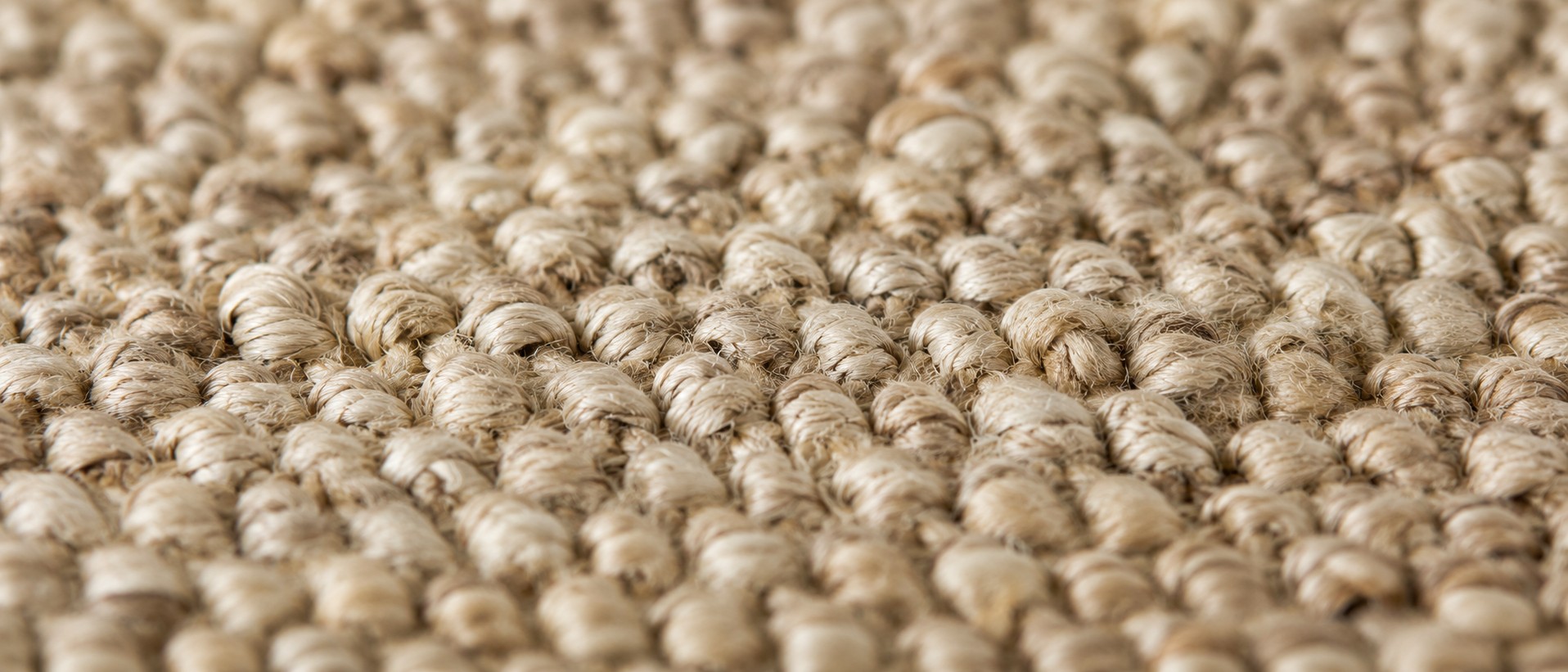
A kilim operates in a different league of technique. Kilim rugs are hand-woven, they have no raised pile of wool and are often flatter and coarser than knotted wool rugs. Their patterns tend to be plain and rectilinear as a result of the weaving technique. The sweeping curved line of an arabesque can hardly be rendered as softly in flat weave as it can in a knotted oriental rug.
The Berber rug is likewise a world of its own: a hand-knotted rug mostly from Morocco, with a pile of virgin wool and a pile height of between 14 and 30 mm. Geometric patterns and minimalist diamond designs are typical. The medallion itself is also not the same as the arabesque. Caucasian medallions, for example, are strictly geometric and free of floral elements, and they are often repeated multiple times in two or three rows.
Color determines everyday life: bright calm or dark robustness
With an arabesque rug, color makes a big difference in everyday use. Dark colors and more complex patterns help to conceal dirt and small stains. Heathered or varied patterns therefore look clean for longer, because they preserve the visual impression of freshness.
Light, plain-colored rugs behave differently. They show dirt more quickly and soon look unsightly without regular cleaning. For an open entrance hall with heavy foot traffic, a dark, patterned rug is therefore the practical choice: it absorbs dust and wear better. With lighter variants, regular vacuuming with a gentle brush roll is worthwhile, and stains are best treated immediately.
Size and material for living room, bedroom and hallway
The right size depends on the room. A well-proven rule of thumb: the rug should be large enough for all the furniture of a seating group to fit on it. The following guidelines serve as a reference:
| Room size | Recommended format |
| Small living room up to 15 sqm | 140x200 cm to 160x230 cm |
| Medium-sized living room 15 to 25 sqm | 200x300 cm to 250x350 cm |
| Large living room over 25 sqm | from 300x400 cm |
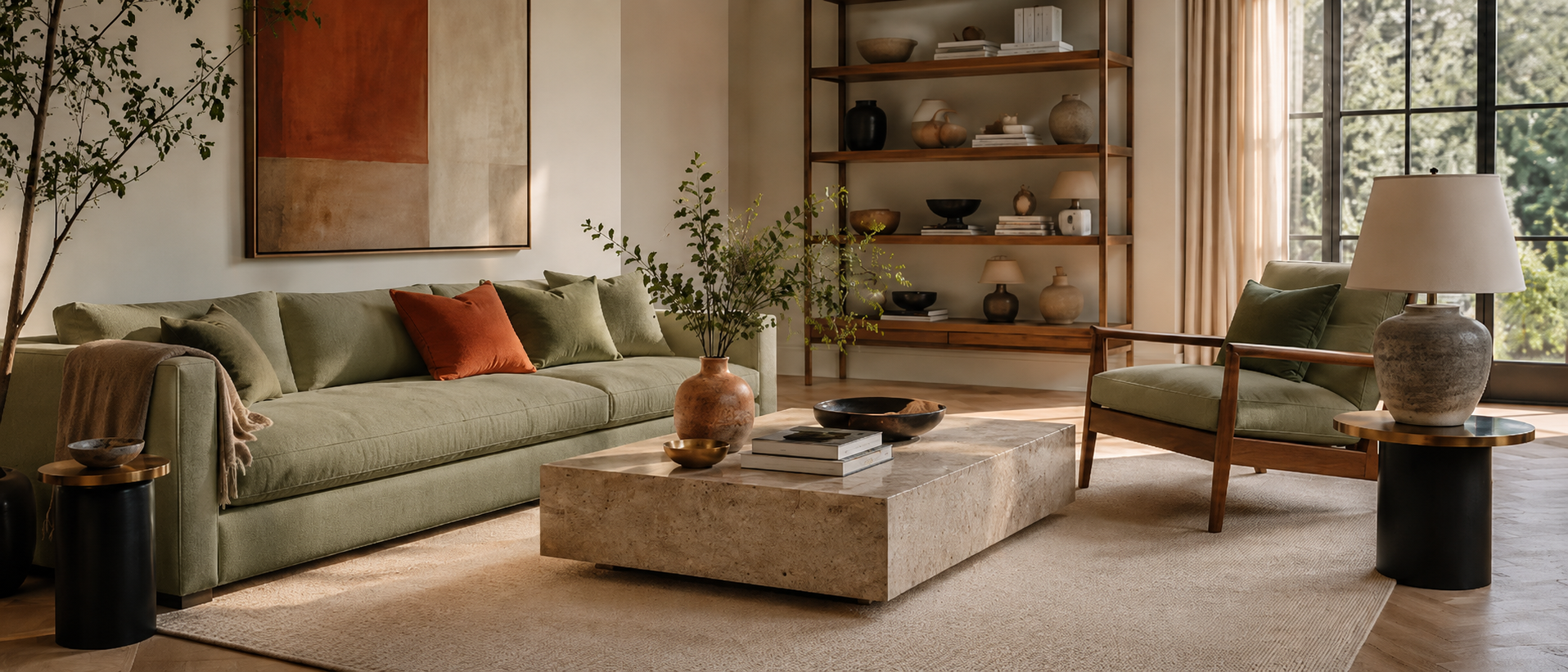
In a small living room up to 15 sqm, even a 160x230 cm rug brings the seating group together, so that the sofa and armchairs appear as a coherent furniture ensemble. For bedrooms and hallways the same common formats apply, such as 120x180 cm or 160x230 cm, adapted to the available floor space.
In terms of interior style, the arabesque is flexible. An oriental rug brings warmth to the living room and can become the center of the space, complementing both minimalist and opulent interiors. In Boho-chic settings a Persian arabesque medallion works particularly well with natural wood and rattan, because flowing oriental patterns in muted tones take on an elegant, nostalgic quality. Specific countries of manufacture or knot densities cannot be stated as a blanket rule, as these vary depending on the type of rug and its origin.
FAQ
What is an arabesque rug?
An arabesque rug carries the arabesque as its defining pattern: a stylized, sweeping leaf and scroll ornament. It consists of a foliage scroll with split leaf volutes and a connecting stem that repeats in circles and as a partial spiral. Originally developed in Romano-Hellenistic art, the arabesque became the central decorative element of Islamic art and remains typical of many oriental rugs to this day.
Where does the arabesque ornament sit on the rug?
Mainly in three places: in the central medallion, in the corner fields and in the surrounding border. The arabesque is particularly prominent in the medallion-focused Eslimi pattern, where it often terminates in forked scrolls. As a scroll border it also frames the center field and holds the composition together.
Are arabesque rugs easy to care for?
This depends strongly on the color. Dark tones and complex, heathered patterns conceal dirt and small stains better and look clean for longer. Light, plain-colored variants show soiling more quickly and require regular vacuuming, with stains best treated immediately. For heavily trafficked areas such as a hallway, a dark, patterned arabesque rug is the practical choice.
What size is right for which room?
Small living room up to 15 sqm: 140x200 cm to 160x230 cm Medium-sized living room 15 to 25 sqm: 200x300 cm to 250x350 cm Large living room over 25 sqm: from 300x400 cm Rule of thumb: the rug should be large enough for all the furniture of a seating group to fit on it.
How does an arabesque rug differ from a kilim?
Primarily in technique and appearance. A kilim is hand-woven, has no raised wool pile and is often flatter and coarser, with patterns that tend to be plain and rectilinear as a result of the weaving technique. The arabesque, by contrast, lives from soft, sweeping curves that can be rendered far more finely in knotted oriental rugs.