7 Really Strong Reasons for a Rug
Buying a rug: for many, this sounds like a matter of taste. Yet the right rug solves concrete living problems. It structures rooms, absorbs noise, protects valuable floors and turns a collection of furniture into a coherent interior concept. Anyone wondering whether the investment is worthwhile will find seven objective arguments here that go far beyond mere coziness.
1. Room Effect and Zoning: The Room Instantly Feels More Considered
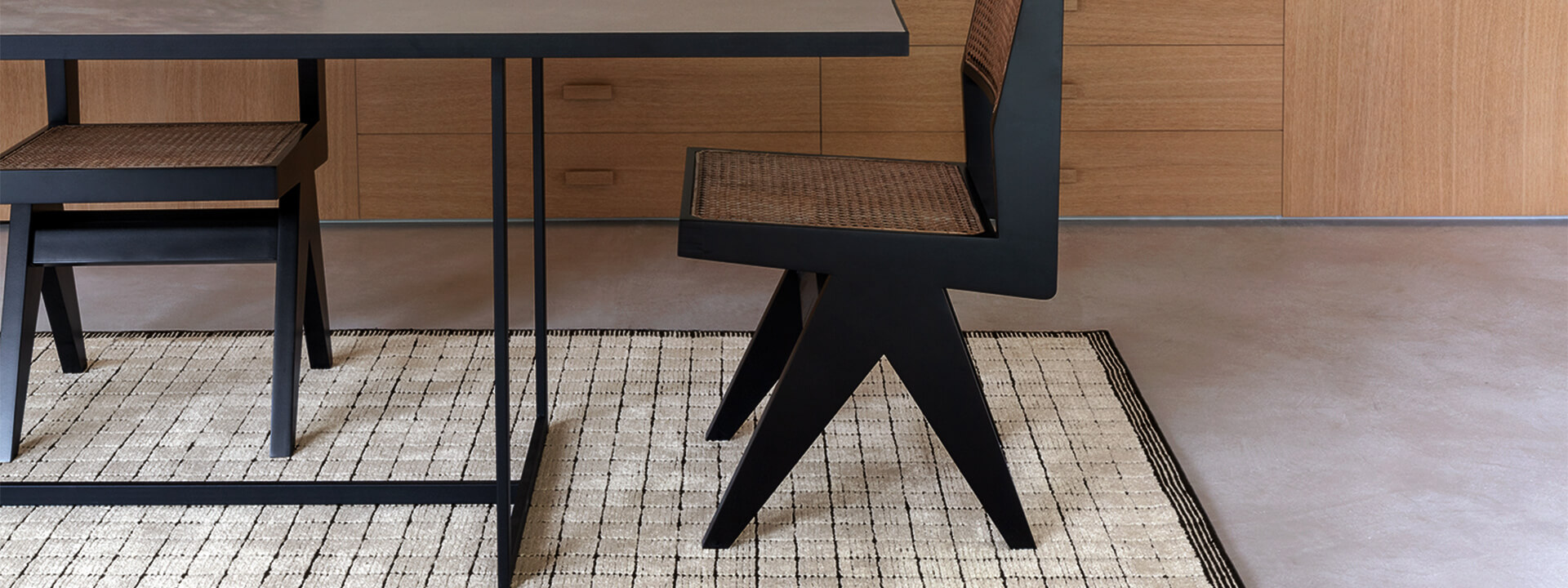
Open living areas can quickly feel unstructured. A rug changes that at a glance: it defines seating, dining or working zones and gives groups of furniture a visual anchor. It picks up colors, repeats patterns or deliberately sets contrasts. Particularly large-format rugs act like a soft architectural surface that divides the room into readable areas.
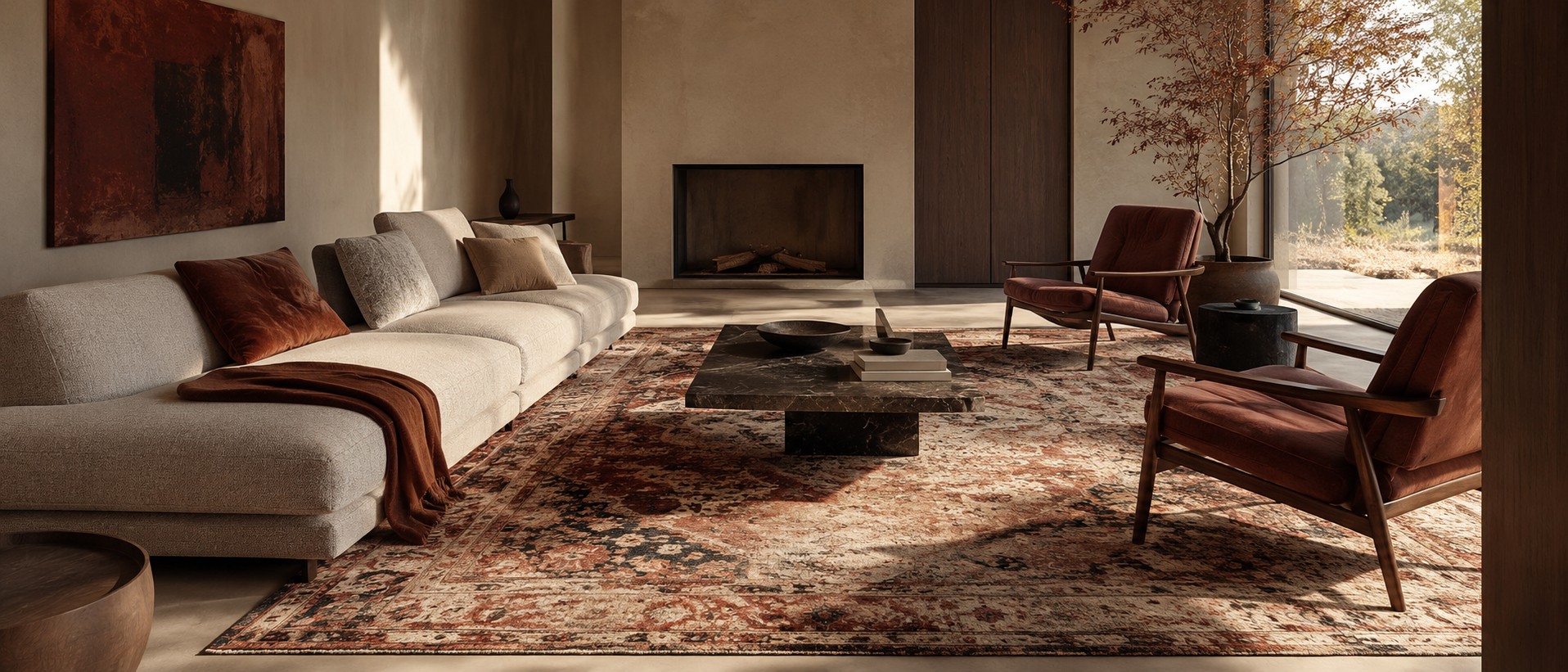
The result is tangible: the room feels more planned and self-contained. Anyone who places a sofa, coffee table and armchair on a shared rug creates a seating group with a clear center.
2. Better Acoustics: An End to Echo and Cold
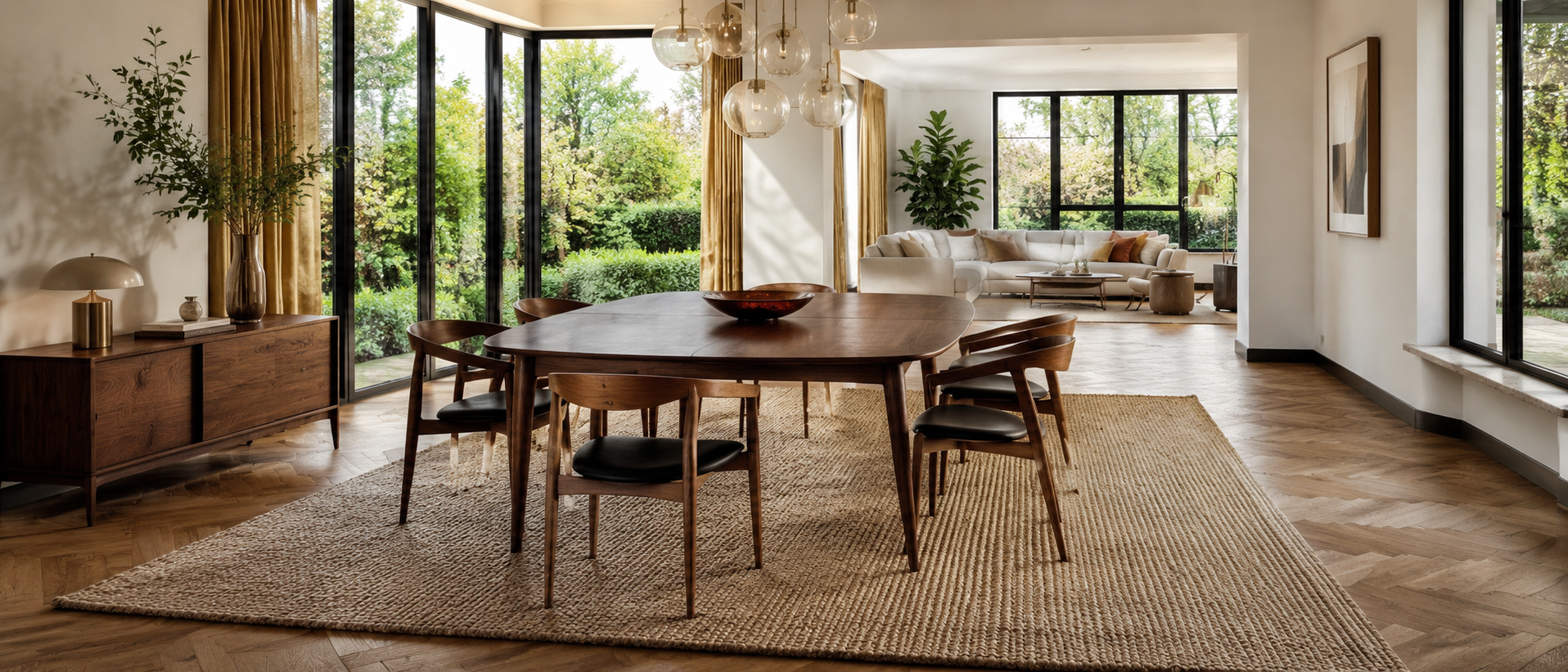
Parquet, natural stone, concrete, glass fronts: hard surfaces reflect sound and make rooms noisy. Rugs pull sound out of the air, cut down on footfall noise and bring a noticeably calmer quality to a space. Especially in open-plan layouts or period apartments with high ceilings, the difference is immediate.
That kind of quiet is a luxury you feel every day. A wool rug with a dense pile achieves particularly good results here, because wool has naturally sound-absorbing properties.
3. Feel and Comfort: Barefoot is Better
Anyone who walks barefoot across a good rug in the morning knows immediately what is meant. The surface is softer, warmer and more pleasant than any hard floor. The experience depends greatly on the material:
- Wool warms, cushions and is naturally hardwearing.
- Silk offers a cool touch and a characteristic sheen.
- Viscose and Tencel feel silkily soft and reflect light particularly beautifully.
- Sisal and other natural fibers impress with a robust, natural texture.
Comfort begins at floor level. A rug changes the entire relationship with a room.
4. Floor Protection That Actually Pays Off
Parquet, natural stone and designer floors represent a real financial commitment. Daily foot traffic, furniture legs and localized abrasion gradually work their way into unprotected surfaces, leaving marks that stay. A rug covers the highest-stress zones and meaningfully extends the life of your floor.
The argument is purely rational: anyone who has an expensive floor laid sensibly protects it where the greatest daily stress occurs. A rug here is a practical protective measure, full stop.
5. Style Anchor in Interior Design: Furnishings Become a Concept
Sofa, armchair, coffee table, sideboard: individual pieces of furniture often feel disconnected without a unifying element. A rug takes on the role of style anchor. It can refine calm, monochrome interiors or bring coherence to more varied rooms.
A silk rug with a fine pattern adds immediate depth to a plain room. A flat wool rug in earth tones pulls different wood tones and textiles into a unified whole. The right rug turns a collection of furnishings into a concept.
6. Dust Binding and Room Air: With the Right Rug and Good Care
A widespread misconception is that rugs are dust traps. The reality is more nuanced: short-pile, densely woven rugs can bind dust particles instead of stirring them up with every movement. This is an advantage over smooth floors, where dust is stirred up again with every step.
The prerequisite is regular, thorough vacuuming. Anyone who pays attention to hygiene chooses a short pile, a dense surface structure and has the rug professionally cleaned at suitable intervals. Rugs and hygiene are by no means incompatible with the right care.
7. Emotion, Craftsmanship and Quality: A Piece of Living Culture
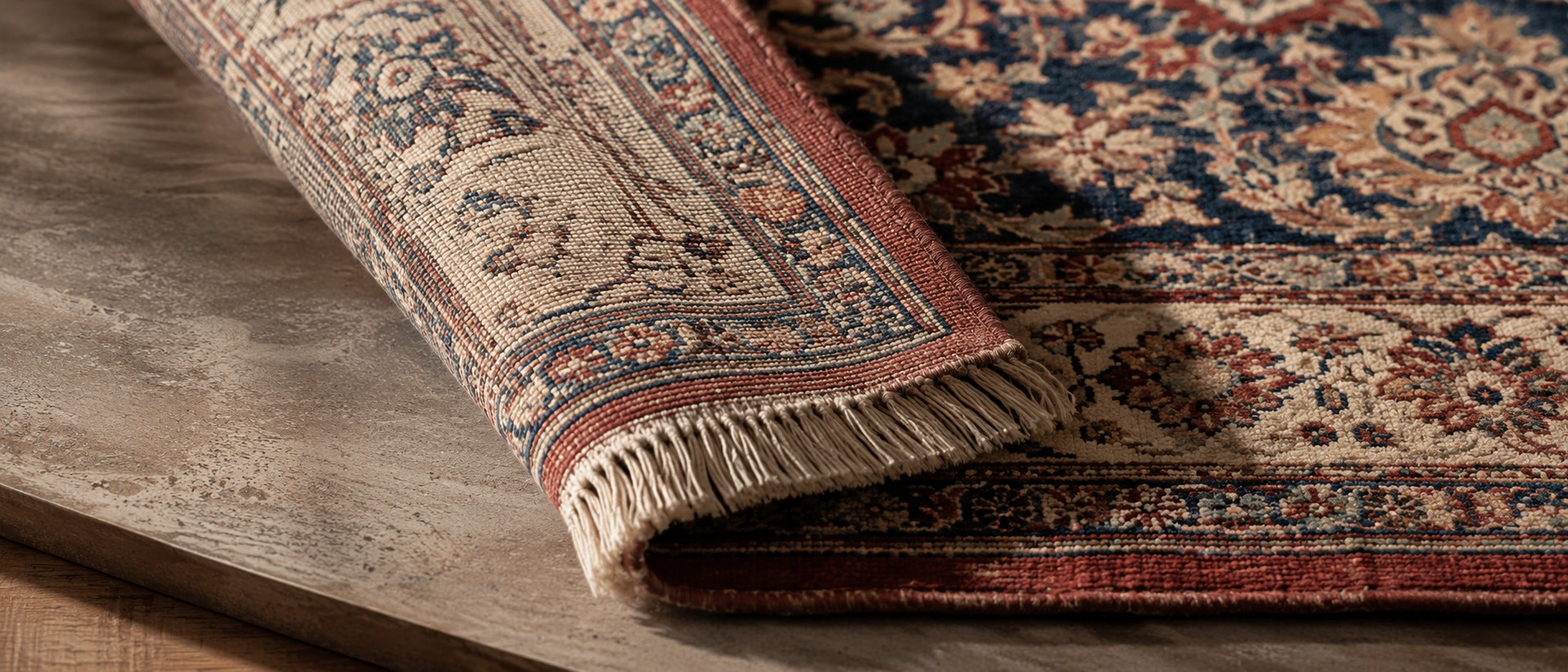
Good rugs carry a story within them. Hand-knotted pieces from Nepal, Persia or Morocco convey something through their material, origin, pattern and workmanship that no machine-produced accessory can achieve. An antique rug feels individual and genuinely valuable.
Longevity is a strong argument here: a well-cared-for wool rug or a silk rug made by hand lasts for decades and can be passed from generation to generation. That sets it clearly apart from quickly replaceable furnishing pieces.
Conclusion: The Right Rug Solves Concrete Problems
Anyone wishing to buy a rug will find clear, rational reasons in these seven points. Whether the issue is echo, hard floors, a lack of structure or rooms that feel unfinished: a rug provides answers. What matters is choosing the right size, the appropriate material and a quality that convinces over the long term.
FAQ
Why should you buy a rug at all?
A rug improves the feel of a room right away: it structures open spaces, connects groups of furniture and gives the interior a clear center. It also reduces echo on hard floors, brings warmth and comfort underfoot and protects sensitive floor coverings from wear. The room reads as more complete and coherent.
Which rug improves acoustics the most?
Large-format rugs cover more floor area and absorb correspondingly more sound. A dense pile cuts footfall noise more effectively than a thin, loosely woven model. Wool and heavy natural fibers are naturally sound-absorbing materials. An additional rug underlay enhances the acoustic effect and simultaneously improves how the rug sits on the floor.
Are rugs suitable for allergy sufferers?
With the right choice, certainly. Short-pile rugs with a dense structure bind dust particles instead of stirring them up with every step. Regular vacuuming with a powerful device is important, as is occasional deep cleaning. There is no blanket guarantee: consistent care is the decisive factor. Anyone who pays attention to hygiene will find a short-pile, easy-care rug to be a practical everyday solution.
Which rug size looks the most considered?
Generously sized rugs read better than models that are too small. The general rule: all the main pieces of furniture in a seating group should stand on the rug with at least their front legs. A rug that is too small makes the furniture look visually disconnected and resembles a patch rug. Going one size larger gives the room structure, calm and a sense of generosity.
Is a good rug worth the investment?
Quality materials such as wool, silk or Tencel feel better and age more beautifully. The service life is significantly longer than that of cheaper alternatives. The impact on the room is stronger: dense weaving, rich colors and refined surfaces are immediately noticeable. With handcrafted pieces, individuality is added, since no two rugs are exactly alike. Well-made rugs can be used and passed on for decades.