Rug for Holiday Flat & Airbnb: What Really Holds Up
An Honest Look at Everyday Guest Life
Let me be straightforward with you: anyone who thinks a fluffy high-pile rug makes their holiday flat cosier has never experienced the third consecutive guest tracking in sand from the beach. Or a suitcase wheel leaving fine roller marks across the entrance area. Or a glass of red wine on a light-coloured pile bringing an innocent career as a landlord to an abrupt end.
A rug in a holiday flat is not a decorative item. It is a working tool. And that is perfectly fine, as long as it does its job well.
Material Is Everything – or at Least a Great Deal
I once had a customer in Graubünden who fitted out his chalet with thick wool runners. Beautiful. After two winter seasons the entrance runner smelled of damp hiking socks, and the stains from the fondue evening were still visible. Wool is wonderful. For quiet bedrooms and premium living rooms where guests arrive with clean socks.
For everything else, I recommend:
- Polypropylene: The all-rounder par excellence. Moisture-resistant, stain-repellent, affordable and suitable for almost every room. Wine, coffee, sun cream – polypropylene shrugs it off like a professional. The catch: inexpensive polypropylene can sometimes look less than luxurious. For a mid-range property, it is an excellent choice.
- Nylon: Even more robust than polypropylene, exceptionally dimensionally stable and ideal for hallways and heavily used walkways. Somewhat less common in the rug segment than in the fitted carpet sector, but worth searching for.
- Wool: A genuine asset for premium holiday flats with a quieter guest profile. Naturally durable and dirt-repellent thanks to the natural scale structure of the fibre. However, in the entrance zone or under the dining table, wool quickly becomes overwhelmed.
- Polyester: Affordable and visually appealing, but less resilient under heavy use. Suitable for decorative accents in less frequently used rooms.
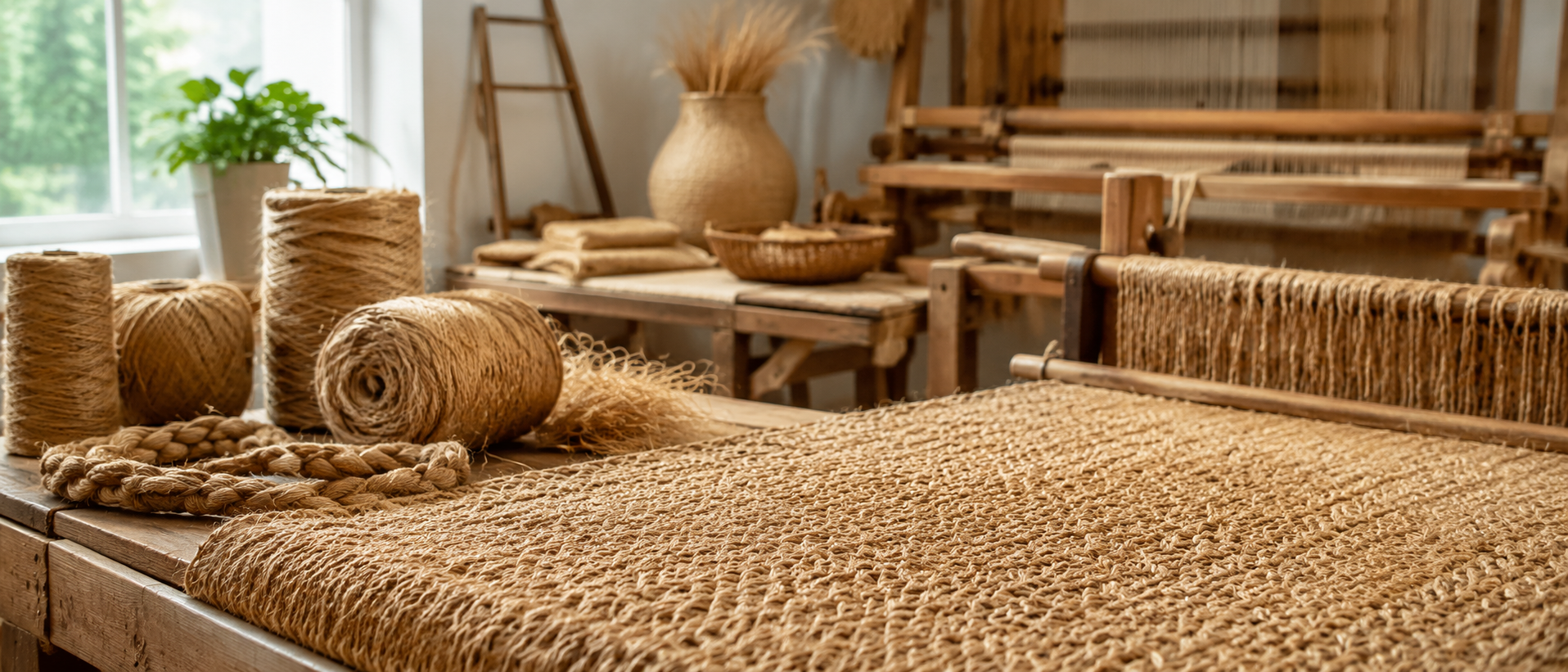
- Sisal and jute: They look fantastic but are sensitive to moisture. Perfectly charming for dry, lightly used areas in a country house. The bathroom vicinity, kitchen or entrance area are off limits.
Low Pile Beats High Pile – Every Time
This is not a matter of taste but of cleaning logic. A dense low-pile rug can be vacuumed in two minutes. A high-pile rug conceals crumbs, hair and dirt between its fibres like an archive. Then the next guest arrives, and the cleaner has an hour and a half between check-out and check-in. You know how that ends.
Even better are flatweave rugs: virtually no pile, quickly vacuumed or swept, visually modern and available in many designs. My first choice for dining and entrance areas.
For those who prefer a little more texture: a dense, structured surface. Structured or mélange patterns have another advantage I always mention to my customers: they conceal small stains and signs of wear far better than light, plain-coloured rugs.
Think Room by Room – One Rug Does Not Fit Everywhere
Entrance Area
The toughest zone in the entire flat. This is where the suitcases roll in, where street shoes arrive, where the sand from the lake shore lands. A dark or mélange low-pile rug in polypropylene or nylon, combined with a non-slip underlay: that is the right answer. And a good entrance mat in front reduces the amount of dirt tracked in considerably.
Living Room
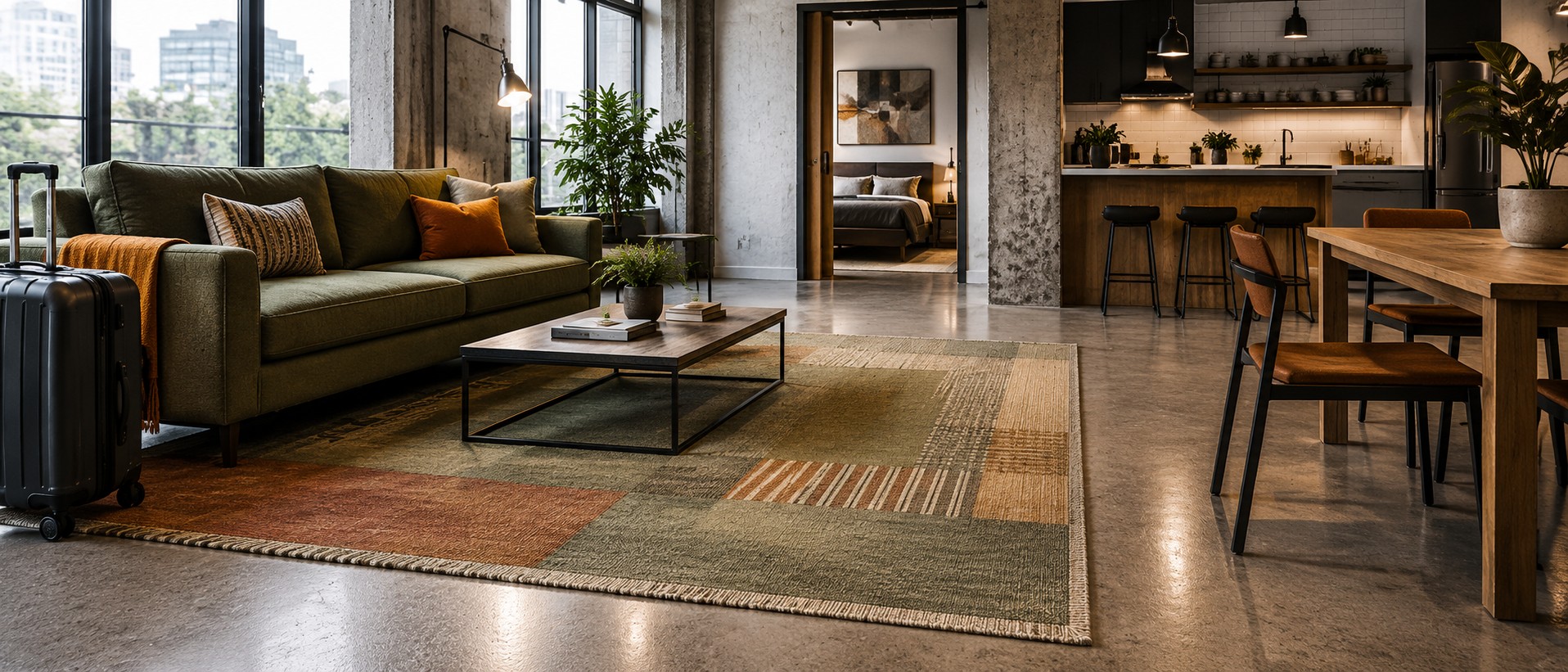
Here things can be a little more homely. A flatwoven performance rug in earth tones or a calm pattern gives the room character while still being easy to vacuum. Operators of an upmarket property can also use a high-quality wool rug here in a quieter colourway.
Dining Area
Stains are part of the programme here. No high pile, no light grey, no viscose. Flat, synthetic, mélange. Chairs should glide easily, and stains should be quick to treat. Polypropylene is virtually unrivalled here.
Bedroom
Somewhat less wear, somewhat more flexibility. A moderate low pile is also the safe choice here. Those who wish to can quite happily opt for wool in the bedroom, provided the rest of the flat is covered with robust materials.
Children's and Family Accommodation
Small, washable rugs for defined play areas work well. For large surfaces, it is better to rely on very easy-care synthetic materials. Washable rugs sound appealing but quickly reach practical limits at larger formats.
What You Can Do Without
High pile and shaggy: visually tempting, a problem in everyday rental life. Sensitive materials such as viscose or silk-look finishes are unsuitable in frequently used zones. Very light plain-coloured rugs in entrance areas and under the dining table are an invitation to trouble.
And rugs that may only be cleaned professionally? They simply have no place in a holiday flat when there are four hours between two bookings.
Care Is Not a Bonus – It Is the System
The best rug is of no use if the cleaning staff have no clear instructions. Treat stains immediately, rather than waiting until the next check-out. Vacuum after every stay, especially in entrance and dining areas. Rotate rugs regularly so that wear patterns develop more evenly.
I also recommend to my customers that they plan a replacement rug concept from the outset: interchangeable rugs instead of fitted carpet. A single rug is considerably easier to clean, air out or replace than an entire floor covering. This reduces ongoing costs and keeps the property in good shape long-term.
What Truly Counts in the End
There is no universal answer to the question of the best holiday flat rug. Material, pile height, weave density, colour, room, guest profile and cleaning routine all decide together. Someone renting out a rustic holiday home for families with a dog needs different rugs from someone with a quiet Ticino design apartment for two people.
But one thing applies everywhere: the best rug is the one that still looks well-kept after thirty guests. Not the softest, not the cheapest, not the most photogenic in the listing. The most resilient.
FAQ
Which rug is best for a holiday flat or Airbnb?
Low pile or flatweave in polypropylene or nylon is the most reliable choice. Densely woven, mélange or medium-dark models conceal signs of wear and can be vacuumed quickly. For a practical formula: short pile, synthetic fibre, structured pattern.
Is polypropylene a sensible choice for Airbnb rugs?
Very much so. Polypropylene is moisture- and stain-resistant, withstands intensive use and is affordable compared to other materials. In the dining area, living room and entrance area it makes full use of its strengths. Those renting out a mid-range property will find it hard to beat for value.
Are wool rugs suitable for holiday flats?
Yes, but used with care. Wool is naturally durable and dirt-repellent, and in premium holiday flats it makes a real difference to the feel and atmosphere. It works very well in quiet bedrooms or lightly used living areas. In entrance areas, dining rooms or properties with a high risk of staining, more robust synthetic fibres are the safer choice.
Which rugs should be avoided in holiday flats?
High pile and shaggy: too demanding to clean, dirt settles deep into the fibres. Very light, plain-coloured rugs in entrance and dining areas: every stain is immediately visible. Viscose and silk-look finishes: sensitive to moisture and intensive use. Sisal and jute in moisture-prone zones: entrance areas, near the kitchen or balcony access are critical. Rugs that may only be cleaned professionally, when little time is available between two bookings.
Are washable rugs the best solution for Airbnb?
For small, easily accessible areas they are practical, especially in family or pet-friendly accommodation. At large formats, washable rugs quickly reach their limits: washing, drying and handling become demanding, and quality varies considerably. As a complement to a robust main rug they make sense; as an all-round solution for large surfaces, less so.