


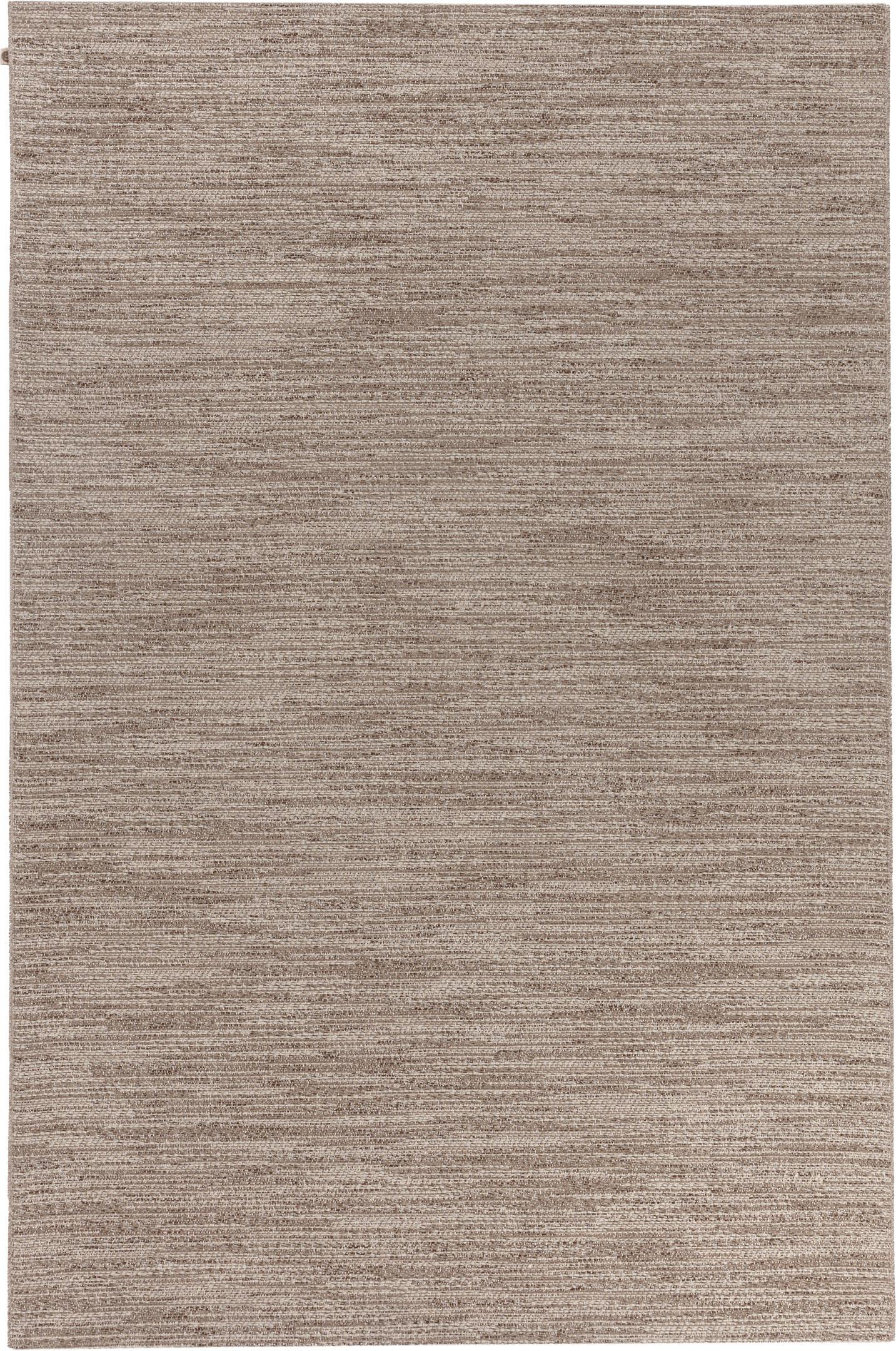


Square rug: when the shape brings calm to a room
A square has four sides of equal length. There is no top and no bottom, which creates a balanced, harmonious impression. That is precisely what makes the shape so powerful: a square rug sets a clear focal point and calms the room, bringing a settled atmosphere to the space.
The shape plays to its strengths wherever square elements are already present. A square dining table, a compact seating group, a corner sofa with an L-shape: a rug laid square ties these pieces of furniture together and gives the zone structure. In open-plan layouts, a square rug structures the living area and visually separates, for example, the dining zone from the sofa area.
Wool is the most important yarn in rug production and is represented in almost every collection. Among living room rugs, you will therefore find the shape in many materials and sizes, from a small accent piece to a large central statement rug.
Does a square rug work in a rectangular room?
Yes. The square rug does not have to follow the room's proportions; it follows the furniture. Rectangular rooms often look harmonious with rectangular rugs, because the shape echoes the room's outline. A square still works as soon as you place it as a clearly defined island beneath a table or seating group.
Take a narrow, rectangular room: if you lay the square under the seating group, a clearly defined seating island emerges, and the rest of the room remains free for walking through. The rug becomes the center of the zone, and the room's shape recedes into the background. This resolves the concern that the shape might look disproportionate: what matters is the zone the rug defines, not the shape of the walls.
It is important to leave enough free space around it. If the rug is squeezed too close to the furniture or walls, the room feels cramped. With breathing room on all sides, the island stands on its own.
The island principle: square rug as a clear focal point
The island principle is the simplest rule for the square shape. You move the furniture a little away from the wall and place it on or next to the rug. This creates a cohesive area with a cozy, welcoming atmosphere.
When it comes to furniture placement, there are two approaches:
- All legs on: the seating group sits completely on the rug, which looks the calmest and most contained. This requires a correspondingly larger size.
- Front feet only: with larger seating groups it is often sufficient for only the front furniture feet to rest on the rug. This still ties the group together and saves floor space.
An example from an open loft: the seating group stands freely in the room and is separated from the dining area as its own island by the square. In large rooms, you intuitively arrange the furniture around the rug. A slight overlap of individual pieces further loosens the composition. The room should not be too small for this arrangement, otherwise the walkways become too narrow.
Square rug by size: from 150x150 to 300x300 cm
The right size determines whether the shape convinces. A rug that is too small looks lost; one that is too large makes the room feel optically smaller. Standard square sizes range from around 150x150 cm to over 400x400 cm for custom orders. As a rough guide:
- 60x60 cm: small accent piece or bedside rug.
- 100x100 cm: focal point for smaller seating groups.
- Rug 200x200 cm: spacious living rooms or beneath square dining tables.
- 250x250 cm: central piece in an open living area or beneath a corner sofa.
- Rugs 300x300 cm: large seating groups where all legs should rest on the rug.
Under the dining table, the general rule is: table shape equals rug shape, so a square table calls for a square rug. For a square four-person table of around 80x80 cm, a 200x200 cm rug is a good fit. For larger square dining tables, 200x200 cm or 240x240 cm makes sense. The rug should be large enough that the rear chair legs still rest on it when chairs are pushed back; as a guide, at least 60 cm of overhang per side beyond the table.
Under the sofa, the rug should be at least as wide as the sofa, ideally 15 to 25 cm more on both sides. Under a corner sofa, a 250x250 cm square works well, so that the L-shape is held together and the entire seating arrangement sits on one surface.
Two practical tips: when in doubt between two sizes, go for the larger one. And mark the dimensions on the floor with painter's tape before buying; you will immediately see how much surface area the square takes up.
Material for the square living room rug compared
The material determines the feel, care requirements, and lifespan. An overview for the square living room rug and other areas:
- Wool: the natural lanolin makes the fiber resistant to dirt and water, it regulates the indoor climate, and feels warm and soft. Wool insulates against footstep noise and is non-flammable. It is not suitable for wet areas such as the bathroom.
- Cotton: renewable, robust, and hardwearing. Plant-based and therefore also suitable for allergy sufferers who cannot use wool. Depending on the care label, often machine washable.
- Sisal: made from the leaves of the sisal agave, it absorbs humidity and insulates against both heat and footstep noise, and does not build up static. The texture is rough; the material is sensitive to moisture and stains are difficult to remove.
- Synthetic fiber: polypropylene and polyester are low-maintenance, affordable all-rounders; nylon withstands the highest levels of wear. Good for heavily used areas and families.
For a children's room or heavily used zones, robust cotton or synthetic options are practical. As a soft bedroom rug, wool brings its warm, sound-dampening qualities to bear. If you are looking for a rug for the terrace, choose a weather-resistant synthetic material, as wool and sisal do not tolerate prolonged moisture well.
Anti-slip mat, wall clearance, and everyday care
An anti-slip mat is worthwhile in almost all cases. It ensures the rug lies flat and does not shift, especially on smooth floors and in high-traffic zones. Used as a rug pad, it also protects the floor covering underneath.
For wall clearance, work with a range rather than a fixed figure. As a guide, 30 to 60 cm between the rug edge and the wall creates a balanced look. Where there is more space available, up to one meter of clearance all around is also fine, and the island stands clearly on its own.
Care by material:
- Wool: vacuum regularly, clean only lightly damp; with stains, press with a clean cloth rather than rubbing. New wool rugs shed at first; this settles with vacuuming in the direction of the pile within a few weeks.
- Cotton: machine washable depending on the care label; dry flat afterwards and reshape.
- Sisal and jute: clean dry, avoid moisture; consider protective mats in the dining area.
- Synthetic fiber: spot clean with a mild cleaner; occasional deep cleaning.
As a general rule: rotate the rug every six months so that wear marks distribute evenly, and avoid direct sunlight, which causes colors to fade. Professional cleaning is recommended every one to five years depending on the source. How long a rug lasts depends greatly on material and care: machine-made rugs often last 8 to 20 years, wool rugs on average 10 to 25 years, and inexpensive tufted models often only five to seven years.
